What a magnetic switch is
In many motor control panels, a magnetic switch is used to turn a motor on and off while also providing overload protection.
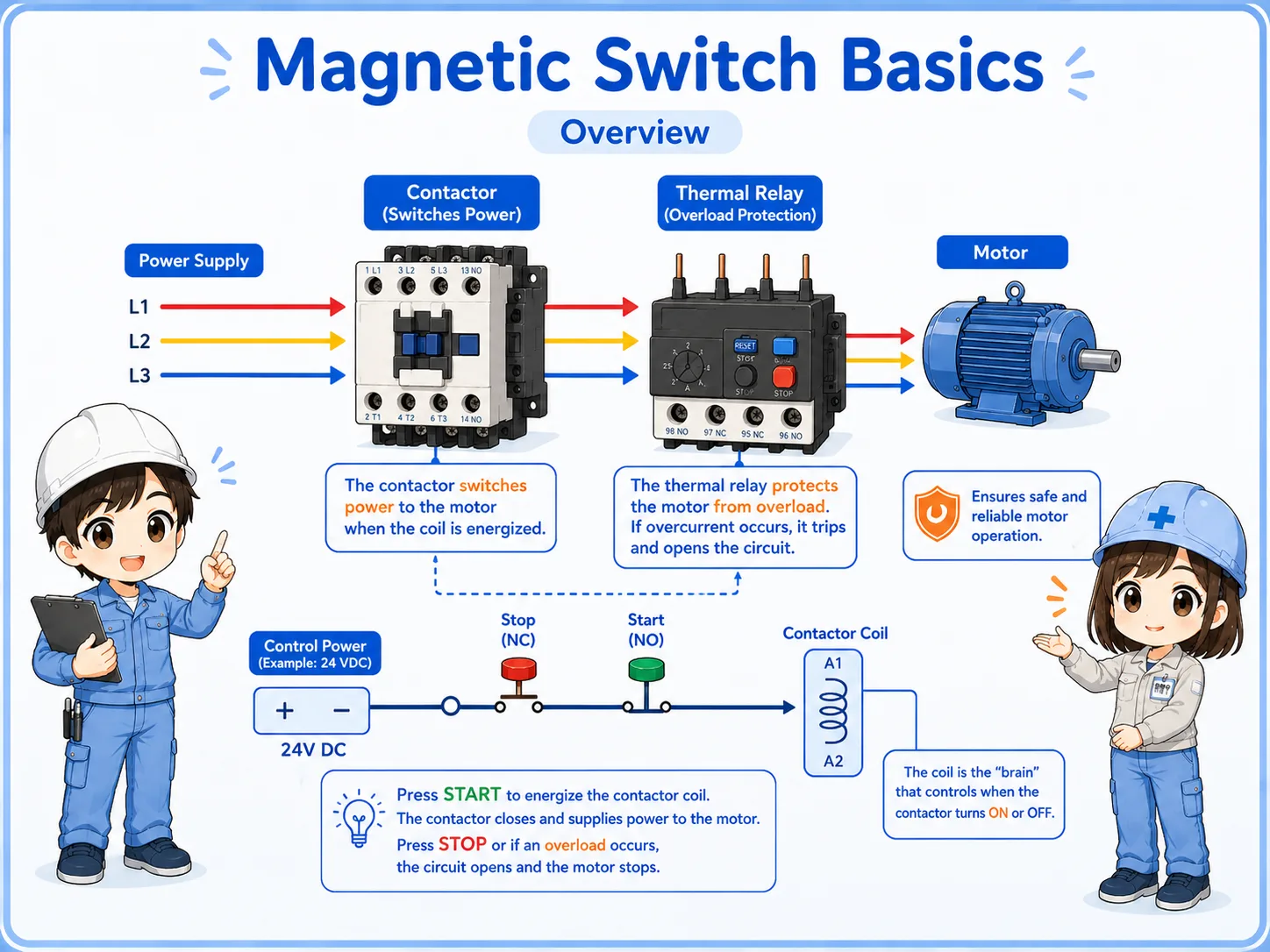
In practical field language, “magnetic switch” often refers to a motor starter made from a contactor and a thermal overload relay. The contactor performs the switching operation, and the thermal relay detects overload current.
It is easier to understand if you separate the two jobs: switching the motor circuit, and protecting the motor from overload.
The contactor switches the motor circuit
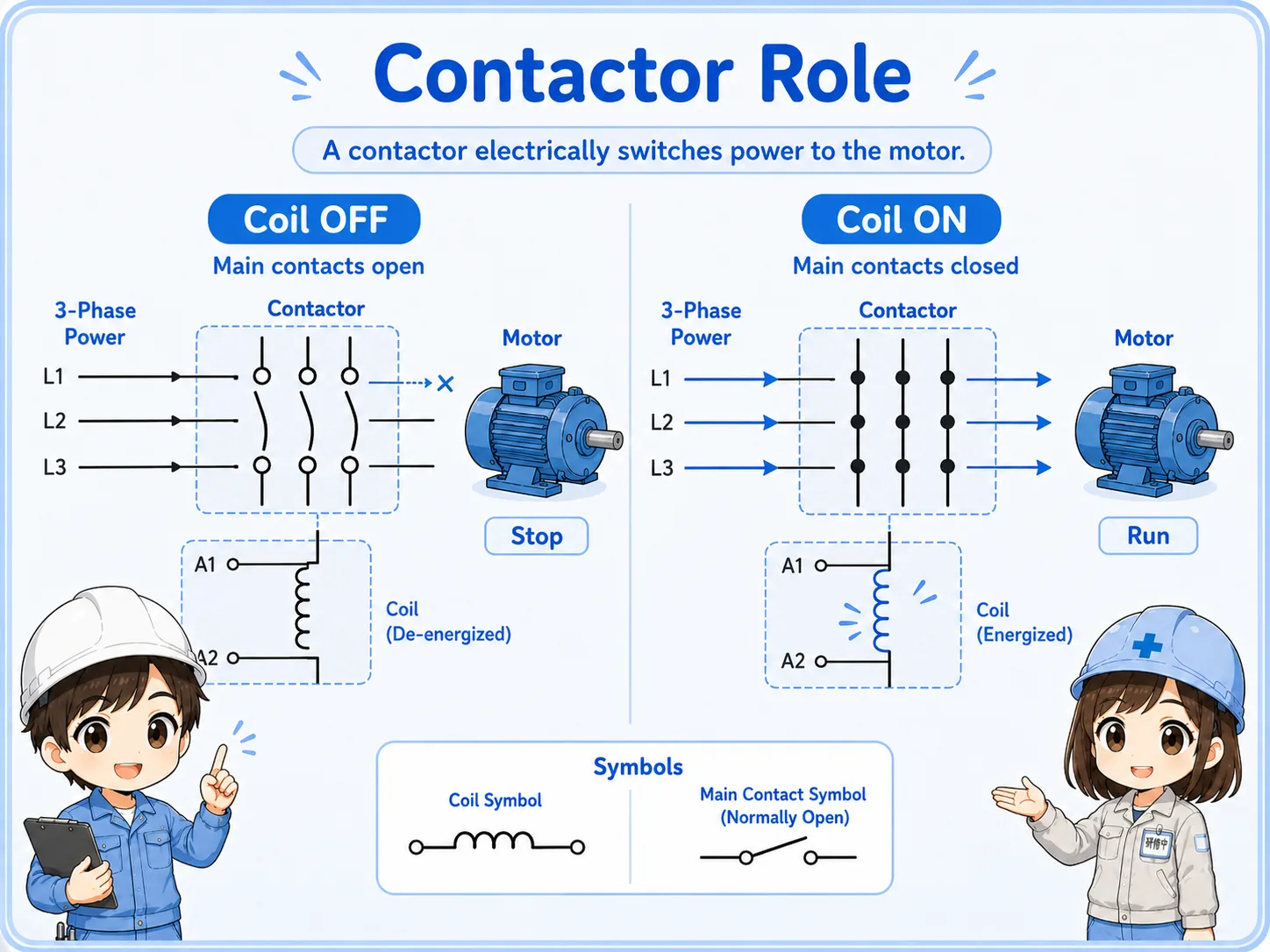
The contactor turns the motor power circuit on and off using an electromagnetic coil.
When the contactor coil is energized, the main contacts close and power is supplied to the motor. When the coil is de-energized, the main contacts open and the motor stops.
The coil is usually controlled by a push button circuit, relay circuit, PLC output, or another control signal. The main contacts handle the motor current, while the control circuit handles the command.
Simple way to remember
The contactor answers the question: “Should the motor power circuit be connected or disconnected?”
The thermal relay protects from overload
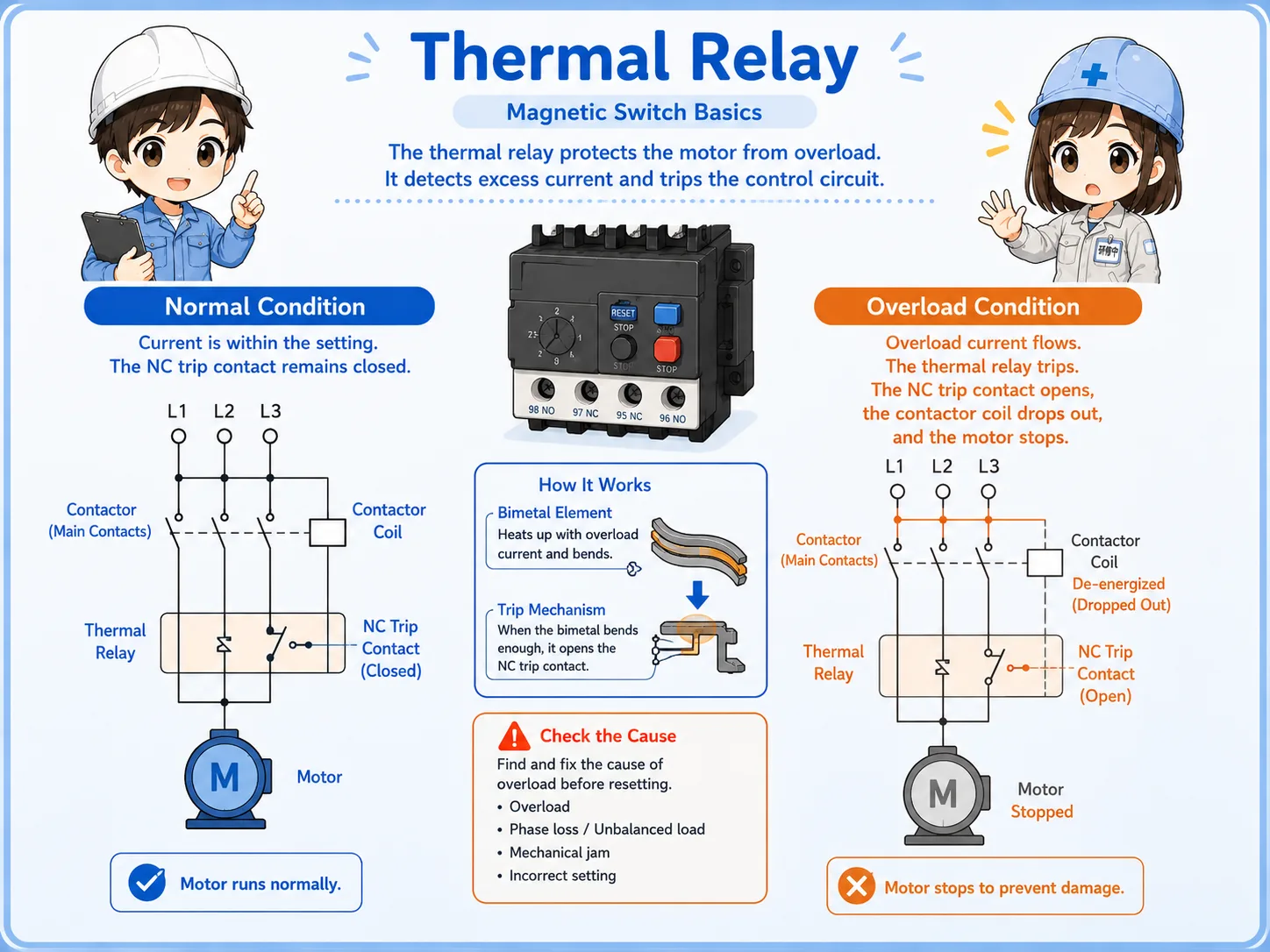
The thermal relay detects motor overload and opens a control contact when the current is too high for too long.
If the motor is overloaded, locked, or mechanically jammed, the current may rise. The thermal relay reacts to this overload condition and trips. In many circuits, its normally closed trip contact opens the contactor coil circuit, stopping the motor.
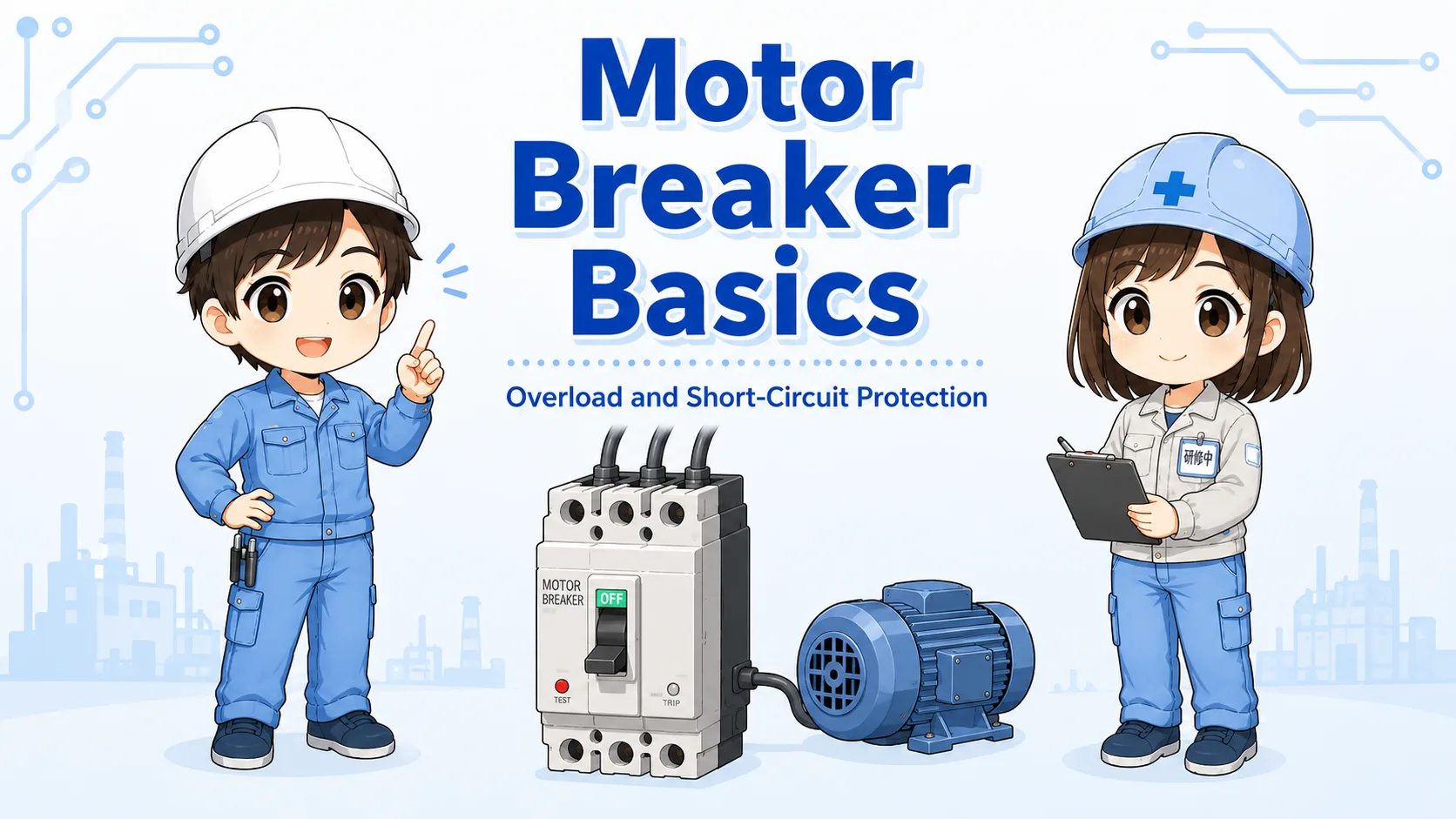
This is different from short-circuit protection. A thermal relay is mainly for overload protection, while a breaker or fuse handles large fault current protection.
Do not reset without checking the cause
If the thermal relay trips, check the motor, load, current setting, wiring, and mechanical condition before resetting and restarting.
Auxiliary contacts and trip contacts
A magnetic switch is not only about the main power contacts. Auxiliary and trip contacts are also important.
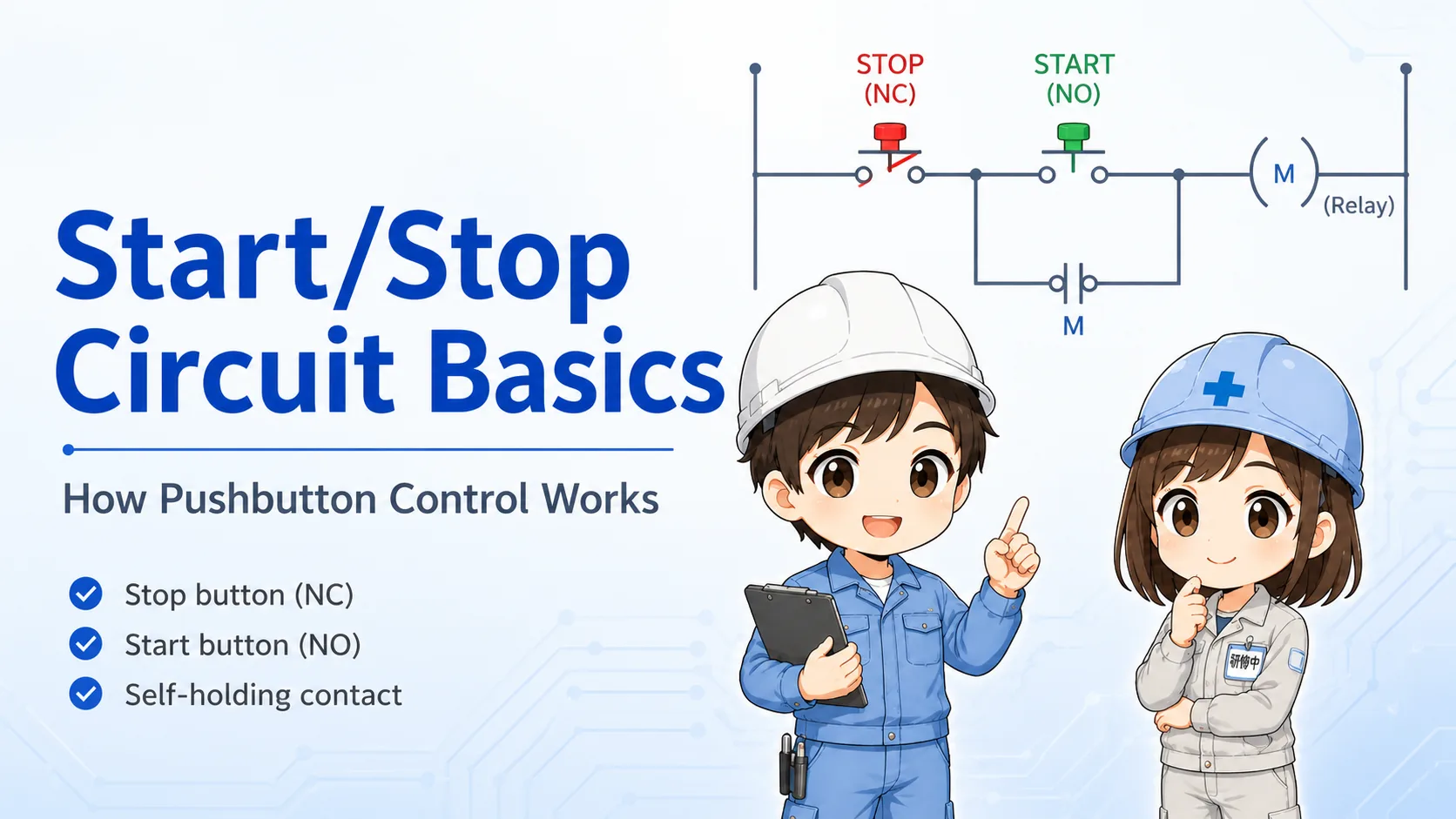
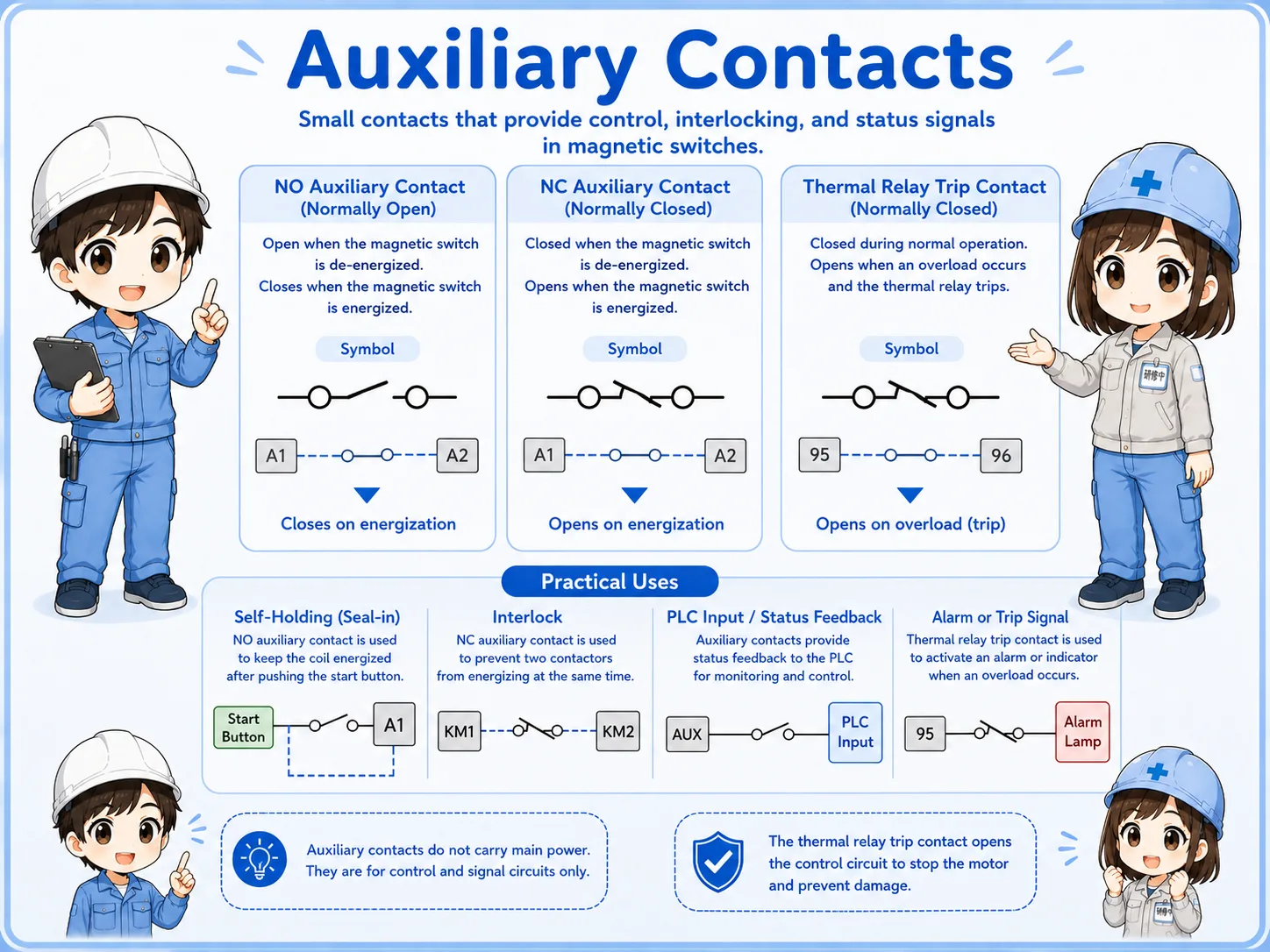
Auxiliary contacts are used in control circuits for self-holding, status feedback, interlock, and PLC input signals. A normally open auxiliary contact may be used to keep a motor running after the start button is released.
The thermal relay trip contact is usually placed in the control circuit. When overload occurs, this contact opens and the contactor coil drops out.
| Contact | Common role | Field check |
|---|---|---|
| Main contacts | Switch motor power. | Check contact wear, terminal tightening, and power output. |
| Auxiliary contacts | Used for self-holding, feedback, and interlock. | Check NO/NC state and actual operation with the contactor. |
| Thermal trip contact | Opens the control circuit when overload is detected. | Check trip state, reset state, setting, and overload cause. |
Basic motor control flow
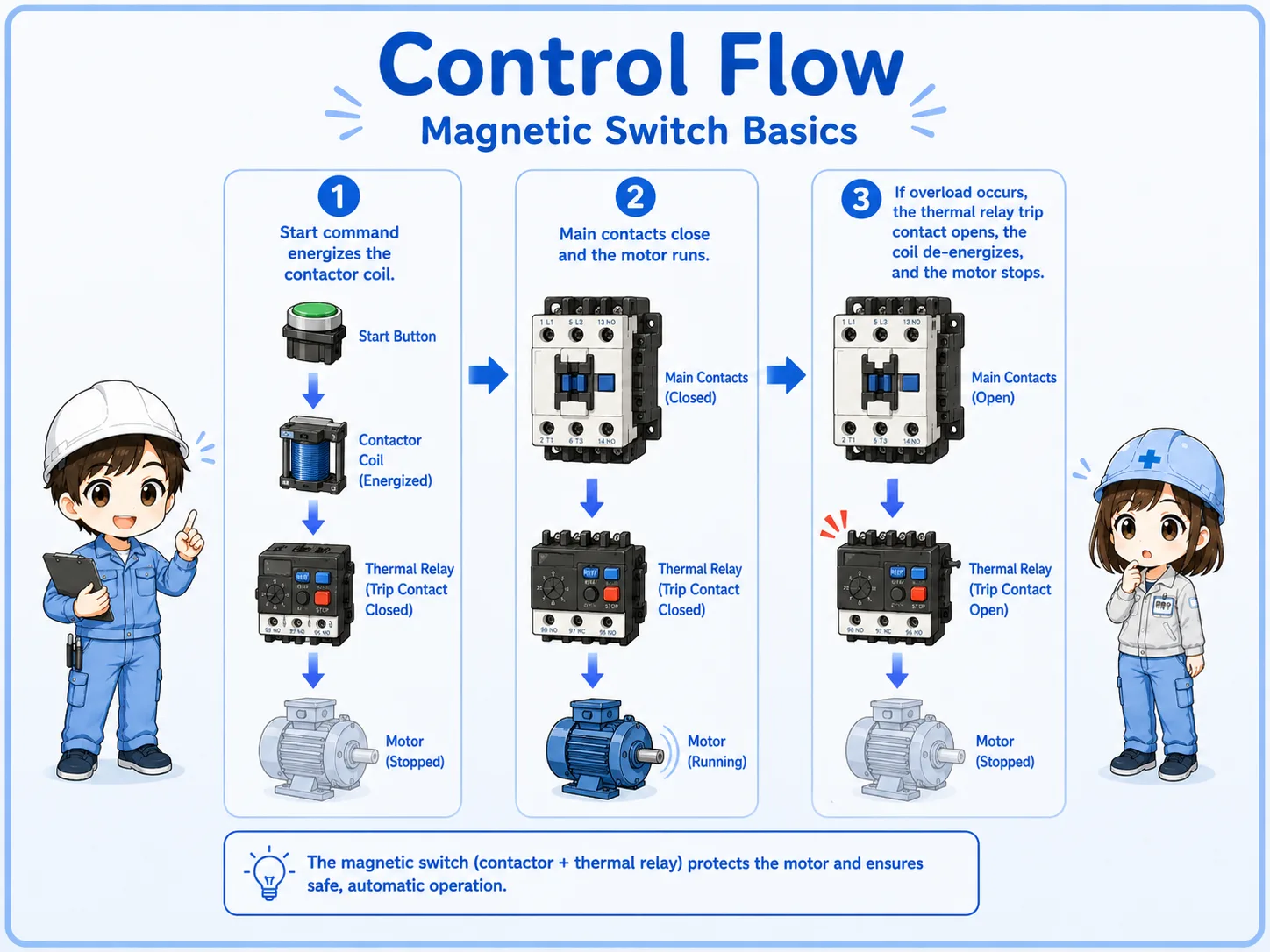
A magnetic switch circuit is easier to follow when you trace the command and protection path.
1. Start command
The start button, relay, or PLC output energizes the contactor coil.
2. Contactor closes
The main contacts close and motor power is supplied.
3. Overload trip
If overload occurs, the thermal relay opens the control circuit and stops the motor.
Field check points
When a motor does not start, does not stop, or trips, check the command side, contactor side, thermal relay side, and load side separately.
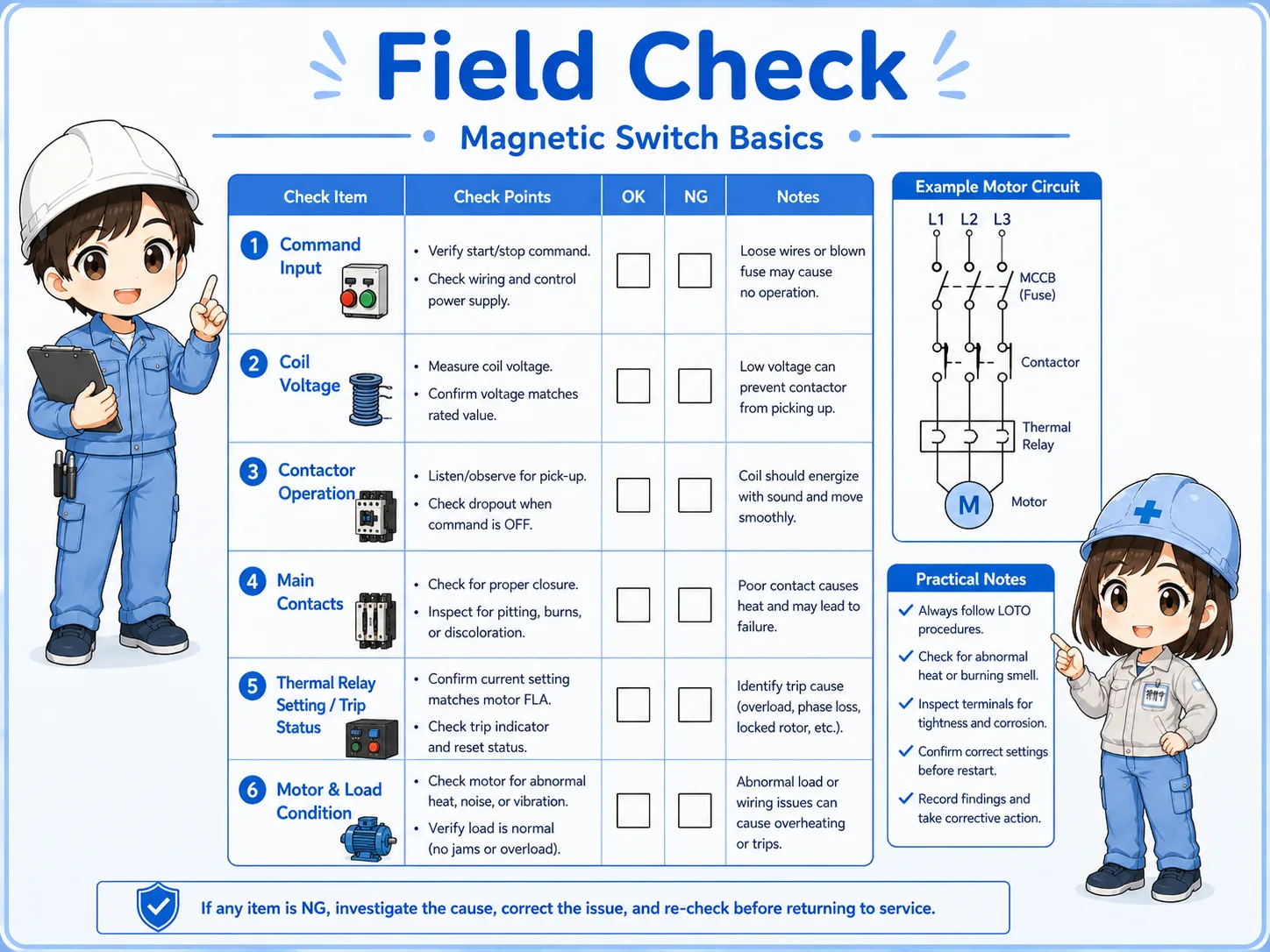
Command input
Check whether the start or stop command is actually reaching the control circuit.
Coil voltage
Check whether the contactor coil receives the correct voltage when it should turn on.
Contactor movement
Listen and observe whether the contactor pulls in and releases correctly.
Main contacts
Check output voltage, terminal condition, contact wear, and abnormal heating.
Thermal relay trip
Check whether the thermal relay has tripped and whether the overload cause is still present.
Motor and load
Check motor current, motor condition, mechanical jam, bearing trouble, or heavy load.
Common beginner mistakes
Magnetic switch troubleshooting becomes easier when switching and protection are not mixed together.
- Thinking the contactor and thermal relay have the same role.
- Resetting a thermal relay without checking the motor or load.
- Checking only the main contacts and ignoring the coil circuit.
- Forgetting that auxiliary contacts may affect self-holding or interlock.
- Changing thermal relay settings just to avoid trips.
- Ignoring loose terminals, contact wear, or abnormal heat.
Use the actual drawing and device manual
Terminal numbers, reset methods, current settings, and contact arrangements depend on the device. Use this article as a concept guide, then confirm with the actual drawing and manufacturer documentation.
Short conversation

A magnetic switch is easier to understand if you separate the contactor and thermal relay roles.

So the contactor turns the motor on and off, and the thermal relay protects it from overload?
Exactly. If the thermal relay trips, do not only reset it. Check why the motor was overloaded.
And auxiliary contacts can be used for self-holding, feedback, or interlock, right?
Yes. The main contacts, auxiliary contacts, coil, and trip contact all have different jobs.
Summary
A magnetic switch is commonly used in motor control circuits. It is often understood as a combination of a contactor and a thermal relay. The contactor switches motor power, while the thermal relay detects overload and opens the control circuit.
When troubleshooting, separate the check into command input, coil voltage, contactor operation, main contacts, auxiliary contacts, thermal relay trip state, and motor load condition. Do not reset a trip without checking the cause.