Good fit for
- Beginners who hear “surge protection” or “SPD” around control panels
- Electricians who want to understand why surge devices are installed
- People checking panel protection after lightning, power trouble, or device damage
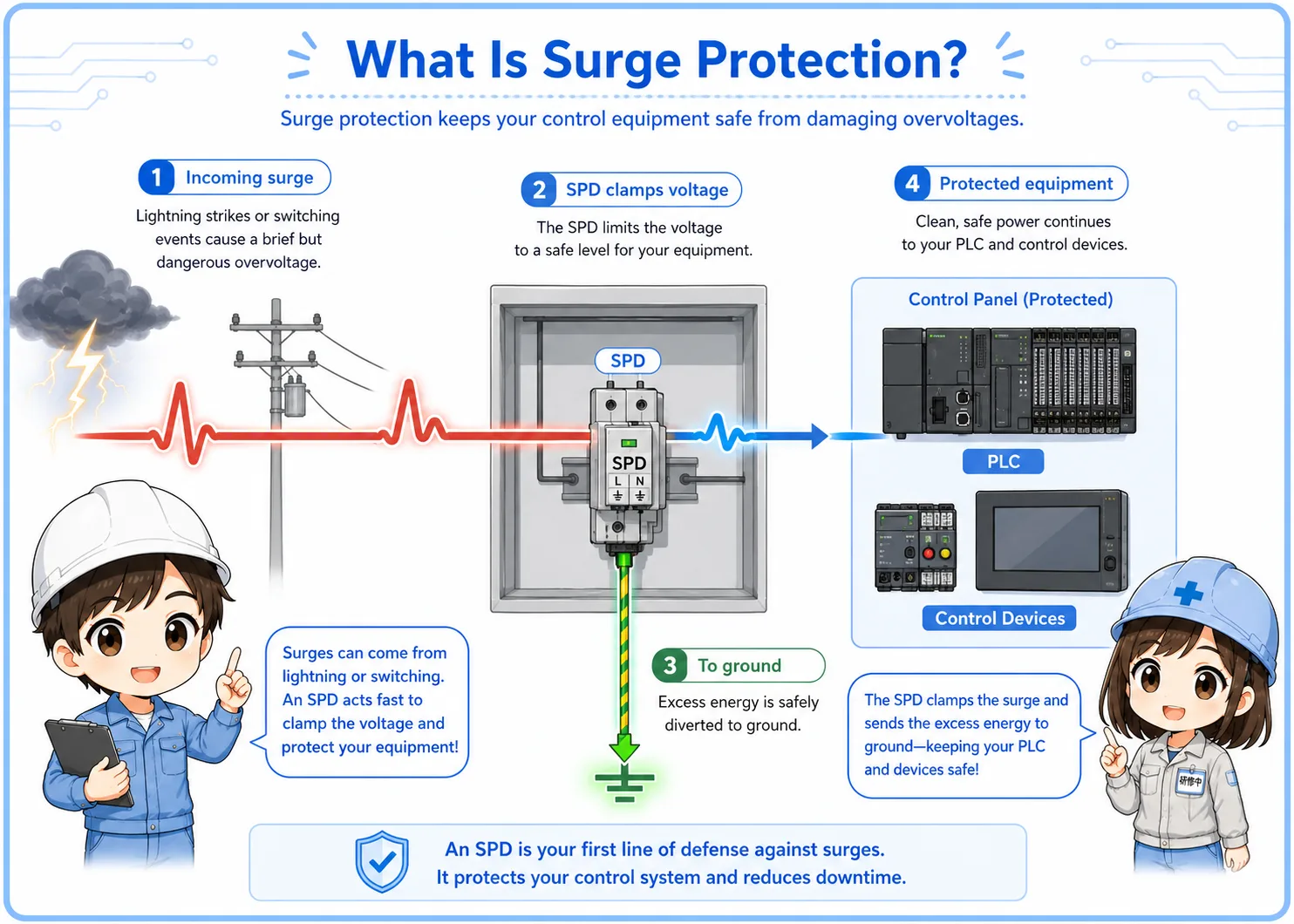
A surge is a short, abnormal overvoltage that can enter a control panel through power lines, signal lines, or grounding paths. This guide explains the basic idea of surge protection and why SPD devices are used in control panels.
Surge protection helps protect electrical equipment from short, abnormal overvoltage.
A surge is a sudden voltage rise that lasts for a very short time. It may be caused by lightning, switching large loads, coils, motors, contactors, or power system disturbances.
A surge protective device, often called an SPD, is installed to limit this abnormal voltage and send surge current toward the grounding path. It does not make a system invincible, but it helps reduce the risk of damage.
The SPD is not just another terminal block. Its wiring length, grounding path, rating, and replacement status affect how well it can protect the panel.
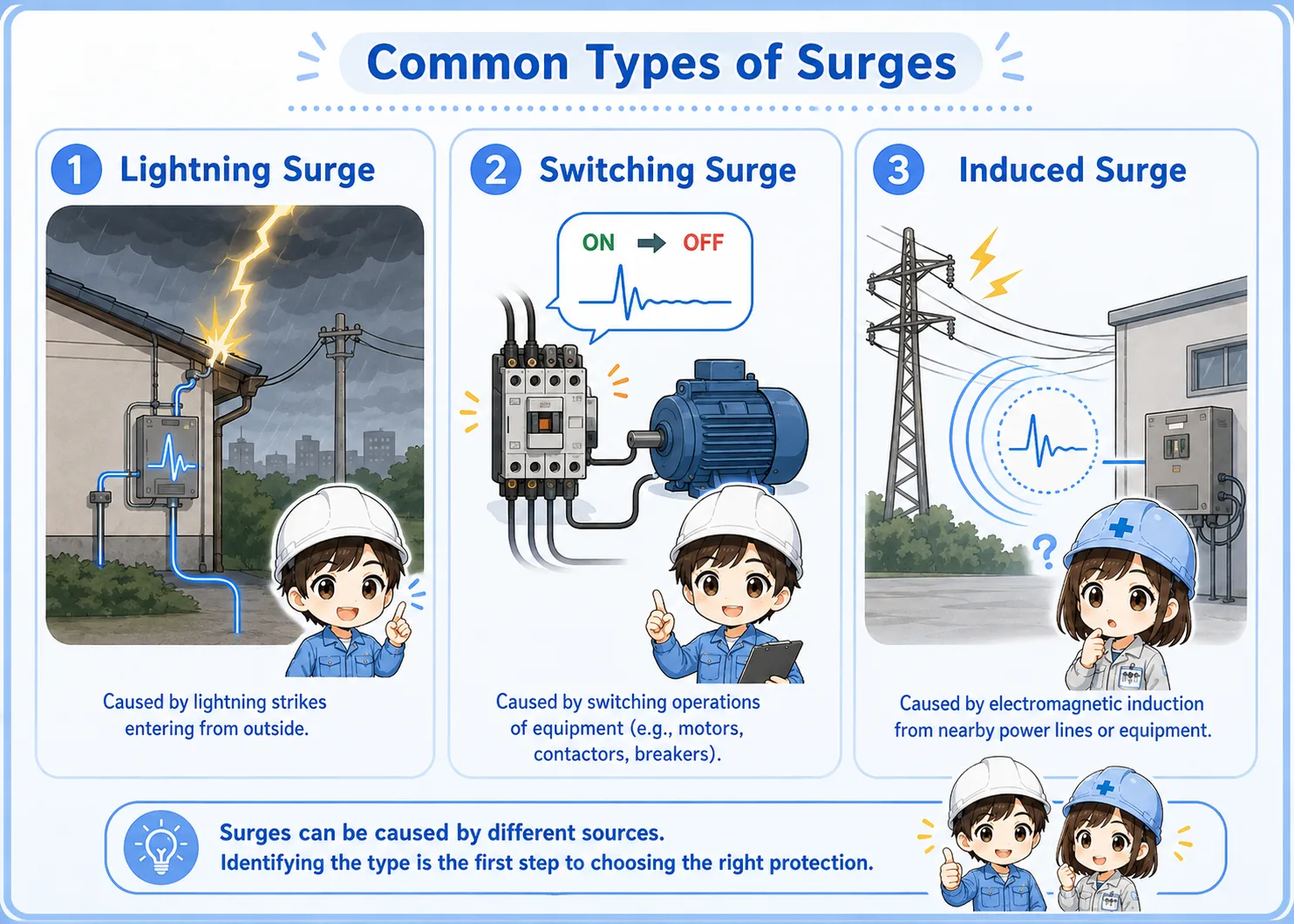
Surges can come from outside the facility or from equipment operation inside the system.
Lightning surges are often associated with thunderstorm activity and can enter through power lines, communication lines, or grounding systems. Switching surges can occur when inductive loads, motors, coils, or breakers are switched.
Abnormal voltage caused by direct or nearby lightning influence.
Voltage spike caused by switching coils, motors, transformers, or large loads.
Noise or surge entering through sensor, communication, or external wiring.
An SPD is installed between the protected circuit and the grounding path.
In normal operation, an SPD should not disturb the circuit. When an abnormal overvoltage appears, it conducts surge current and helps clamp the voltage to a safer level. After a severe surge, the SPD may degrade or show a replacement indicator.
| Part | Basic role | Beginner viewpoint |
|---|---|---|
| Protected line | Power or signal line connected to equipment | Check where the surge can enter the panel |
| SPD | Limits overvoltage and conducts surge current | Check rating, indicator, wiring, and installation position |
| Grounding path | Provides a path for surge current | Keep wiring short and follow the manufacturer instructions |
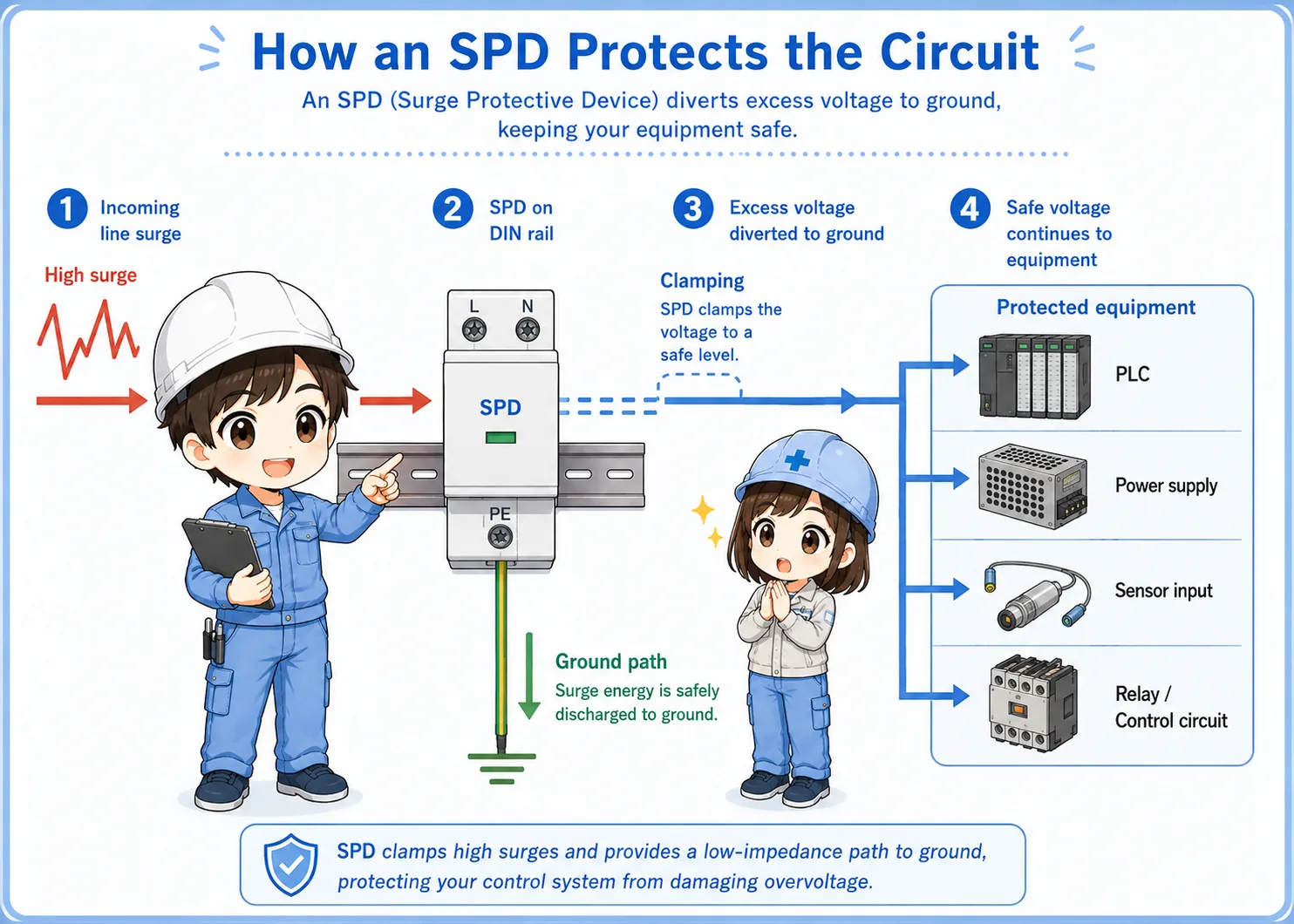
Surge protection depends heavily on the grounding path and installation method. Always follow the equipment manual and applicable site standards.
An SPD helps reduce the stress that reaches sensitive devices.
Without surge protection, abnormal voltage may reach PLCs, power supplies, sensors, communication modules, or drives more directly. With suitable surge protection, part of the surge energy can be diverted before it reaches sensitive equipment.
However, surge protection is not a guarantee against all damage. The protection level depends on SPD selection, wiring, grounding, the surge energy, and how the system is designed.
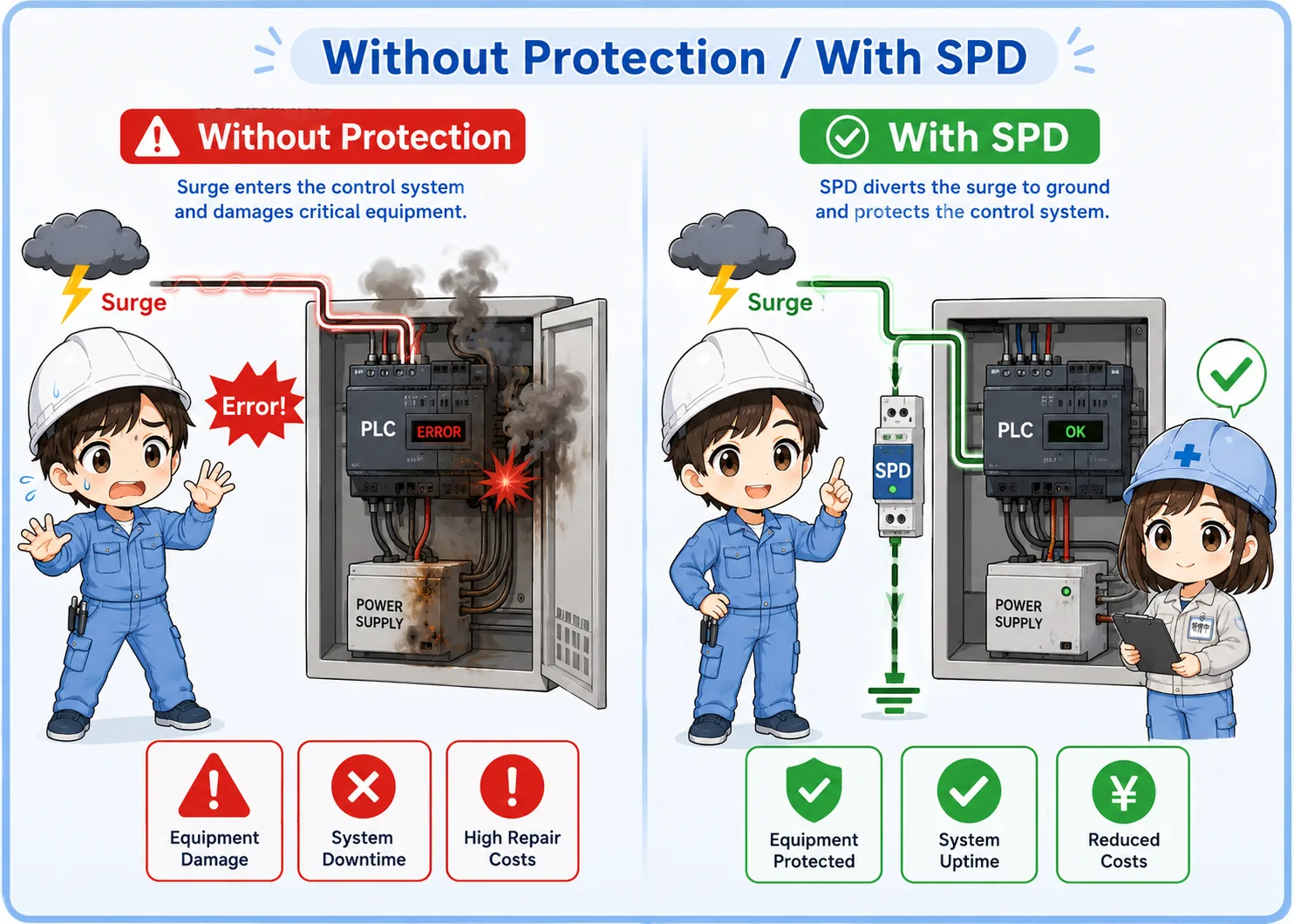
If a panel has repeated device failures after storms or switching events, check not only the failed device but also SPD condition, grounding, and incoming wiring routes.
A short conversation helps avoid seeing the SPD as just a small accessory.

When you see an SPD in a panel, do not only check whether it exists. Check the indicator, wiring length, grounding path, and whether it matches the circuit it protects.

So an SPD can be installed, but the protection may still be weak if the wiring or grounding is poor?
Exactly. Surge protection is a system: SPD, wiring, grounding, and maintenance all matter.
Most practical checks are about SPD condition, wiring, grounding, and signs of past surge stress.
Check visual indicators, alarm contacts, replacement marks, and whether the SPD has operated or failed.
Check line-side wiring, ground wiring, terminal looseness, cable routing, and manufacturer instructions.
Check the grounding route, bonding, panel grounding terminal, and site grounding practice.
Check repeated failures, storm history, burnt marks, power supply alarms, communication errors, and sensor failures.
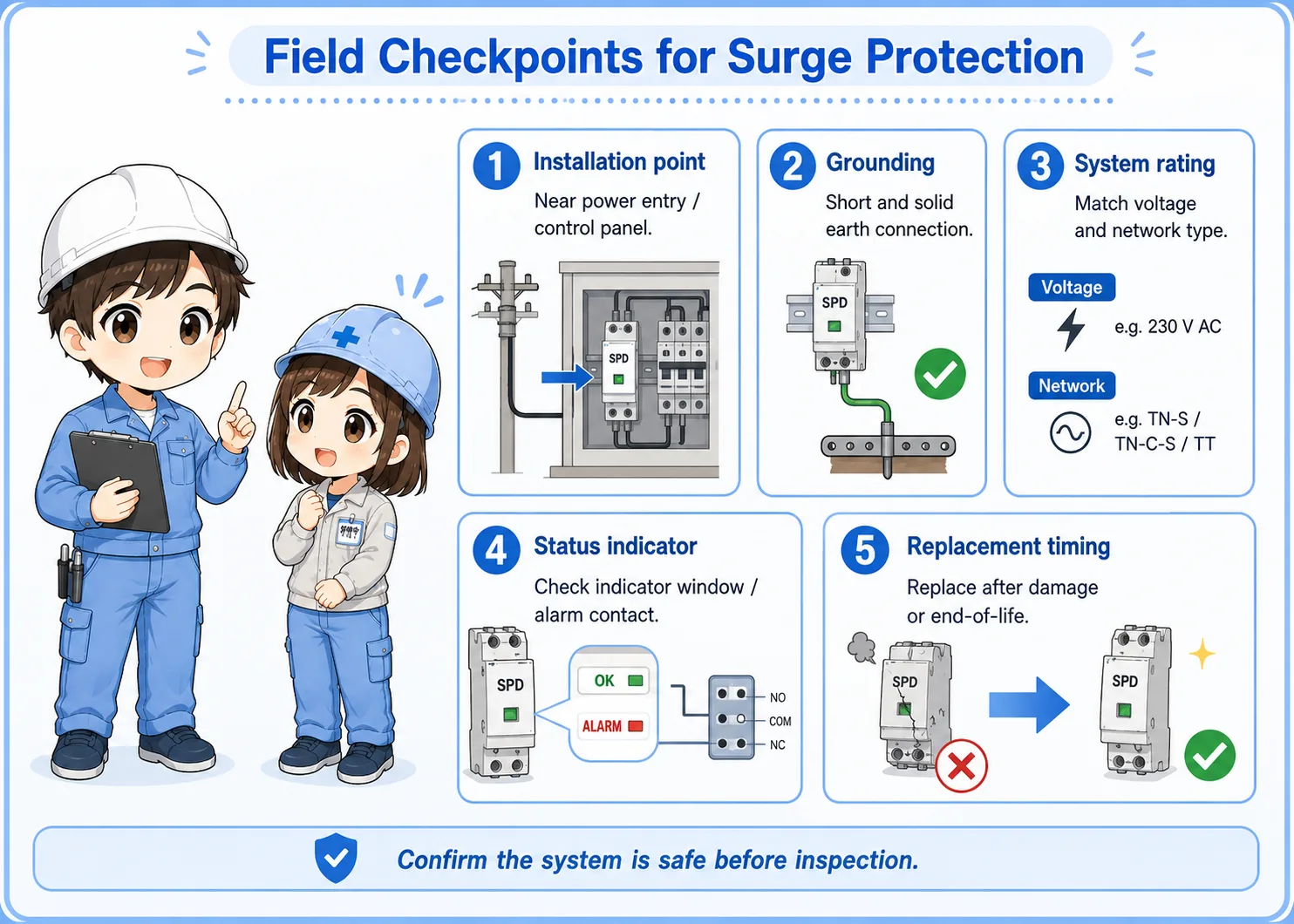
SPD replacement and testing procedures differ by product. Use the manufacturer manual and follow the site safety procedure before working inside a panel.
These articles help connect surge protection with control panels and field devices.