Good fit for
- Beginners who see ACBs in main distribution panels or large machines
- Electricians who want to understand large-capacity breaker roles
- People learning the difference between ACBs, MCCBs, and small breakers
An air circuit breaker, often called an ACB, is used for large-capacity low-voltage circuits. This guide explains the basic role of an ACB, how it differs from smaller breakers, and what to check around main distribution panels.
An air circuit breaker protects a large electrical circuit by opening it when abnormal current is detected.
An air circuit breaker, or ACB, is a low-voltage breaker often used for large-capacity circuits such as main distribution panels. When a serious overcurrent or short-circuit condition occurs, the breaker opens the circuit to help protect equipment and wiring.
The word “air” refers to the way the breaker interrupts the arc in air. In practical field work, you will often see ACBs as large main breakers with trip units, status indicators, manual handles, and sometimes alarm or auxiliary contacts.
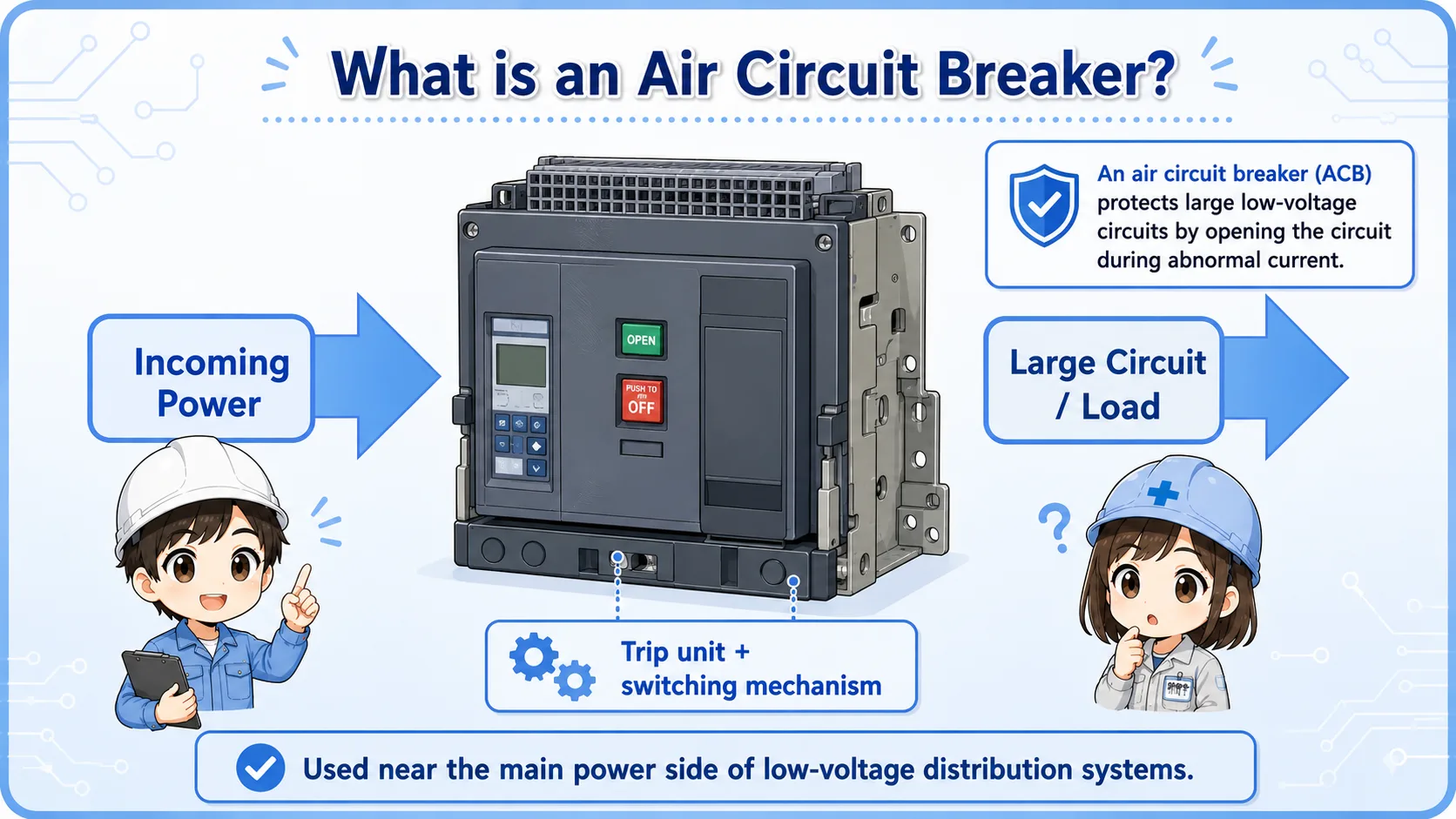
A small breaker protects a small branch circuit. An ACB is usually used where the current capacity and fault level are much larger.
ACBs are commonly used in main distribution panels and large equipment power sections.
You may see an ACB at the incoming side of a control power distribution board, factory distribution panel, large machine panel, or main low-voltage switchboard. It is usually not used for every small load, because smaller breakers are more suitable for branch circuits.
Protects the main low-voltage feeder or distribution board input.
Protects large-capacity equipment where the incoming current is high.
Works with downstream breakers to separate main and branch protection.
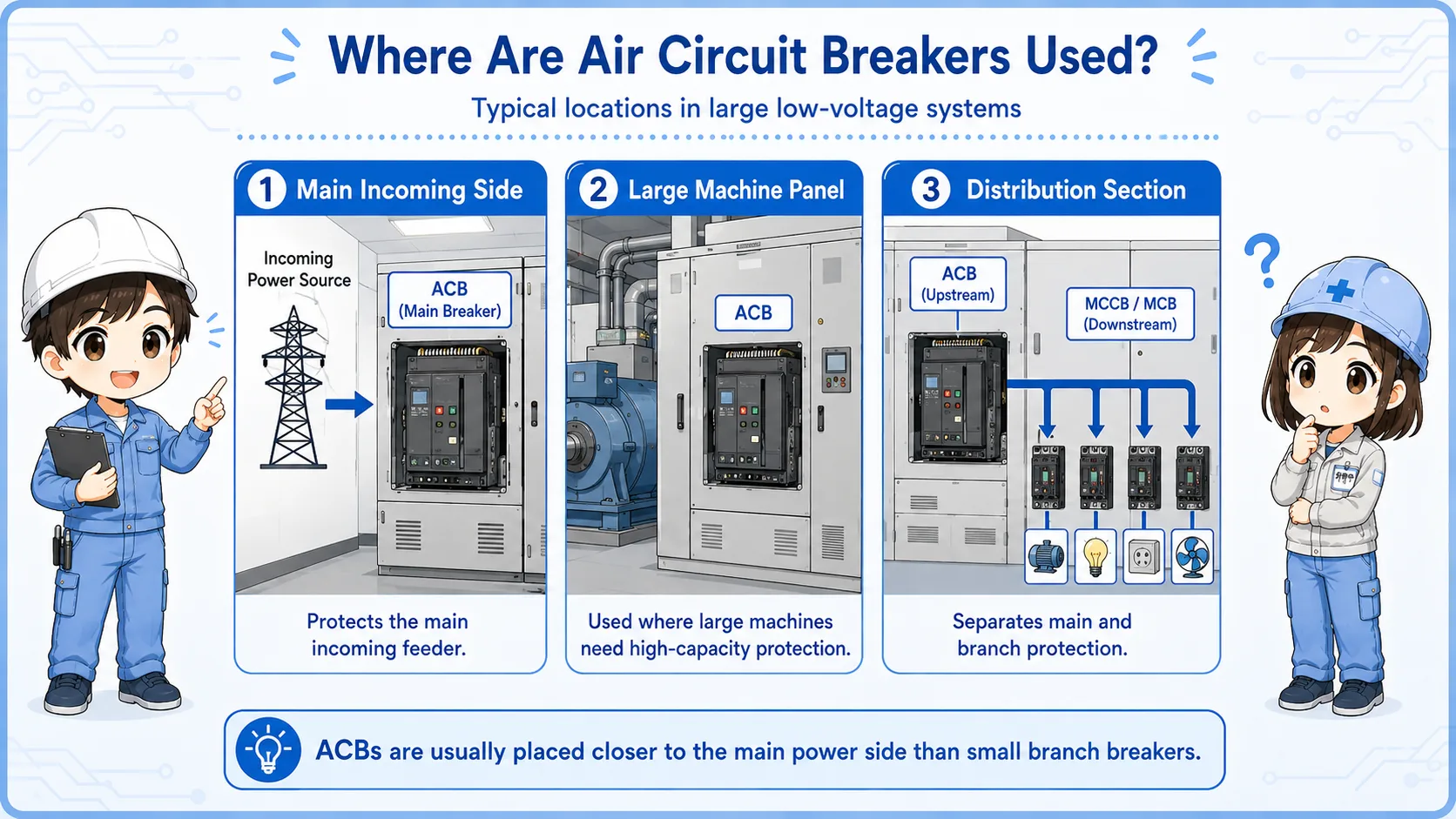
Both are circuit breakers, but they are usually used at different scales and positions.
A molded-case circuit breaker, or MCCB, is commonly used for branch circuits, machine feeders, and many general protection points. An ACB is generally larger and is used for higher-capacity main circuits.
| Item | ACB | MCCB |
|---|---|---|
| Typical position | Main incoming side or large distribution section | Branch circuit, machine feeder, or smaller distribution section |
| Size and capacity | Usually larger and intended for large currents | Usually smaller and used across many panel circuits |
| Field viewpoint | Trip cause and reset procedure may affect a large area | Often protects a smaller load or branch circuit |
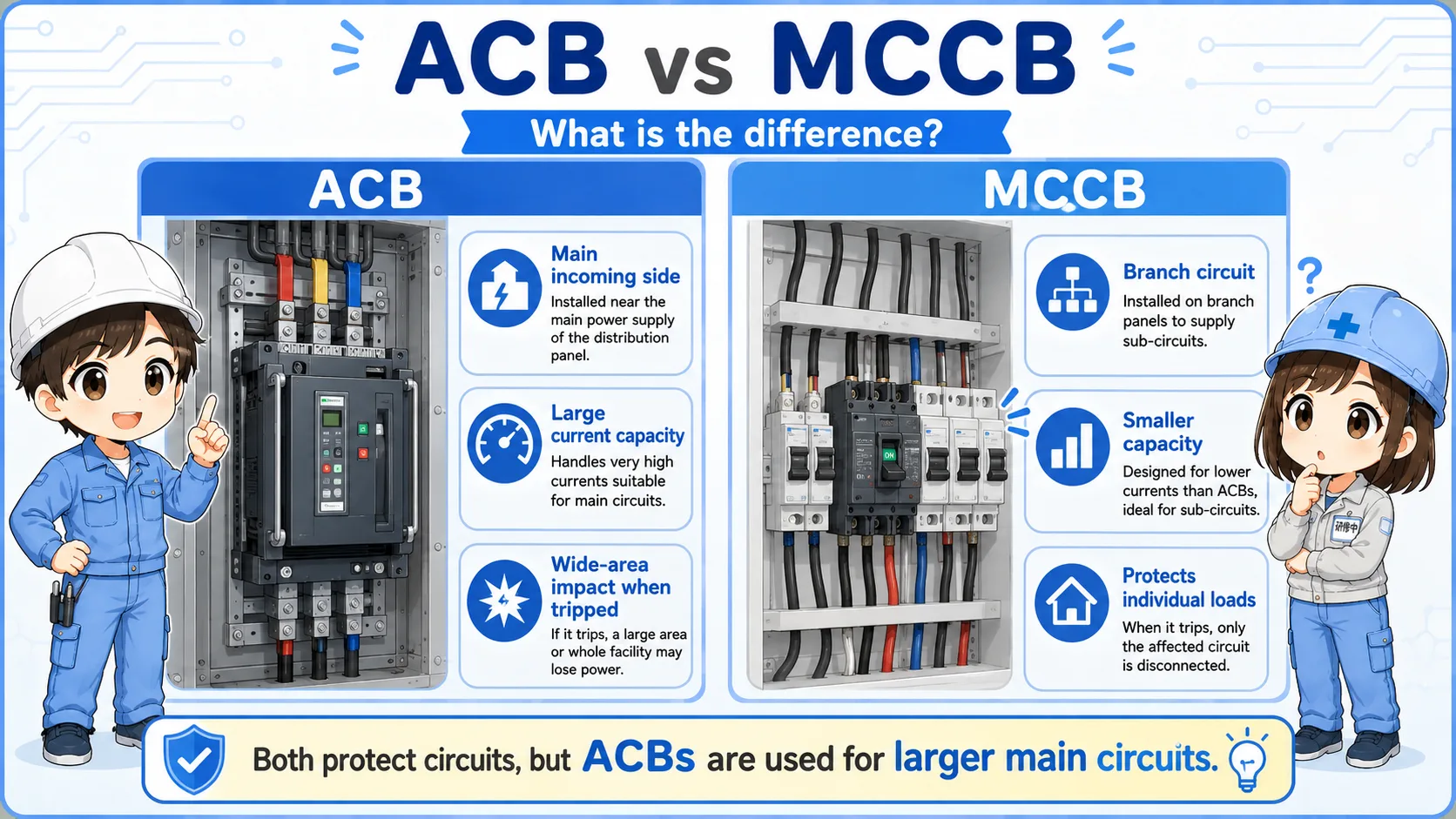
If a large main breaker has tripped, the cause may affect a wide area. Always follow the site procedure and confirm the cause before resetting.
A breaker trip is not just “the switch turned off.” It is a protection operation.
When the trip unit detects abnormal current, the breaker mechanism opens the contacts. During opening, an arc may occur between contacts, and the breaker is designed to interrupt it safely within its rating.
After a trip, the breaker state, trip indicator, alarm contact, and downstream equipment condition should be checked. The important point is to understand what caused the trip before returning power.
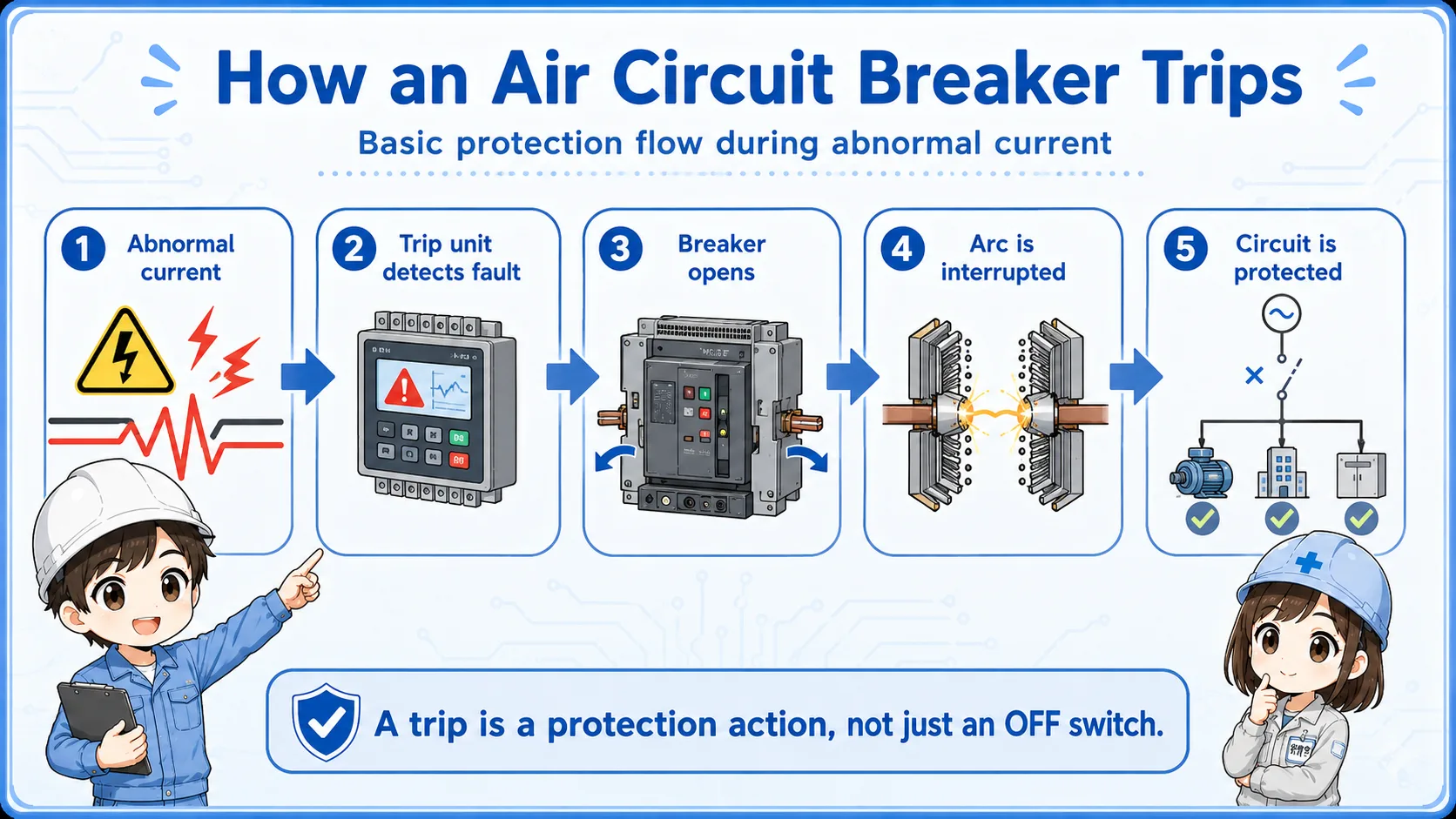
When an ACB trips, record the indication and situation before resetting. This helps identify whether the cause was overload, short circuit, downstream fault, or another condition.
A short conversation helps avoid treating a large breaker like a simple switch.

If an ACB has tripped, do not reset it immediately. First check the trip indication, alarm history, downstream circuit, and whether there was an abnormal load or short circuit.

So a large breaker trip can be a sign of a serious problem, not just something to switch back on?
Exactly. The larger the breaker, the more important it is to follow the correct reset and investigation procedure.
Most practical checks are about breaker status, trip indication, surrounding circuits, and safe work procedure.
Check ON/OFF/TRIP indication, handle position, charging state, alarm contact, and panel display.
Check overload, short circuit, downstream fault, motor starting condition, and recent equipment changes.
Check discoloration, overheating, loose connections, abnormal smell, dust, and signs of arcing.
Follow site procedures, confirm safety, communicate with affected areas, and avoid blind re-energizing.
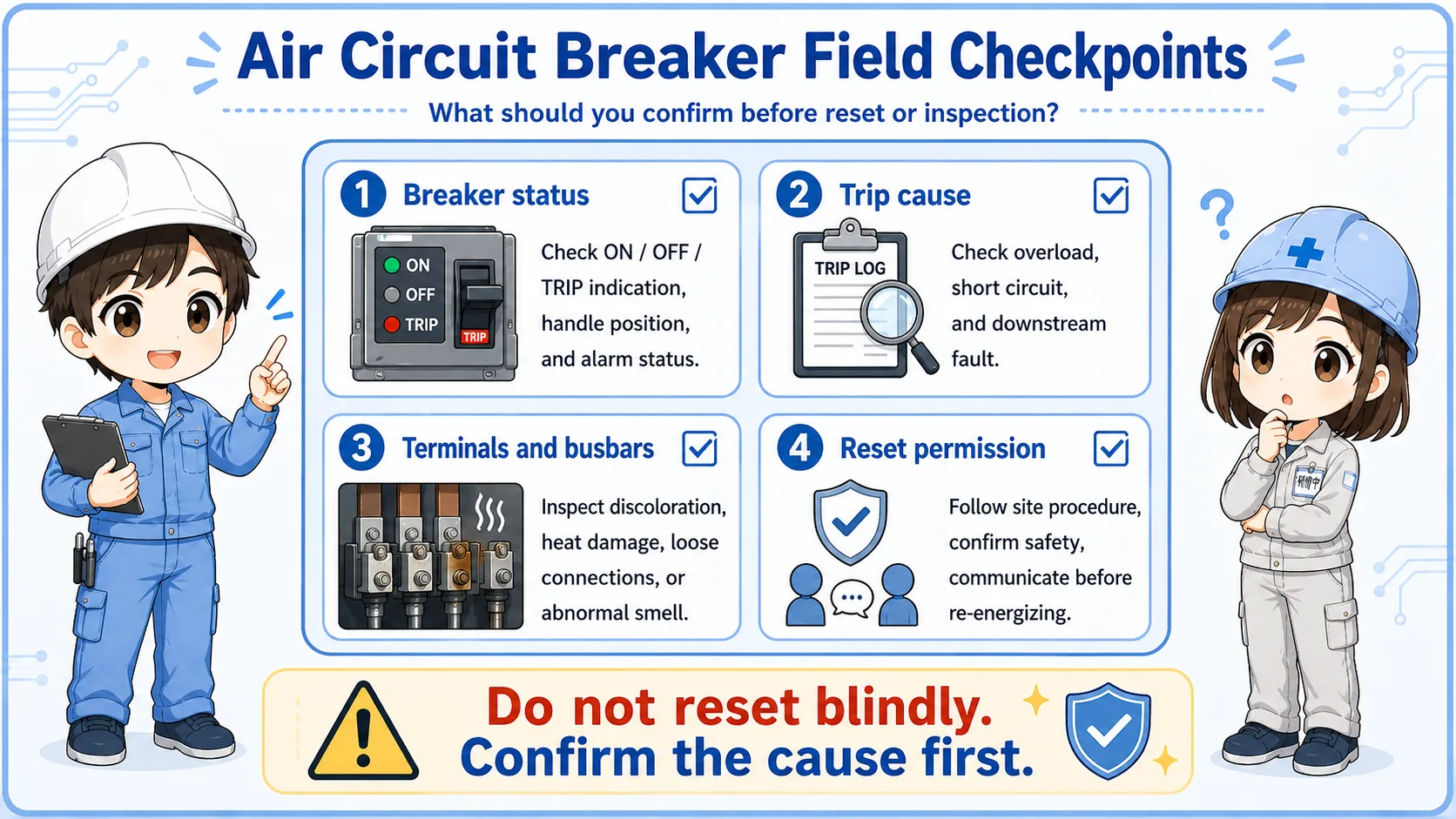
ACB operation, inspection, testing, and maintenance depend on the model. Always use the manufacturer manual and the site electrical safety rules.
These articles help connect breaker protection with other control panel basics.