The basic difference
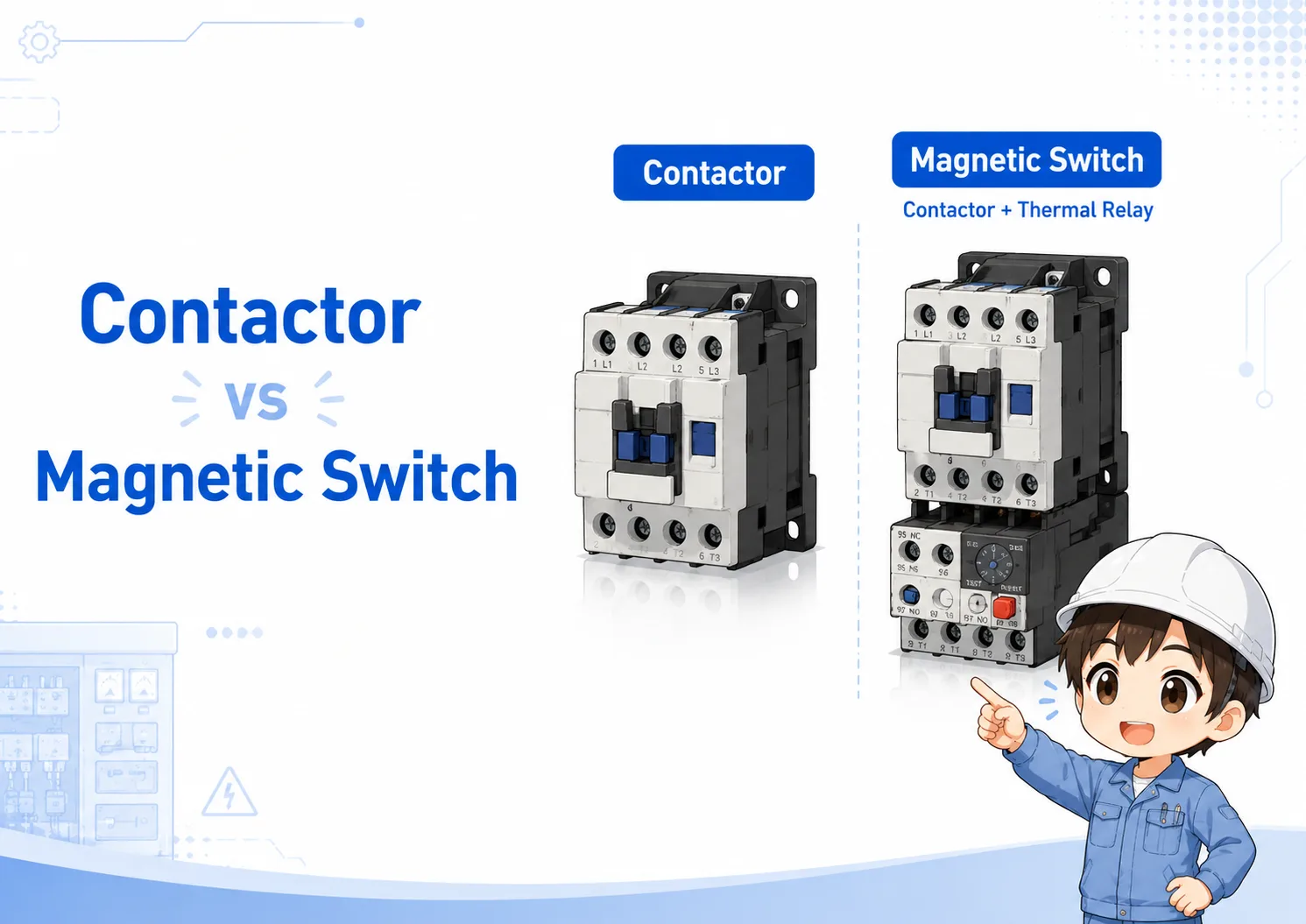
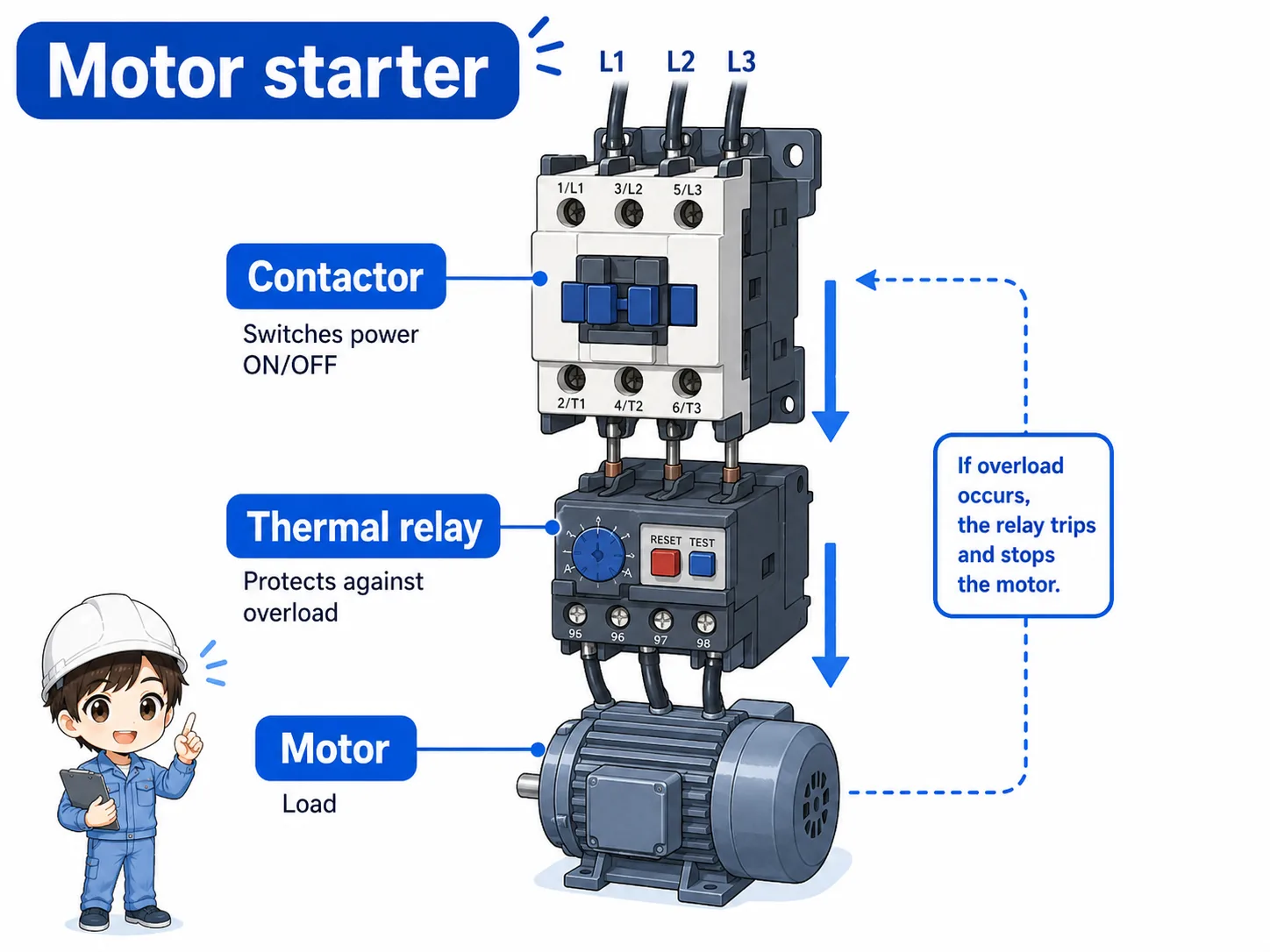
A contactor switches the circuit. A magnetic switch is often used to mean a motor starter that includes overload protection.
An electromagnetic contactor is a device that uses an electromagnet to open and close contacts. It can turn a motor or other load on and off from a control signal.
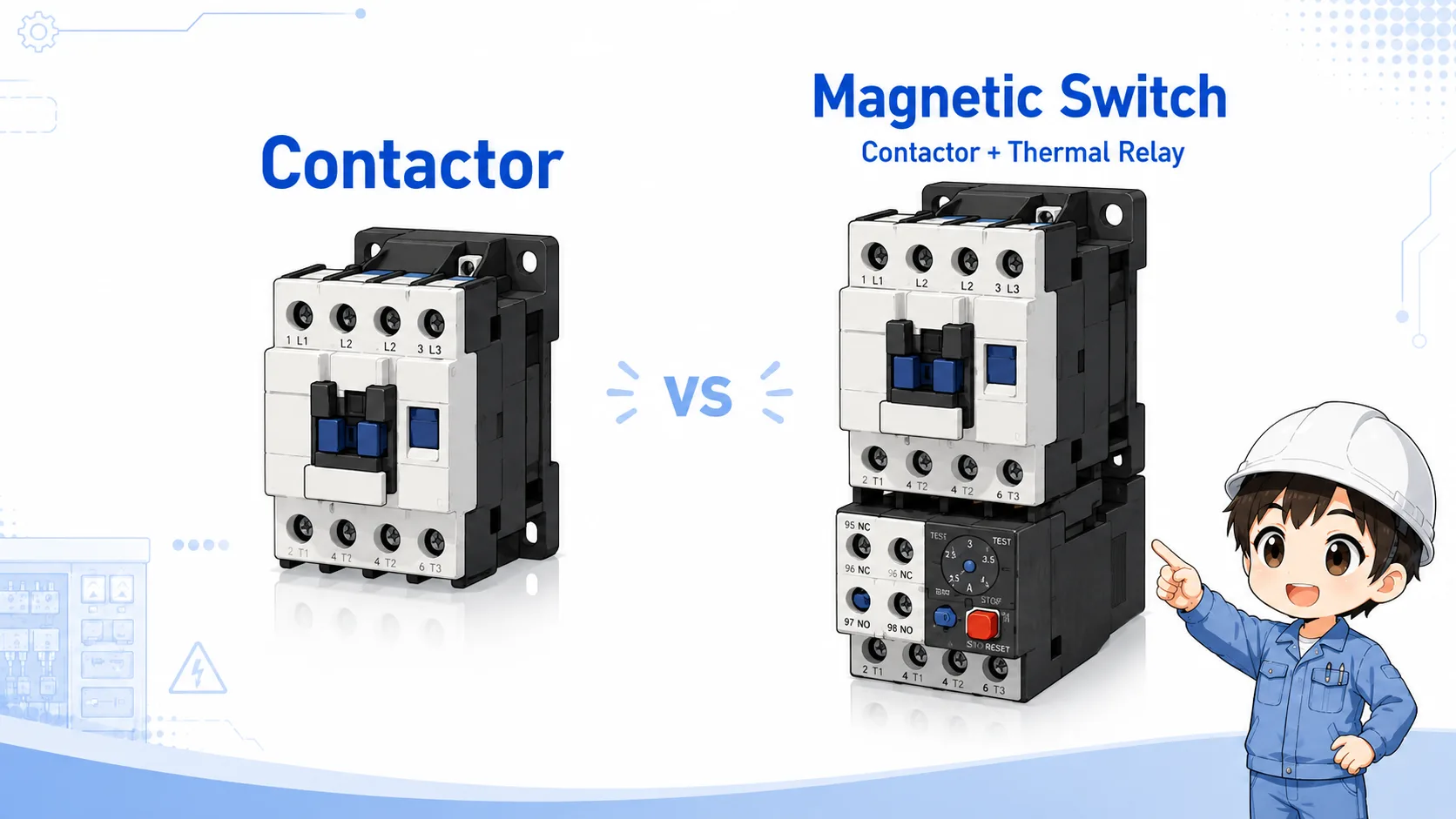
A magnetic switch, in many field contexts, refers to a contactor combined with a thermal relay or overload relay for motor control. In other words, it is often understood as a motor starter assembly rather than only the contactor block.
Simple way to remember
Think of the contactor as the part that switches power, and the magnetic switch as the motor starter combination that may include overload protection.
What an electromagnetic contactor does
A contactor is mainly a remote switching device for larger loads.
When voltage is applied to the coil, the magnetic force pulls the mechanism and closes the main contacts. When the coil is de-energized, the contacts open. This makes it possible for a small control signal to switch a larger power circuit.
Contactors are commonly used for motors, heaters, pumps, fans, and other loads that need reliable repeated switching. However, the contactor itself is not the same as overload protection.
1. Control signal
A push button, PLC output, relay, or timer energizes the coil.
2. Coil magnetizes
The electromagnet pulls the moving contact mechanism.
3. Contacts close
The main circuit is connected and the load receives power.
4. Load runs
The motor or load operates while the contactor stays energized.
Check the coil rating
Coil voltage and terminal names vary by device. Always check the nameplate and official manual before wiring or replacing a contactor.
What a magnetic switch means in motor control
In many motor circuits, magnetic switch means contactor plus overload relay.
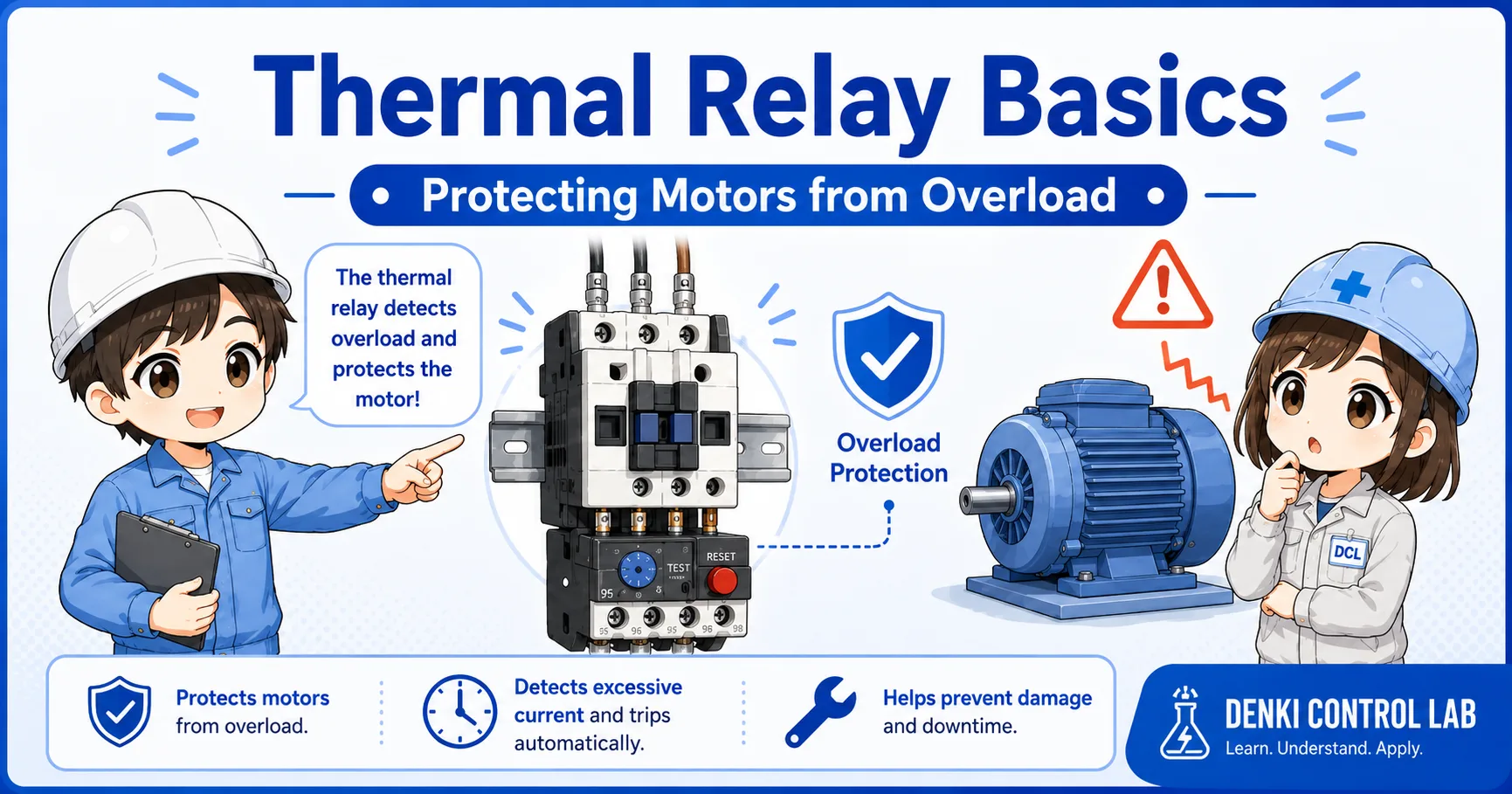
For motor control, switching alone is not enough. The motor also needs protection from overload. That is why a contactor is often combined with a thermal relay. This combination is commonly called a magnetic switch or magnetic motor starter in field conversations.

SeniorIf someone says “magnetic switch” near a motor circuit, check whether they mean the whole starter, not only the contactor block.

JuniorSo I should look for the thermal relay too, especially when the conversation is about motor protection or overload trips.
How the terms are used in the field
The exact wording can vary by country, manufacturer, site, and person.
Some people use “magnetic contactor” and “electromagnetic contactor” almost the same way. Others use “magnetic switch” to mean a contactor with a thermal relay. The safest approach is to confirm the actual device configuration in the panel.
| Term | Common practical meaning | What to confirm |
|---|---|---|
| Electromagnetic contactor | The switching component operated by an electromagnetic coil. | Coil voltage, main contacts, auxiliary contacts, and load rating. |
| Magnetic switch | Often a motor starter combination with a contactor and overload relay. | Whether a thermal relay or overload relay is included. |
| Motor starter | A broader term for equipment used to start and protect a motor. | Starter type, protection method, and manufacturer documentation. |
Field checks when reading or replacing parts
Before replacing a part, confirm whether you need a contactor alone or the starter combination.
If you replace only the contactor when the actual problem is around the thermal relay or overload trip circuit, the issue may remain. On the other hand, replacing the whole assembly when only the coil is faulty may be unnecessary. Separate the switching part, protection part, control wiring, and load condition.
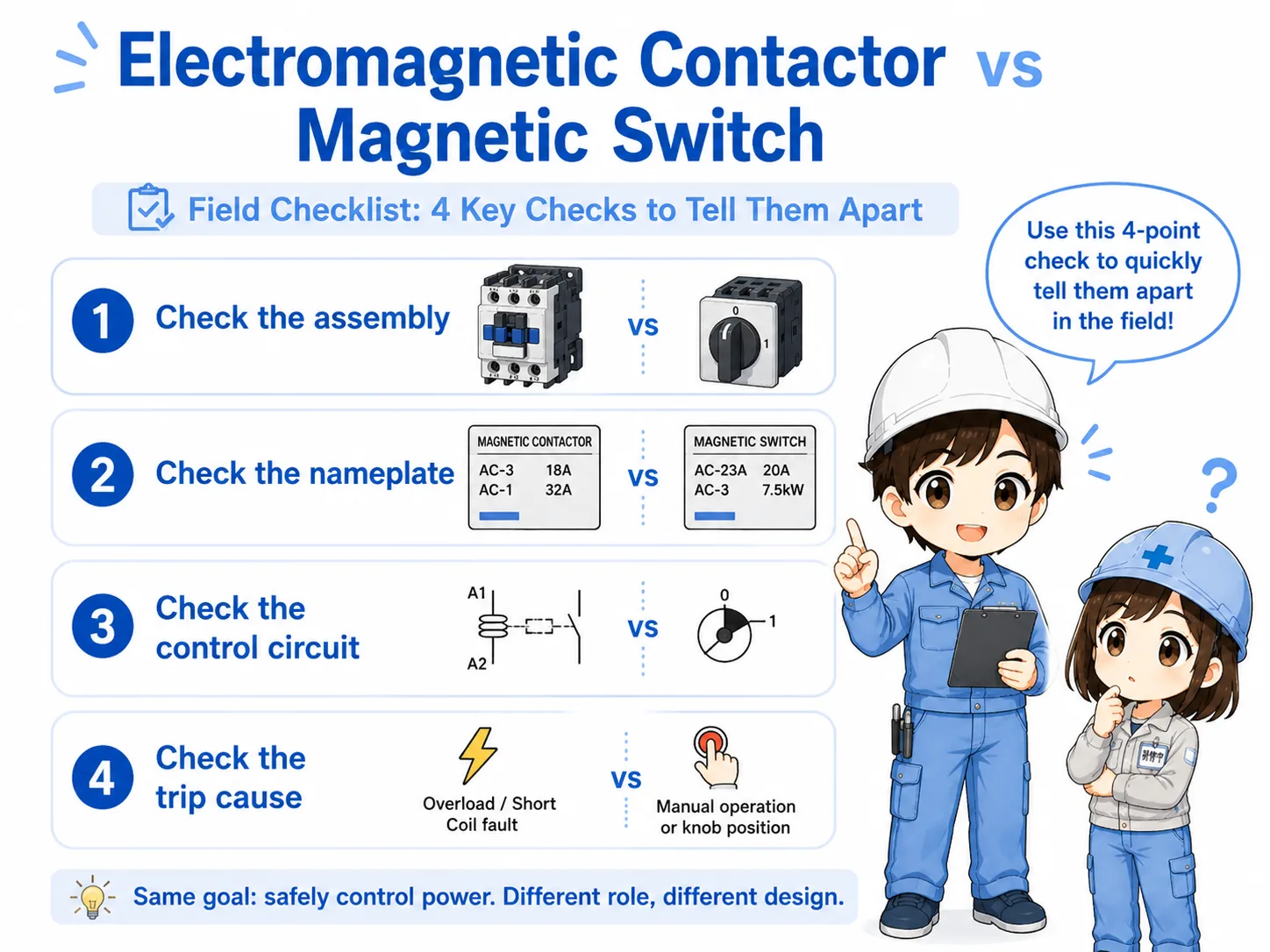
Check the actual assembly
Is there only a contactor, or is a thermal relay mounted under it?
Check the nameplate
Confirm model, rating, coil voltage, current range, and manufacturer data.
Check the control circuit
Look for auxiliary contacts and thermal relay contacts in the coil circuit.
Check the reason for trip
If overload protection operated, find the cause before resetting or replacing parts.
Do not decide from the nickname alone
Field terms can be convenient, but replacement and troubleshooting should be based on the actual device, wiring diagram, and official manual.
Related articles
These articles connect naturally with contactors, motor protection, and control panel basics.