What is a no-fuse breaker?
A no-fuse breaker is a protective device that opens the circuit when abnormal current flows.
A no-fuse breaker is often abbreviated as NFB. Depending on the country, manufacturer, or product category, similar overcurrent protective devices may also be described as molded case circuit breakers or MCCBs. Do not rely on the name alone; always check the actual device marking, wiring diagram, and manufacturer manual.
The important idea is simple: when too much current flows, the breaker trips and stops the circuit. This helps prevent wire overheating, insulation damage, equipment damage, and fire risk.
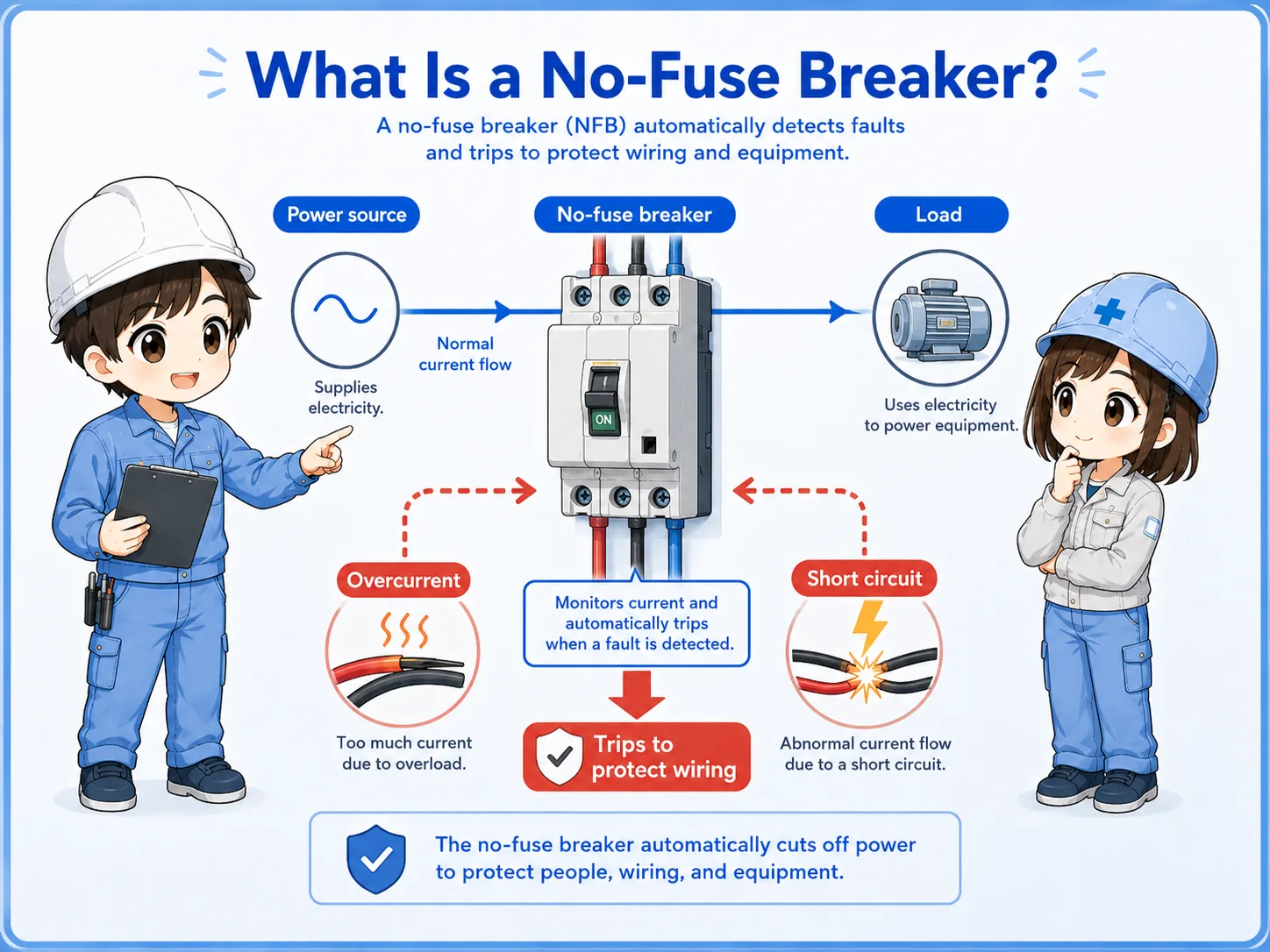

Think of the no-fuse breaker as a guard for the wiring. It does not wait for a fuse to melt; it trips mechanically when the current becomes abnormal.

So it is mainly watching for too much current, not just whether the equipment is running normally.
How a no-fuse breaker trips
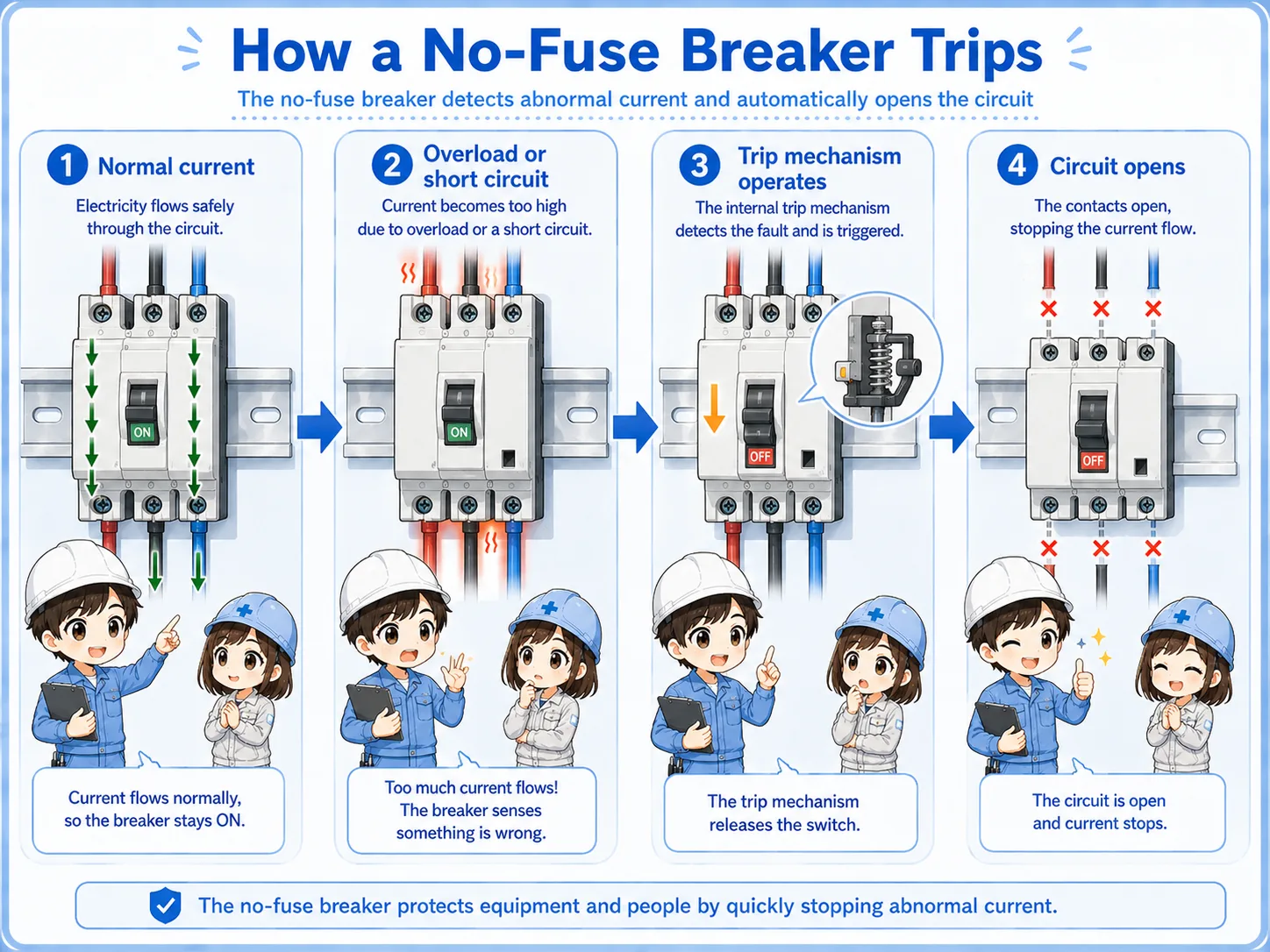
The breaker trips when the current exceeds what the circuit can safely handle.
There are two typical abnormal current situations to understand: overload and short circuit.
1. Load increases
A motor, heater, or downstream circuit draws more current than expected.
2. Current rises
The current exceeds the safe range for the circuit and wiring.
3. Breaker detects it
The trip mechanism responds to the abnormal current condition.
4. Circuit opens
The breaker turns off and disconnects the downstream circuit.
| Condition | What happens | Typical field image |
|---|---|---|
| Overload | Current is higher than normal for a period of time. | A motor is overloaded, equipment is jammed, or too many loads are connected. |
| Short circuit | A very large current flows suddenly because conductors contact incorrectly. | Damaged insulation, wiring mistake, component failure, or contact between phases. |
| Normal load | Current stays within the intended range. | The breaker remains on and the circuit operates normally. |
Do not reset repeatedly without checking
If a breaker trips again immediately, there may be a short circuit, equipment fault, wiring error, or serious overload. Repeatedly turning it back on can make the damage worse.
No-fuse breaker vs earth leakage breaker
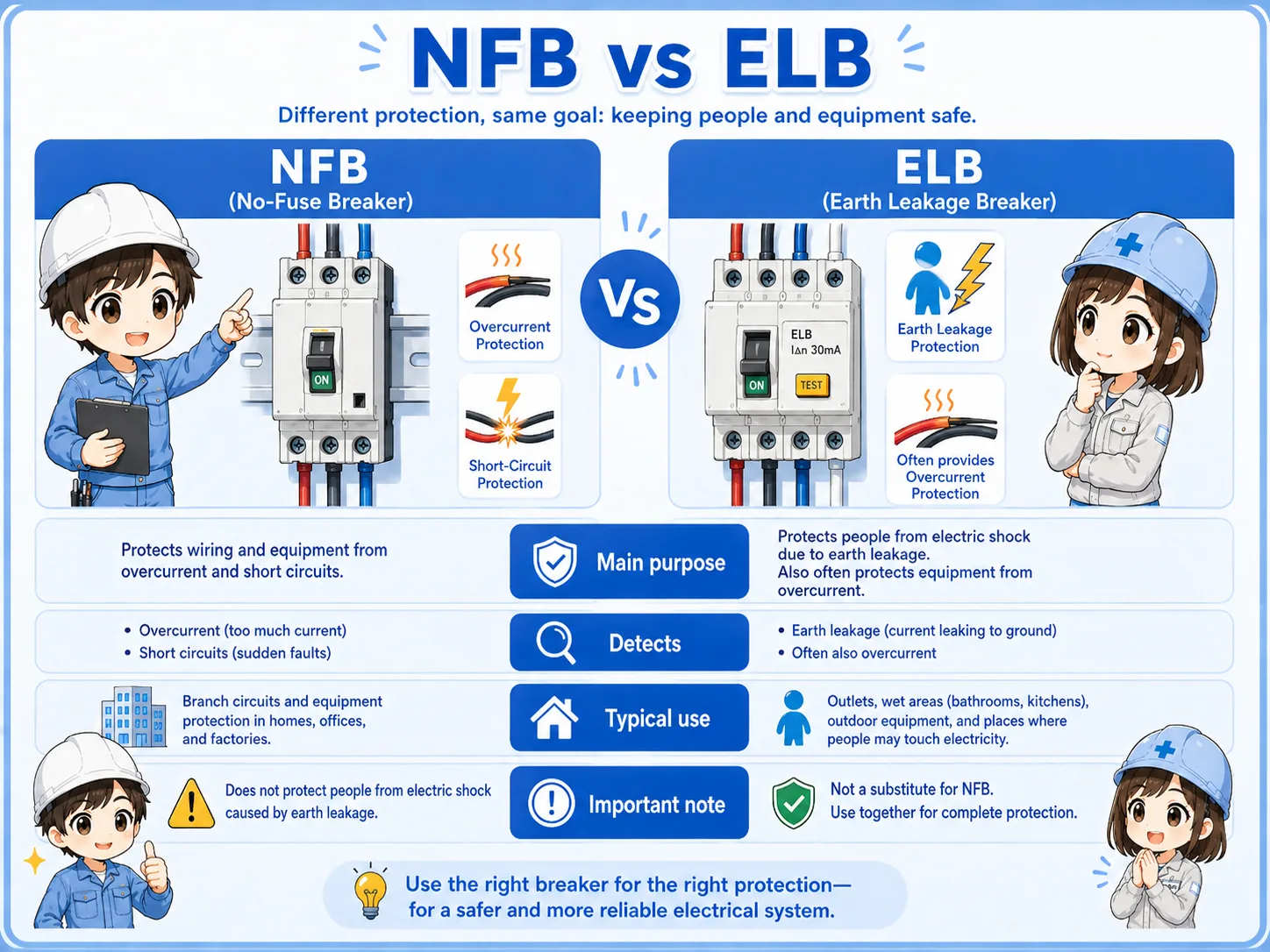
The easiest way to separate them is to ask: is the device protecting against overcurrent, leakage current, or both?
An NFB mainly protects against overcurrent and short circuits. An earth leakage breaker focuses on detecting leakage current to ground, which is related to electric shock and insulation problems.
| Item | No-fuse breaker | Earth leakage breaker |
|---|---|---|
| Primary purpose | Protect wiring and circuits from overcurrent and short circuits. | Detect leakage current and reduce electric shock or leakage fire risk. |
| Main abnormal condition | Too much current flowing through the circuit. | Current leaking to ground or to unintended paths. |
| Typical field clue | Overload, short circuit, or downstream equipment fault. | Insulation deterioration, moisture, damaged cable, or leakage path. |
| Simple memory aid | “Too much current.” | “Current leaking away.” |
Important distinction
A no-fuse breaker tripping does not automatically mean a leakage current problem. First separate overcurrent, short circuit, and leakage current in your thinking.
Field checks before resetting a tripped breaker
A breaker trip is a result. The real work is finding why it tripped.
Before turning the breaker back on, slow down and check the surrounding conditions. The correct action depends on whether the trip happened during startup, during operation, after maintenance, or immediately after wiring work.
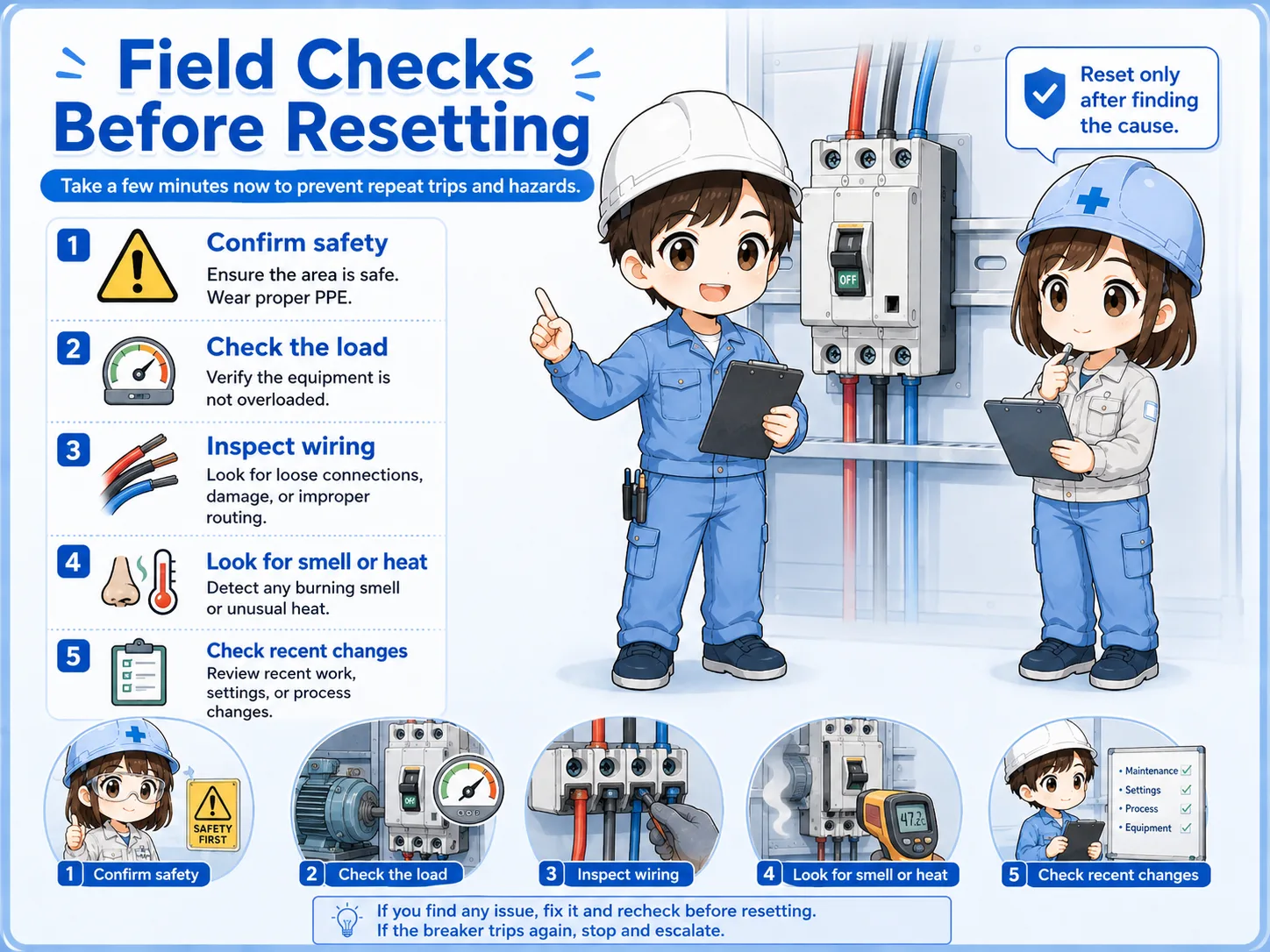
When did it trip?
At startup, during normal operation, after maintenance, or immediately after power was restored?
What changed?
Check recent wiring work, replaced parts, added loads, or changes in operating conditions.
Any signs of damage?
Look for smell, heat, discoloration, loose terminals, damaged cable, or abnormal equipment noise.
Does it trip again?
If it trips immediately again, stop resetting and investigate the downstream circuit carefully.
Rating selection is a design task
The breaker rating must match the wiring, load, short-circuit capacity, standards, and panel design. A larger rating is not a simple fix for nuisance trips, because changing the rating can affect wire protection, coordination, and safety. This article explains the basic concept, not final selection for real equipment.
Summary
A no-fuse breaker is one of the most basic protective devices in electrical panels. Its main role is to stop abnormal current before wiring and equipment are damaged.
- An NFB mainly protects against overcurrent and short circuits.
- An earth leakage breaker detects leakage current, so its protection target is different.
- A breaker trip should be treated as a clue, not just an inconvenience.
- Do not repeatedly reset a breaker without checking the cause.
Related articles
These English articles already exist and are safe to link from this page.