Good for you if
- You see SSRs in heater, lamp, or frequent-switching circuits.
- You want to compare SSRs with mechanical relays.
- You need a beginner-friendly checklist before replacement.
A beginner-friendly guide to SSRs, mechanical relay differences, heat dissipation, leakage current, and practical field checks before replacement.
SSR means solid state relay. It is a relay-like device that switches a load using electronic components instead of moving mechanical contacts.
An SSR has an input side and an output side. When the input side receives the correct control signal, the output side turns the load circuit on or off. In many control panels, the input is driven by a PLC output or control circuit, while the output side switches a heater, lamp, solenoid, or another load.
The important beginner point is this: an SSR can be used like a relay in many control circuits, but it is not the same as a relay with physical contacts. Because it switches electronically, it has different advantages and different cautions.
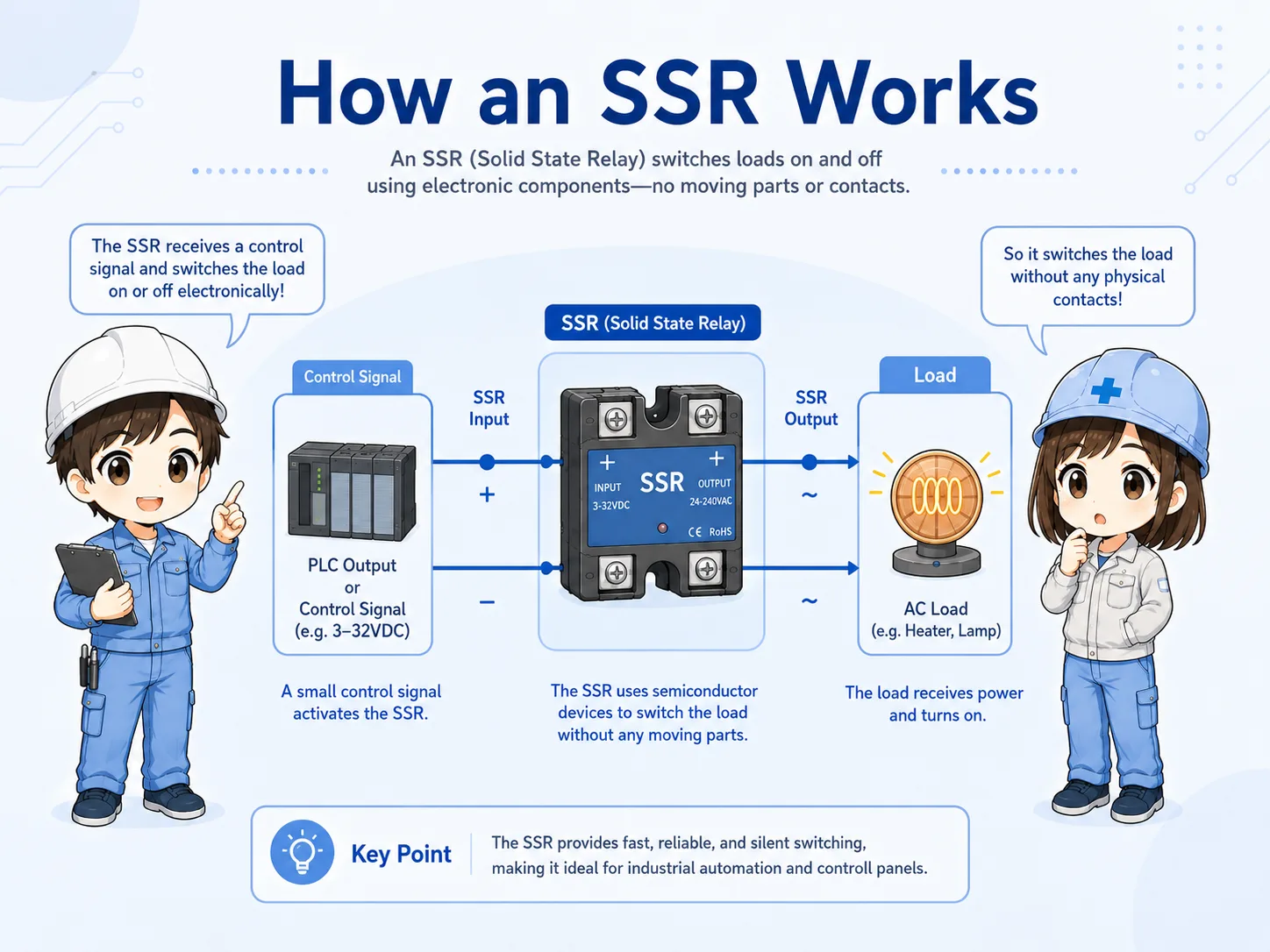
It can replace a mechanical relay in some applications, but only after checking load type, voltage, current, heat, and leakage current.
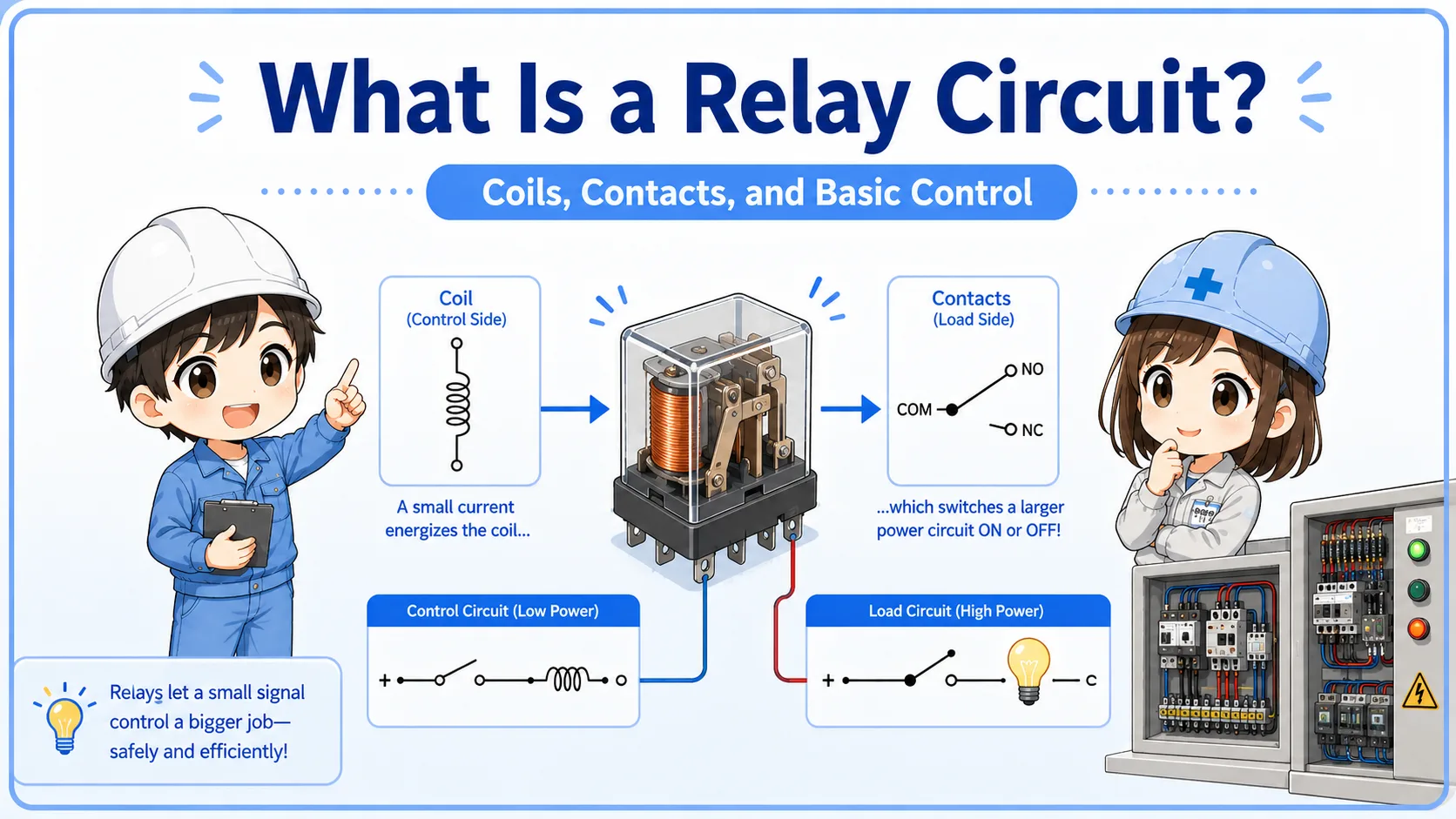
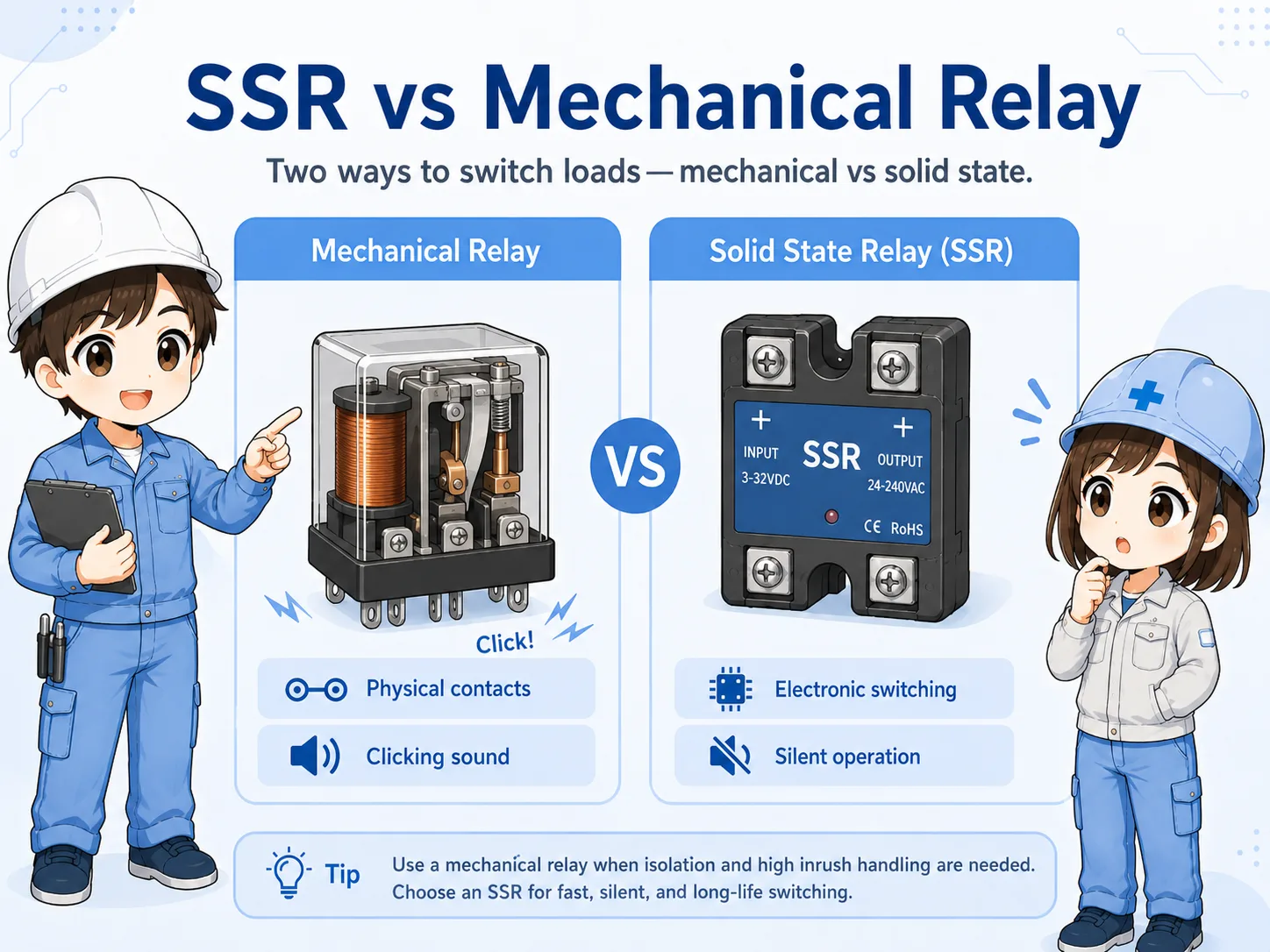
A mechanical relay uses a coil and moving contacts. When the coil energizes, the contacts physically move. An SSR uses semiconductor devices, so there is no contact movement and usually no clicking sound.
This makes SSRs useful when switching is frequent or when contact wear is a concern. However, SSRs also have their own cautions: output voltage drop, generated heat, leakage current when off, and load type compatibility.
| Point | Mechanical relay | SSR |
|---|---|---|
| Switching method | Moving contacts open and close. | Semiconductor output turns the circuit on and off. |
| Wear | Contacts can wear or arc over time. | No mechanical contact wear, but heat and ratings still matter. |
| Sound | Often makes a clicking sound. | Usually silent. |
| Caution | Check coil, contacts, and contact rating. | Check load type, leakage current, heat sink, and output rating. |
An SSR generates heat while current flows through its output side. This is not a defect by itself. The output semiconductor has a voltage drop, and that loss becomes heat.
For small loads, the heat may be modest. For higher current loads, heater circuits, or continuous operation, the SSR may need a heat sink, panel ventilation, and derating according to the manufacturer's data sheet.
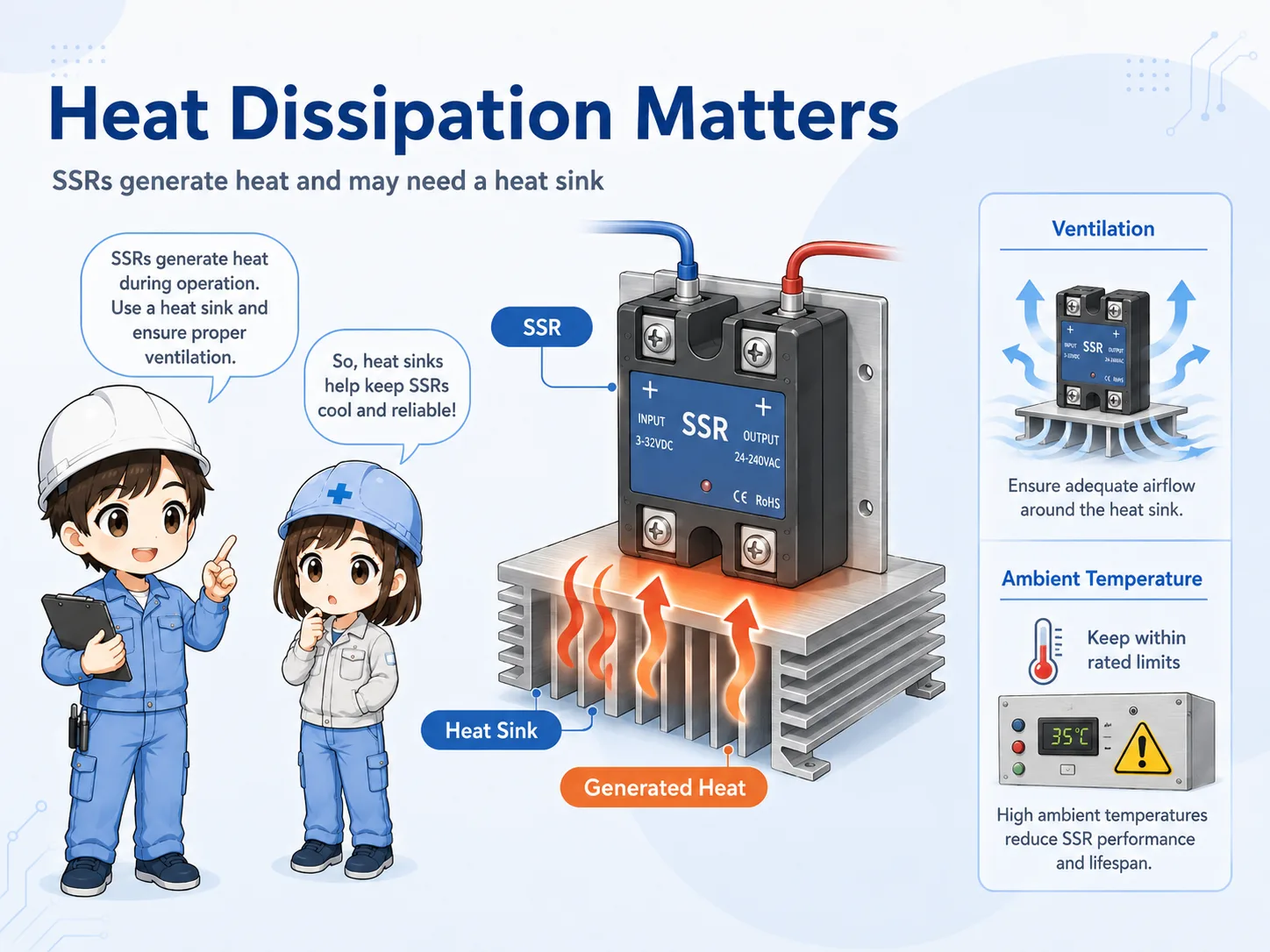
Mounting direction, surrounding temperature, heat sink size, panel ventilation, and load duty all affect whether the SSR can operate safely.
Many SSRs have a small off-state leakage current. That means a tiny current may still flow through the output side even when the SSR is off.
For large loads, this is often not noticeable. For small loads such as LED indicators, pilot lamps, or high-impedance input circuits, leakage current can cause flicker, faint lighting, or unexpected voltage readings.
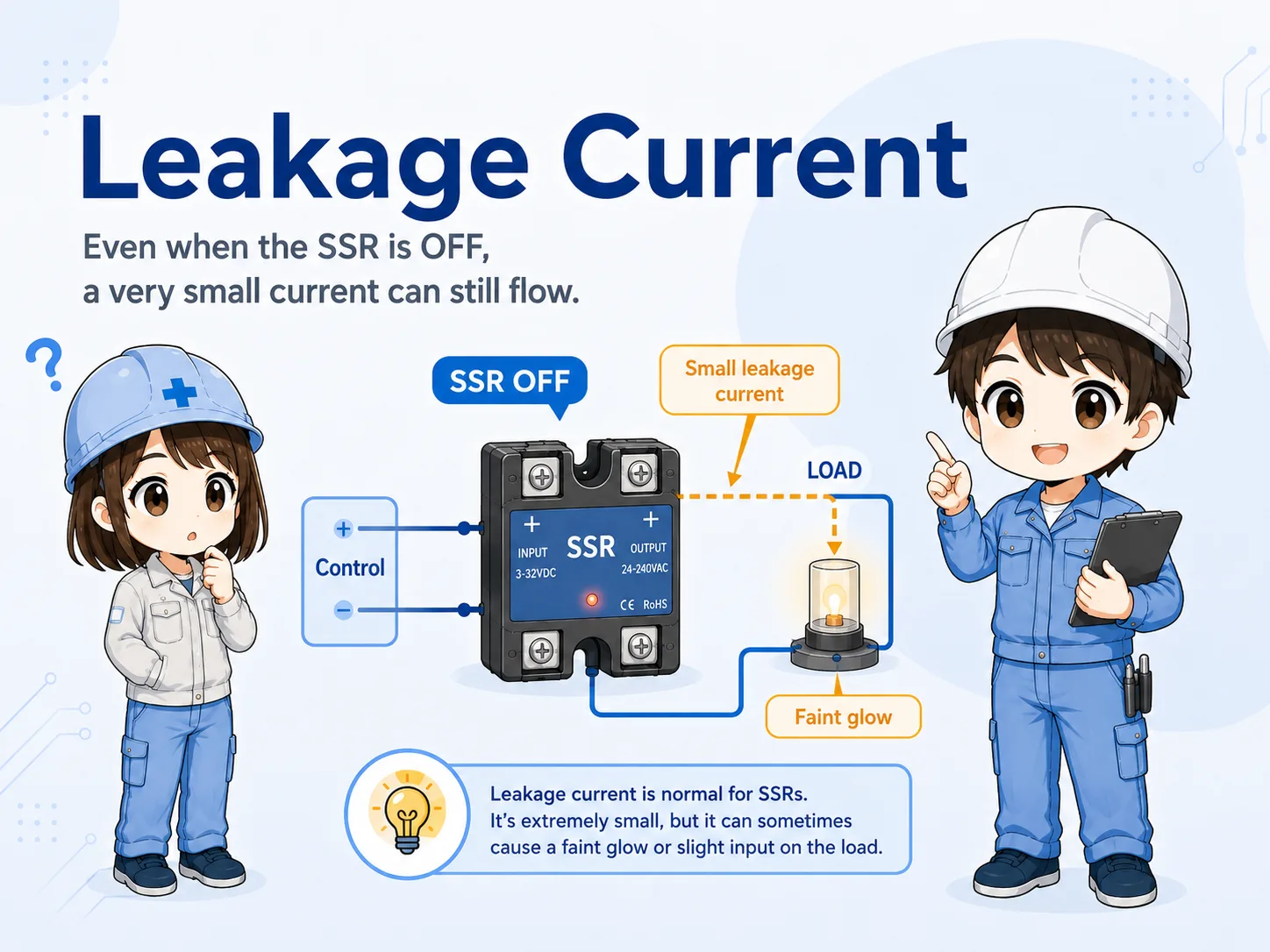
If a load does not fully turn off, do not assume the SSR is immediately broken. First check the SSR type, leakage current specification, load size, and the circuit design.
Before replacing an SSR, match more than just the physical shape. The input side, output side, load type, current rating, and heat dissipation conditions all need to match the actual circuit.
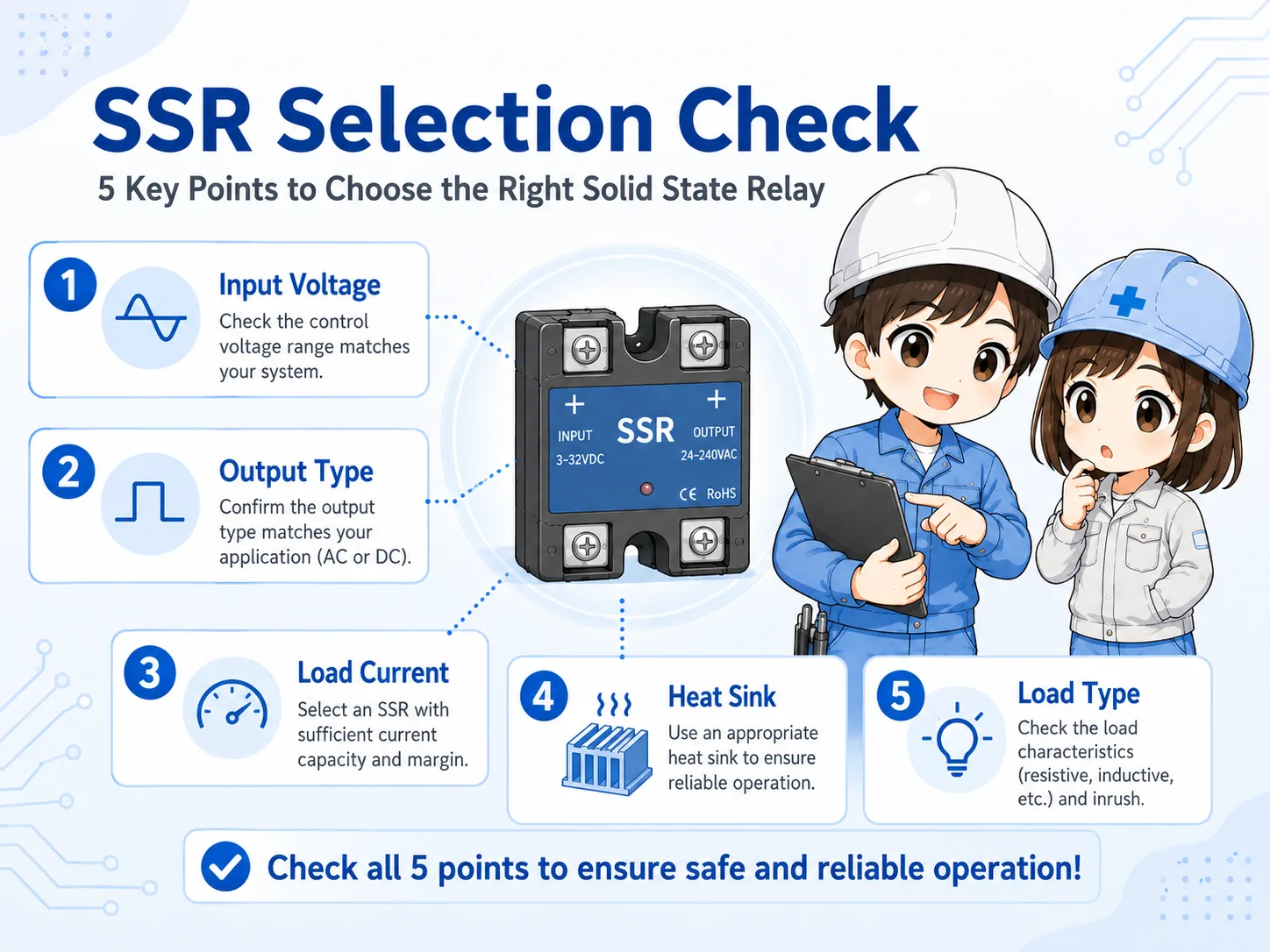
Confirm the control input voltage and polarity if the input is DC.
Check whether the output is for AC load, DC load, or a specific load type.
Compare load current, inrush current, and SSR derating conditions.
Confirm heat sink size, mounting method, and panel temperature.
When an SSR output does not behave as expected, separate the check into input side, output side, load side, and mounting conditions. This helps avoid replacing parts before the real cause is found.

First check whether the SSR input is actually receiving the correct signal. If the input is not right, the output cannot be judged correctly.

So I should not start by replacing the SSR. I should check the input signal, output wiring, load, and heat condition in order.
Measure whether the control signal reaches the SSR input terminals.
Confirm that the load is wired to the correct output terminals.
Check for open load, shorted load, inrush current, or incompatible load type.
SSR outputs can fail open or shorted. Always isolate power before inspection.
An SSR is a solid state relay that switches a load electronically without mechanical contacts. It is useful for silent operation, frequent switching, and applications where contact wear is a concern.
At the same time, SSRs require checks that beginners often miss: heat dissipation, leakage current, load type, input/output rating, and proper mounting. A safe replacement means matching the actual circuit, not only matching the appearance.
SSR means no moving contact, but not no caution. Always check heat, leakage current, AC/DC load compatibility, current rating, and wiring before using or replacing one.