What is a noise filter?
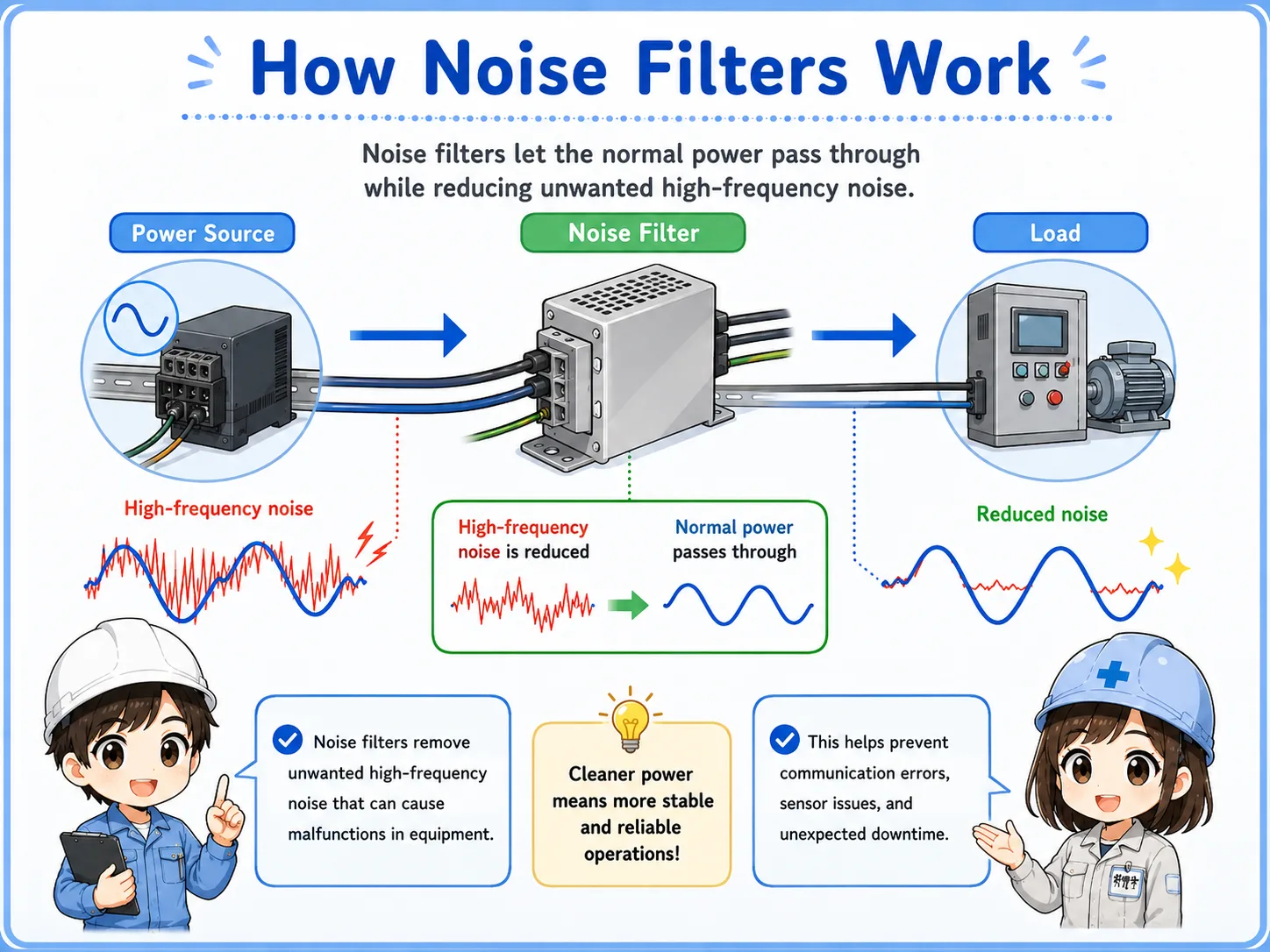
A noise filter is an electrical component used to reduce unwanted noise on a power or control line.
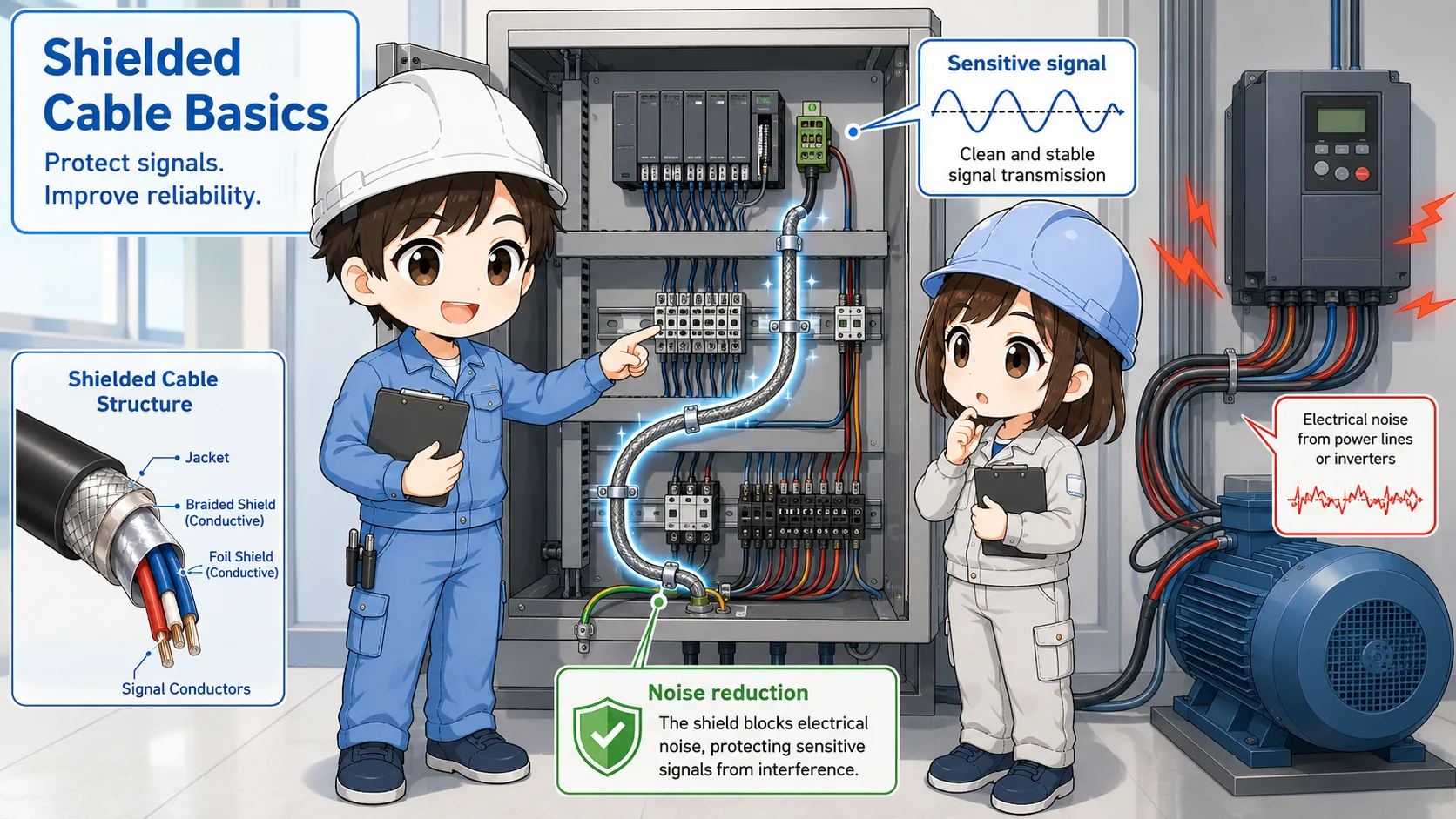
In a control panel, devices such as inverters, servo amplifiers, switching power supplies, solenoids, and contactors can generate electrical noise. That noise can travel through wiring, grounding paths, and nearby cables.
A noise filter is installed to reduce the amount of unwanted noise that passes through a line. Depending on the context, it may also be called an electrical noise filter, power-line noise filter, or EMI filter. It is commonly used on power input lines or near equipment that can generate or receive noise, but the exact type, rating, and wiring method must follow the manufacturer manual and wiring diagram.
A noise filter is one part of the countermeasure
It does not solve every noise problem by itself. Wiring route, grounding, cable shielding, panel layout, and equipment manuals must be checked together.
Where electrical noise can travel
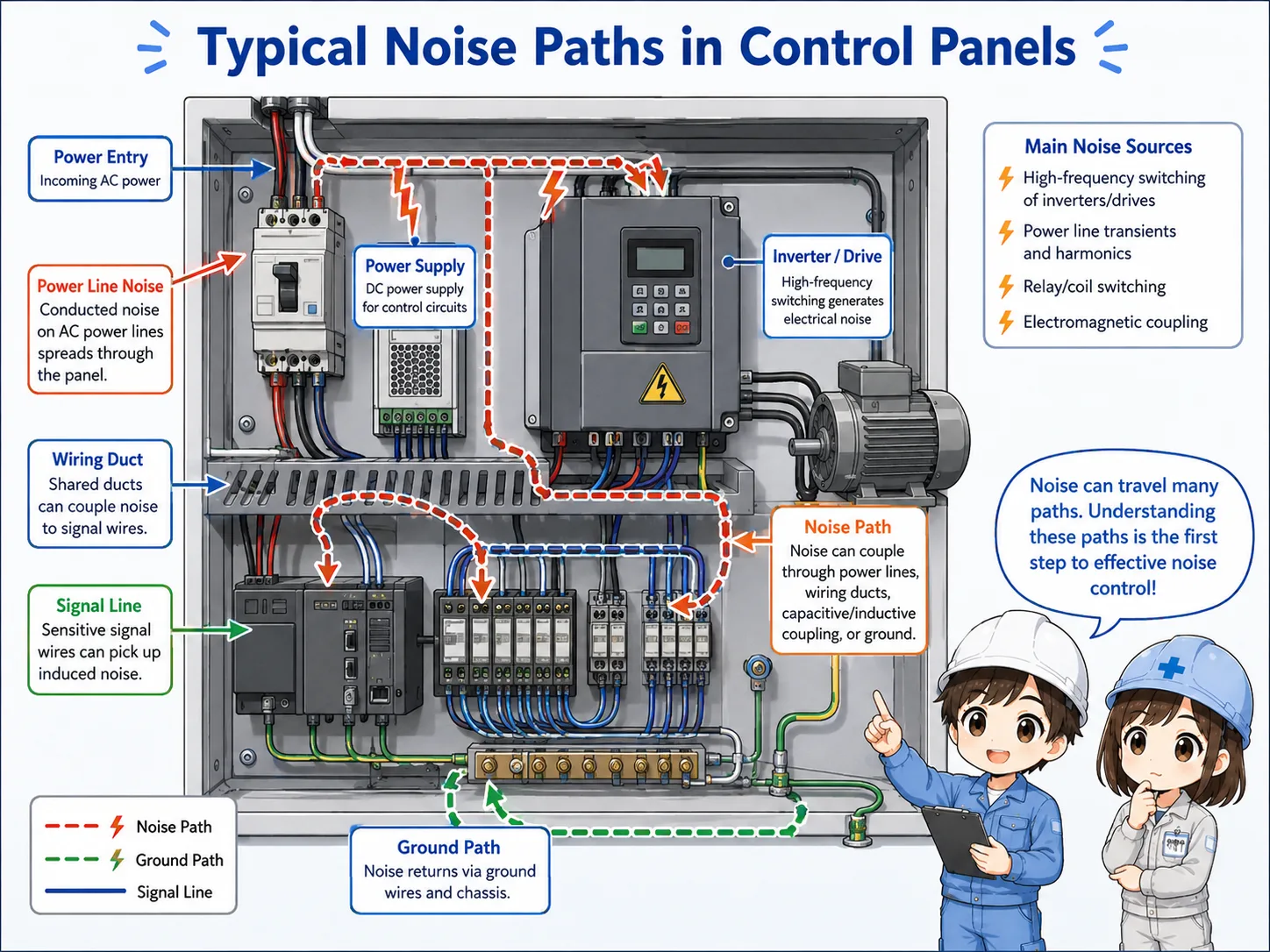
Noise can travel through power wiring, grounding paths, and nearby signal cables.
Noise trouble is not always visible from the outside. A machine may show symptoms such as analog value fluctuation, communication errors, sensor input flicker, or intermittent faults only when a motor, inverter, servo, or large load operates.
In the field, it is helpful to think about how noise is generated, how it travels, and where it affects a signal. A noise filter usually targets the path where noise moves through a power line.
Where noise filters are used
Noise filters are often used near power supplies, inverters, servo amplifiers, and noisy loads.
| Area | Why a filter may be used | Field note |
|---|---|---|
| Power input line | To reduce noise entering or leaving the panel through the power line. | Check line side, load side, and grounding method. |
| Inverter or servo area | These devices can switch power at high speed and create noise. | Follow the manufacturer wiring manual carefully. |
| Control power area | To help stabilize power supplied to control devices. | Do not assume the filter is the only required countermeasure. |

When you see a noise filter, check what it is protecting and which direction the line and load sides face. The wiring around it matters a lot.

So I should not just check whether a filter is installed. I should also check how it is wired and grounded.
Wiring and grounding around a noise filter
A noise filter must be installed with the correct wiring path and grounding method.
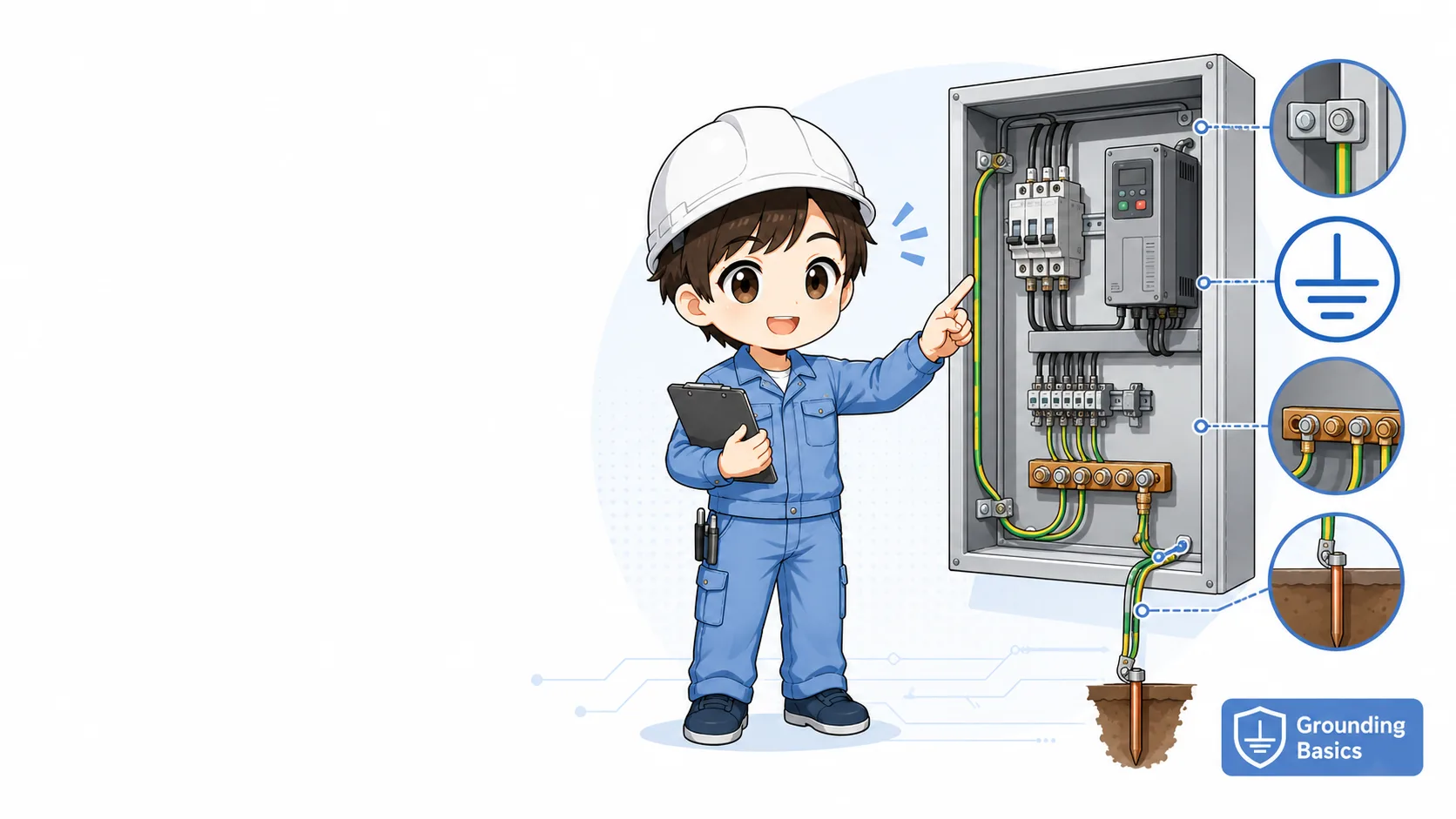
Many filters have a line side and a load side. If the input and output wiring are mixed together or routed too closely, noise may bypass the filter effect. Grounding is also important because many noise filters work together with the grounding path.
1. Identify source
Find the device or line that may be generating or carrying noise.
2. Check filter side
Confirm line side, load side, and wiring direction from the manual.
3. Check grounding
Confirm the ground connection, mounting plate, and terminal treatment.
4. Check routing
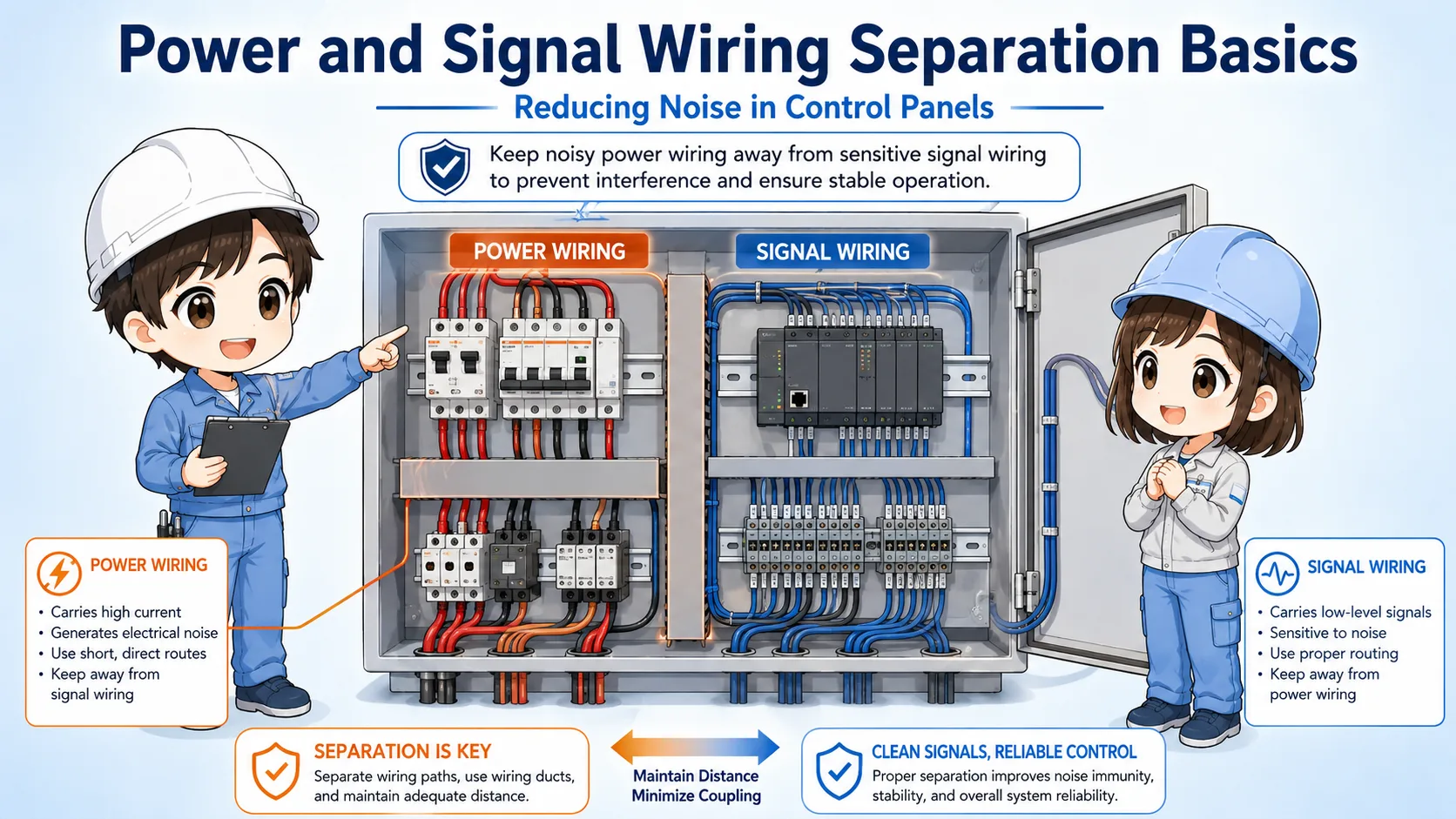
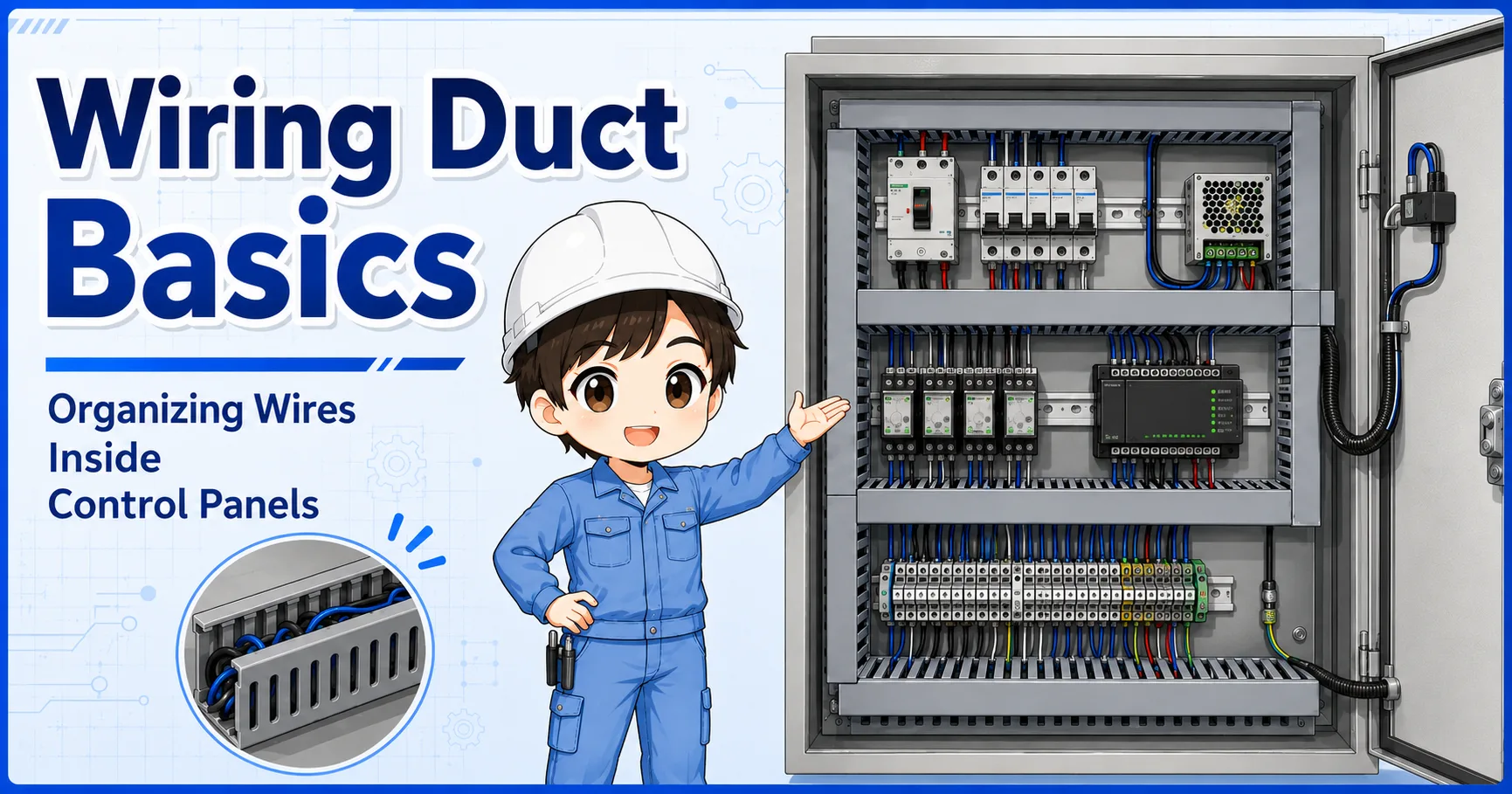
Keep filtered and unfiltered wiring from being bundled together.
Do not let noise bypass the filter
If input-side and output-side wiring are bundled together after the filter, the layout can reduce the filter's practical effect. Check the line side, load side, grounding terminal, mounting surface, and wiring distance according to the filter manual, equipment manual, and panel drawing before changing the wiring.
Field checks for noise filters
When checking a noise filter, look at the filter itself and also the surrounding wiring layout.
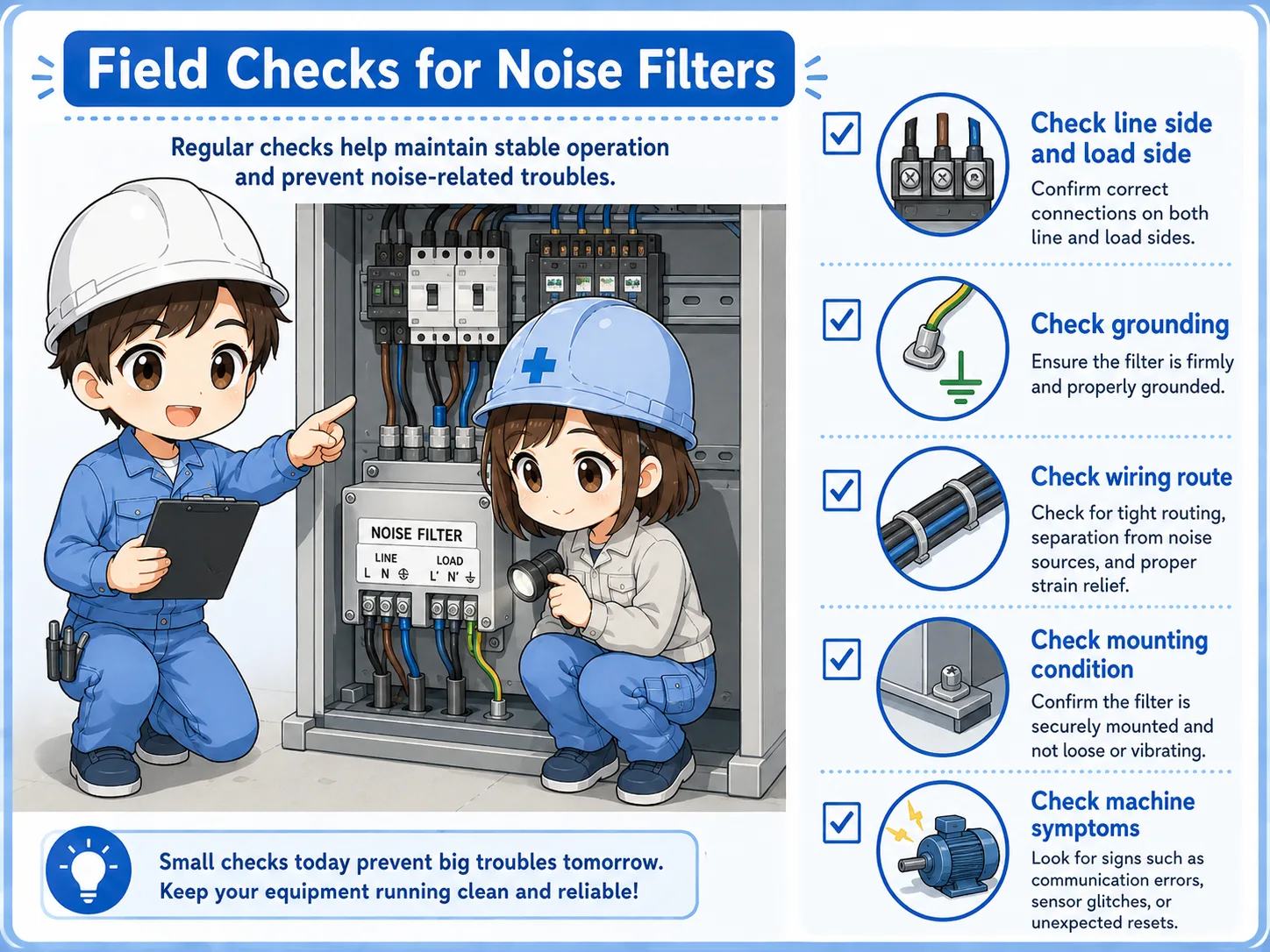
Check line and load sides
Confirm input and output sides according to the filter marking and equipment drawing.
Check grounding
Look at the ground terminal, mounting surface, and bonding condition around the filter.
Check wiring route
Do not bundle noisy wiring, filtered wiring, and sensitive signal wiring together casually.
Check symptoms
Relate the timing of faults to motor start, inverter operation, servo movement, or load switching.
Common mistakes
Noise filters are often misunderstood as a single part that solves all noise issues.
- Installing a filter but mixing the input-side and output-side wires together.
- Ignoring the grounding requirement shown in the manual or drawing.
- Routing sensitive analog or communication lines beside noisy power wiring.
- Adding a filter before checking wiring separation, shield treatment, and grounding.
- Replacing parts without confirming when the noise-like symptom occurs.
Follow electrical safety procedures
Noise filters are connected to power circuits. Do not inspect, replace, or rewire them unless you are qualified and following the site's isolation and verification procedure.
Summary: filtering works with layout and grounding
A noise filter helps reduce unwanted electrical noise on power or control lines. It is especially important around devices such as inverters, servos, switching power supplies, and other equipment that can generate switching noise.
The important point is not just whether a filter exists. Check the line/load side, grounding, wiring route, nearby signal cables, and actual symptoms together. This makes noise troubleshooting more practical and less guess-based.