Good for
- Beginners learning suction and pick-and-place equipment.
- People who have seen a vacuum pad but are not sure where suction comes from.
- Technicians checking why a workpiece is not being picked up reliably.
A vacuum ejector is a compact device that uses compressed air to create suction. In automation equipment, it is often used with a vacuum pad to pick up a workpiece.
A vacuum ejector is the part that creates suction for vacuum handling.
In a simple pick-and-place system, the vacuum pad does not create vacuum by itself. The pad only touches the workpiece and seals against it. The vacuum ejector creates the negative pressure that makes the pad hold the workpiece.
In many factory machines, the ejector is used because it is compact, easy to mount near the pad, and can be controlled with a solenoid valve. When compressed air is supplied, the ejector creates suction. When the supply is turned off or release air is used, the workpiece can be released.
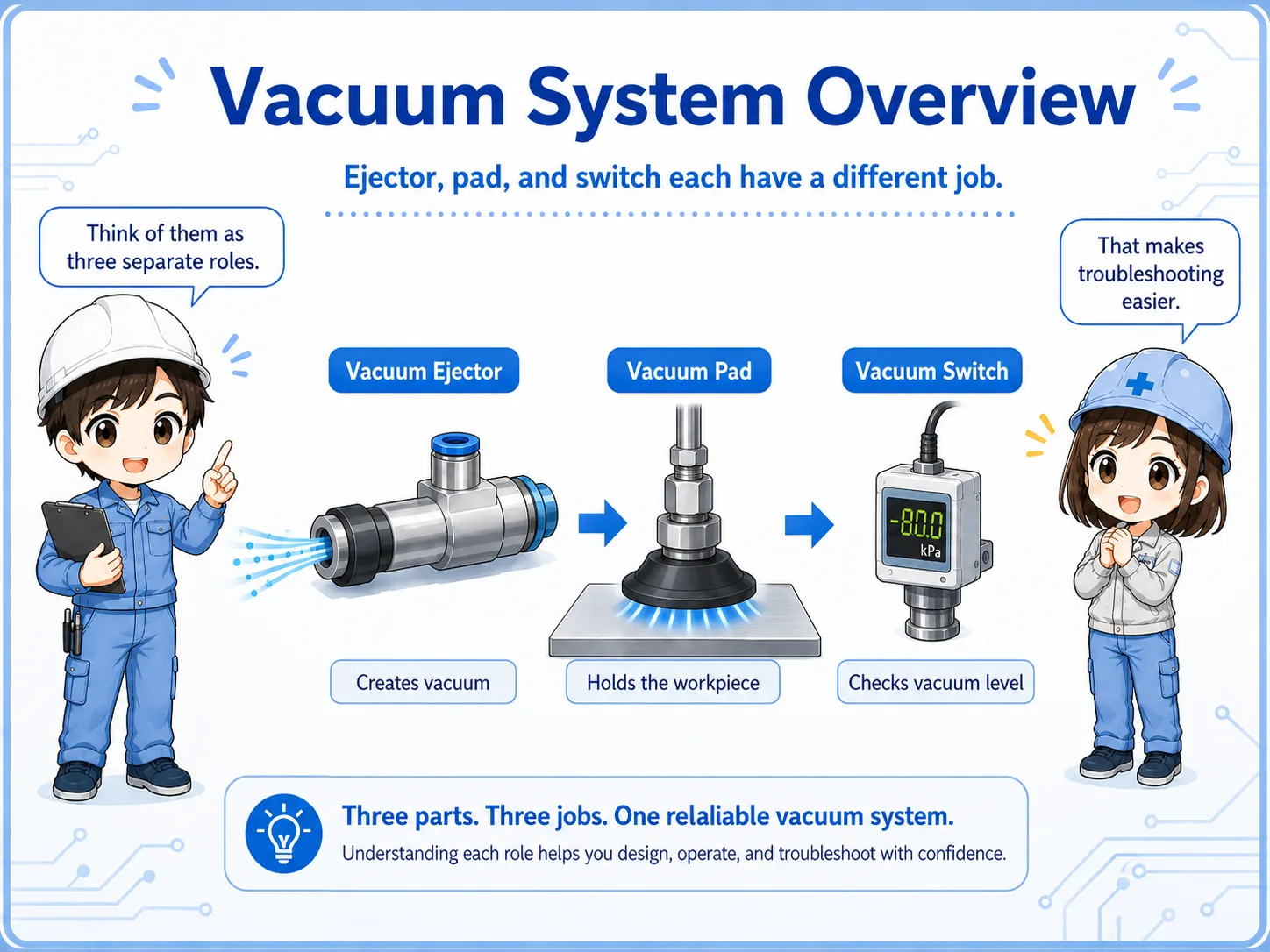
The ejector creates vacuum. The pad contacts the workpiece. The vacuum switch checks the vacuum level. Thinking of these as separate roles makes troubleshooting much easier.
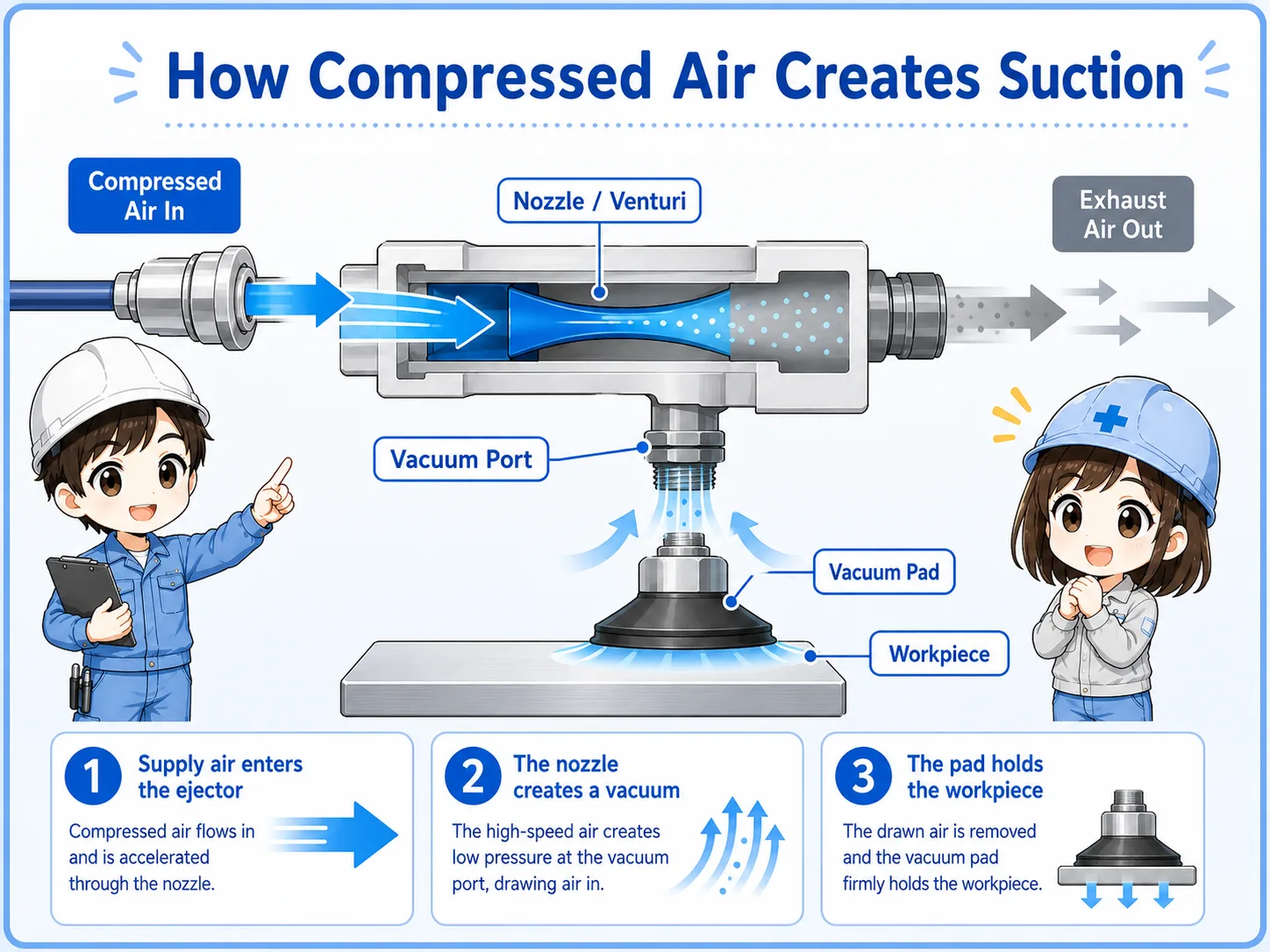
The basic mechanism is simple: compressed air flows through the ejector, and vacuum is created at the suction port.
A common explanation is that an ejector uses the Venturi principle. Compressed air passes through a nozzle inside the ejector, the air speed changes, and a low-pressure area is created. This low-pressure area draws air from the vacuum side.
Compressed air is supplied from the pneumatic line to the ejector.
The internal nozzle creates suction at the vacuum port.
Air from the vacuum side and supply air are discharged through the exhaust side.
If the supply air pressure is too low, the ejector may not reach the expected vacuum level. If there is a leak at the pad or tube, vacuum may drop even when the ejector itself is operating.
A short conversation can make the troubleshooting order easier to remember.
When suction is weak, do not start by replacing the ejector. First, check whether compressed air is actually reaching the ejector at the correct pressure.

So the pad not picking up the part does not always mean the ejector is broken?

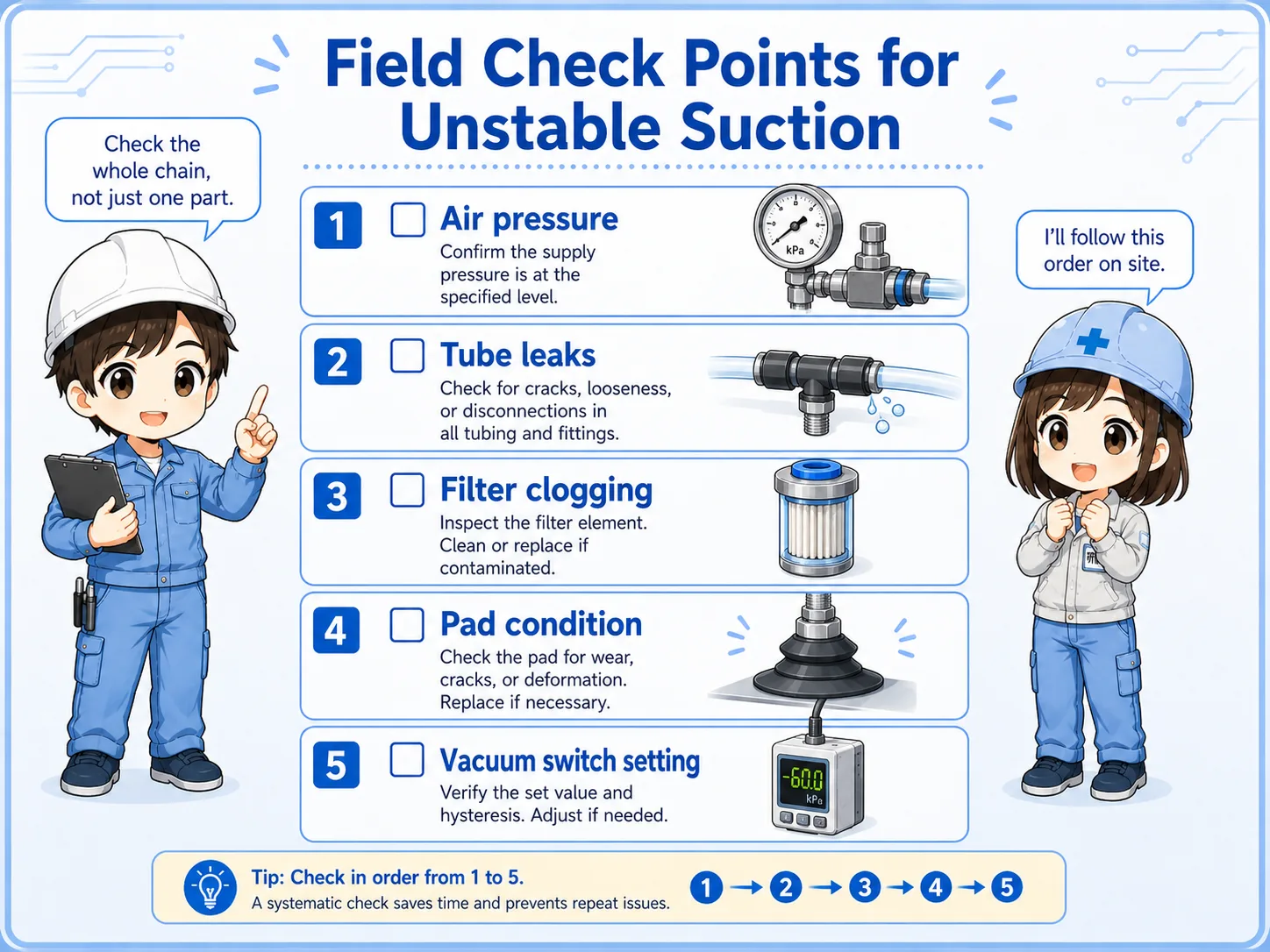
Exactly. Check air pressure, tube connection, filter clogging, pad wear, workpiece leakage, and the vacuum switch setting as one chain.
The ejector creates suction, but the control system still needs a way to know whether suction succeeded.
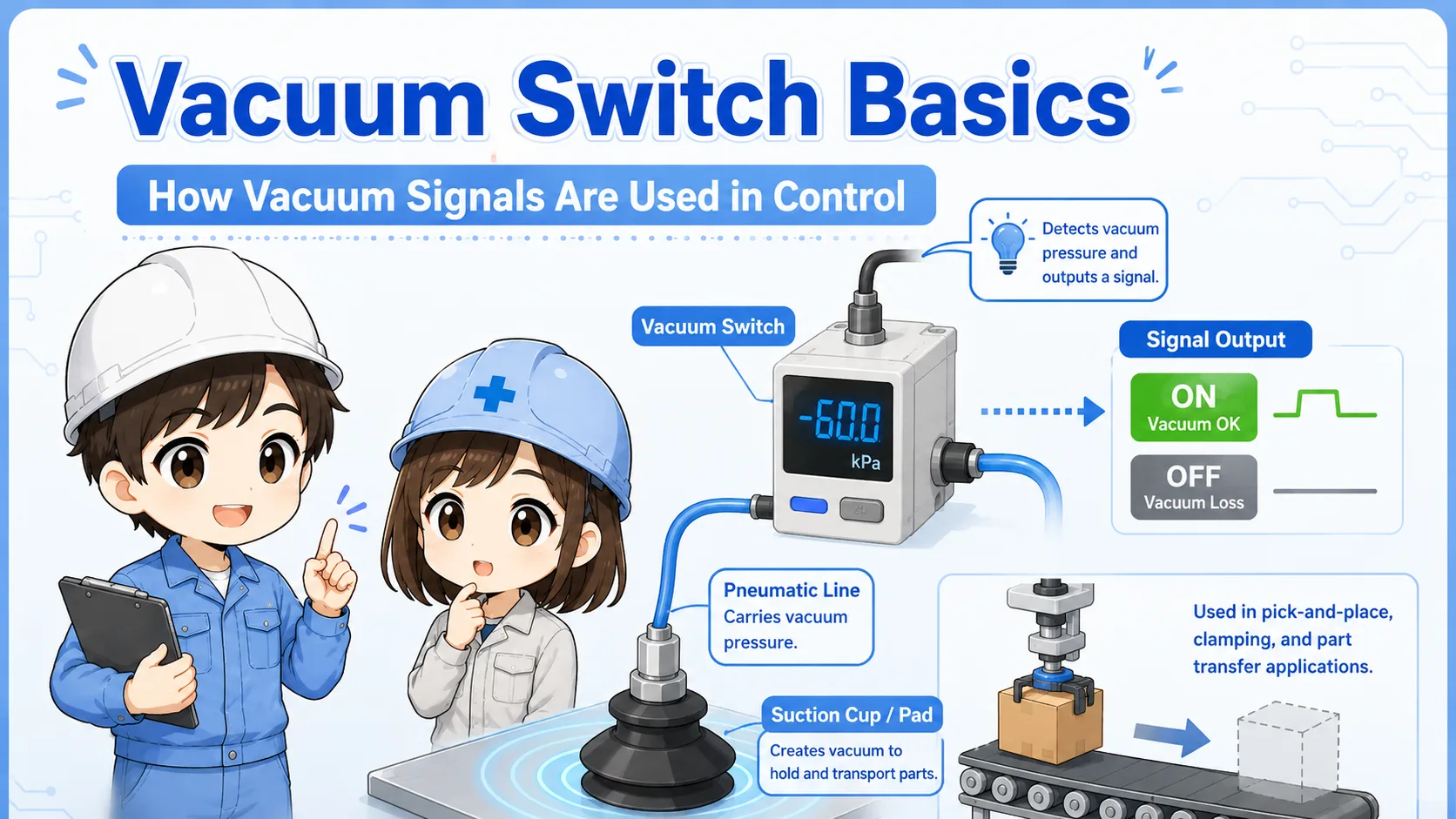
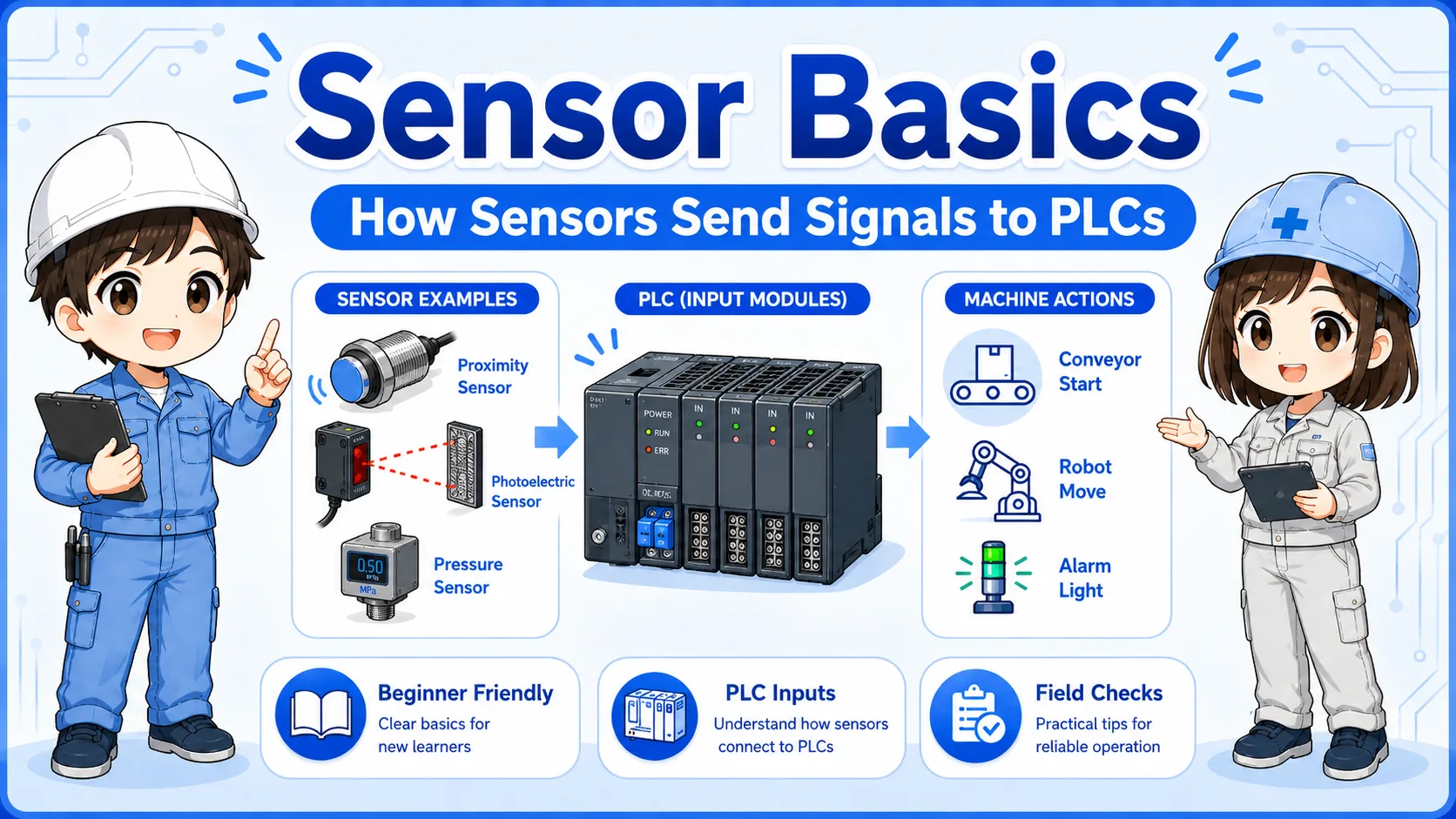
That is where a vacuum switch is used. The vacuum switch monitors the vacuum level and sends a signal when the vacuum reaches the set level. In PLC control, this signal is often used as a suction confirmation input.
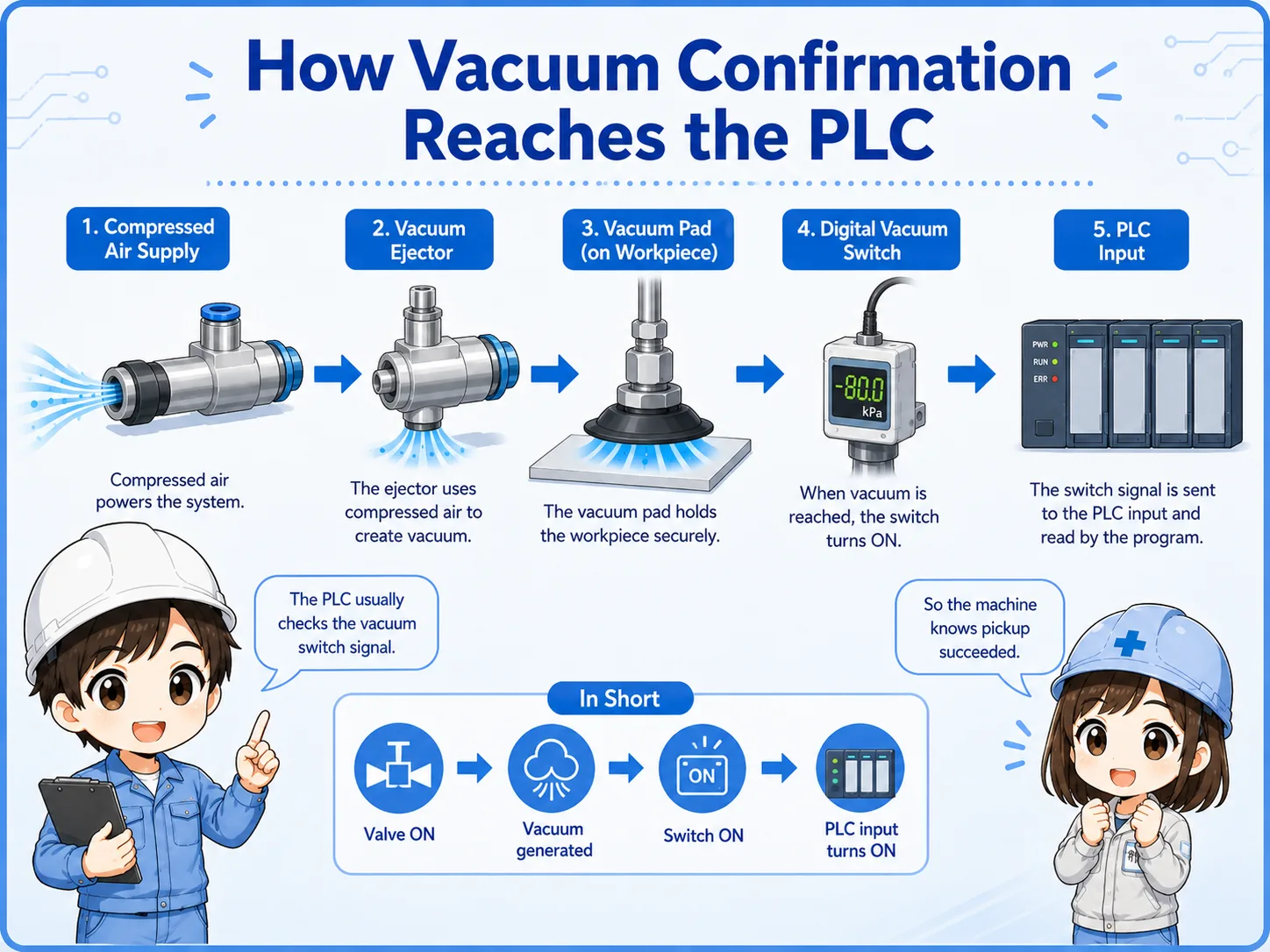
Output ON to the ejector valve → vacuum is generated → pad holds the workpiece → vacuum switch turns ON → PLC allows the next movement.
If the vacuum switch setpoint is too strict, a normal pickup may be judged as failure. If the setpoint is too loose, the machine may think suction is OK even when the workpiece is not held safely.
Most suction problems should be checked as a system, not as a single part.
Check whether the supply pressure is within the expected range for the ejector and whether pressure drops during operation.
Loose fittings, cracked tubes, or long narrow tubing can reduce the vacuum response.
Worn, hardened, dirty, or incorrectly sized pads can cause leakage at the workpiece surface.
Dust or oil mist can clog the vacuum filter and reduce suction performance.
Porous, rough, curved, or uneven surfaces can leak air even if the ejector works correctly.
Confirm that the switch threshold and PLC input logic match the actual required pickup condition.
This article keeps the explanation practical, but the technical points are based on official manufacturer information.
Set pressure, supply pressure, valve wiring, filter maintenance, and product limits depend on the actual model. Always check the official manual and the machine documentation before changing a setting.
These English guides connect naturally with vacuum ejector basics.