What is a star-delta starter?
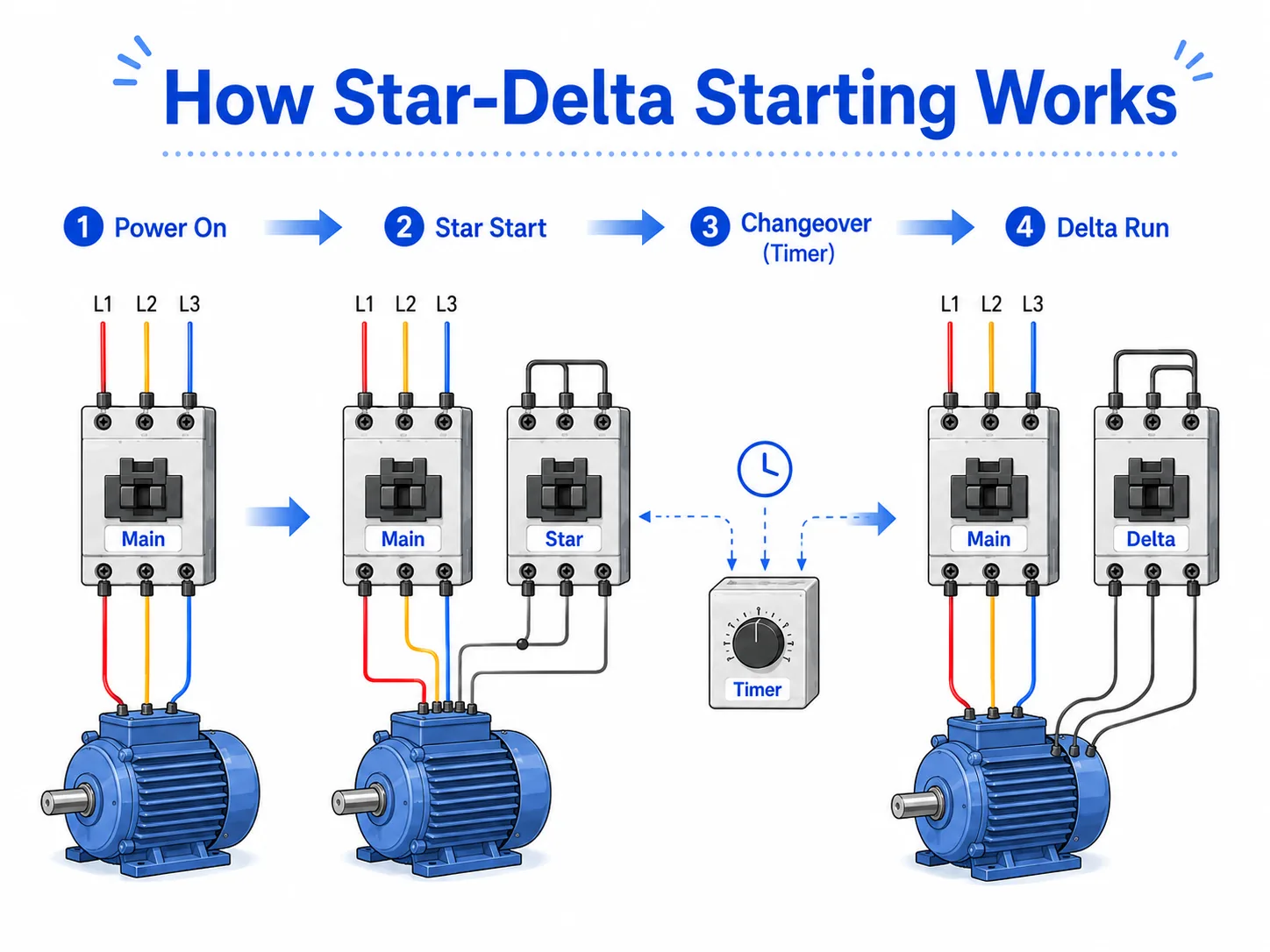
It is a motor starting circuit that starts in star and then switches to delta for normal running.
A star-delta starter is used with a compatible three-phase motor to reduce starting current. At first, the motor windings are connected in star. After a short time, the circuit changes to delta connection so the motor can run normally.
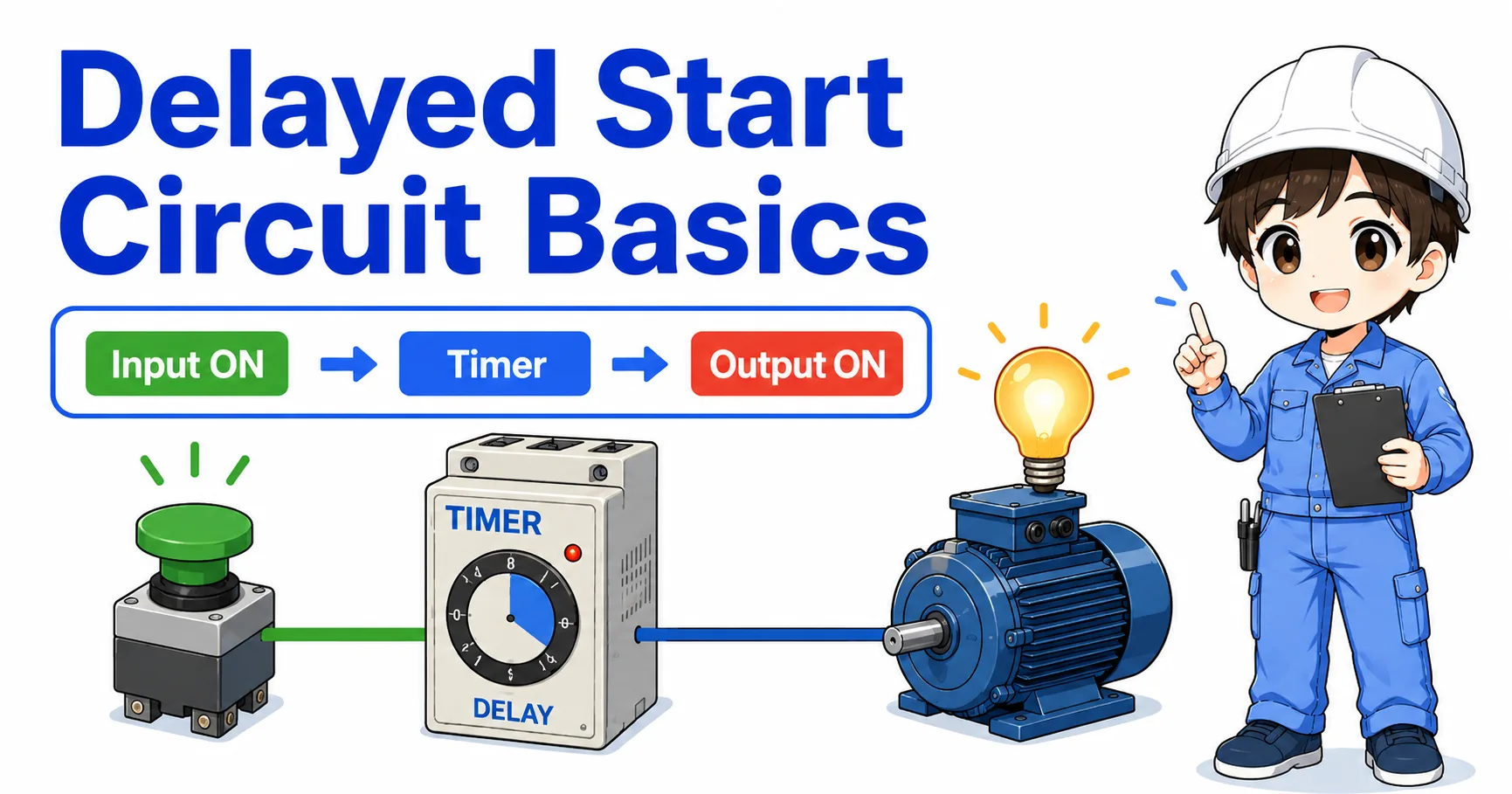
The basic sequence is simple: start command → star start → timer delay → star contactor opens → delta contactor closes → motor runs in delta.
Simple way to remember
Star is for starting softly. Delta is for normal running. The timer decides when to switch from star to delta.
Why star-delta starting is used
The main purpose is to reduce the large current that flows when a motor starts directly.
When a motor starts, it can draw a much higher current than during normal operation. This starting current can cause voltage drop, stress electrical equipment, or affect other machines. Star-delta starting reduces the starting current by starting the motor in star connection first.
However, the starting torque is also reduced. That means star-delta starting is not suitable for every load. It works best when the motor can start with lighter load torque.
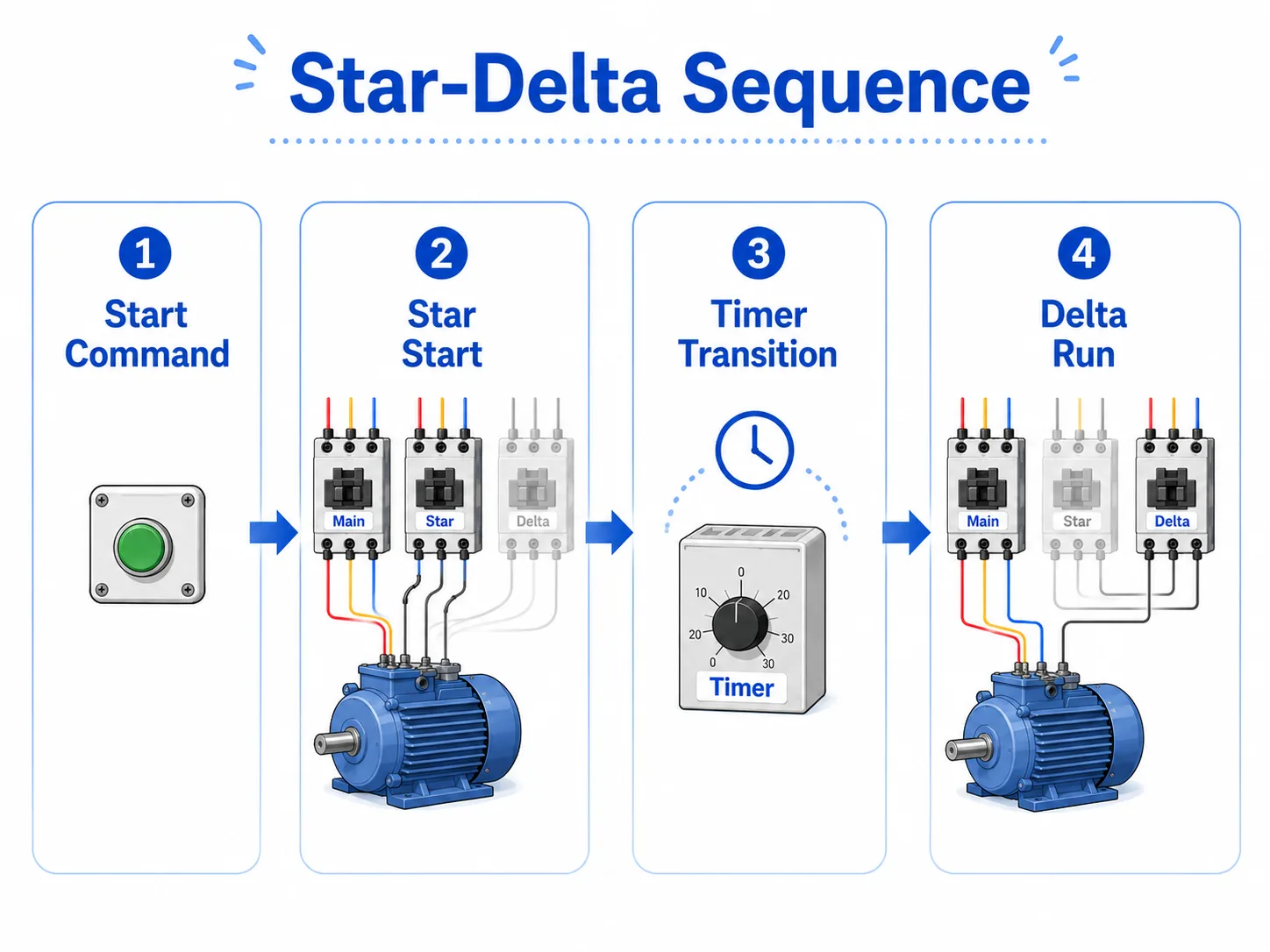
1. Start command
The main and star contactors turn ON.
2. Star start
The motor starts with reduced current and reduced torque.
3. Timer transition
The timer opens star before delta is allowed.
4. Delta run
The delta contactor turns ON for normal running.
Main parts of a star-delta starter
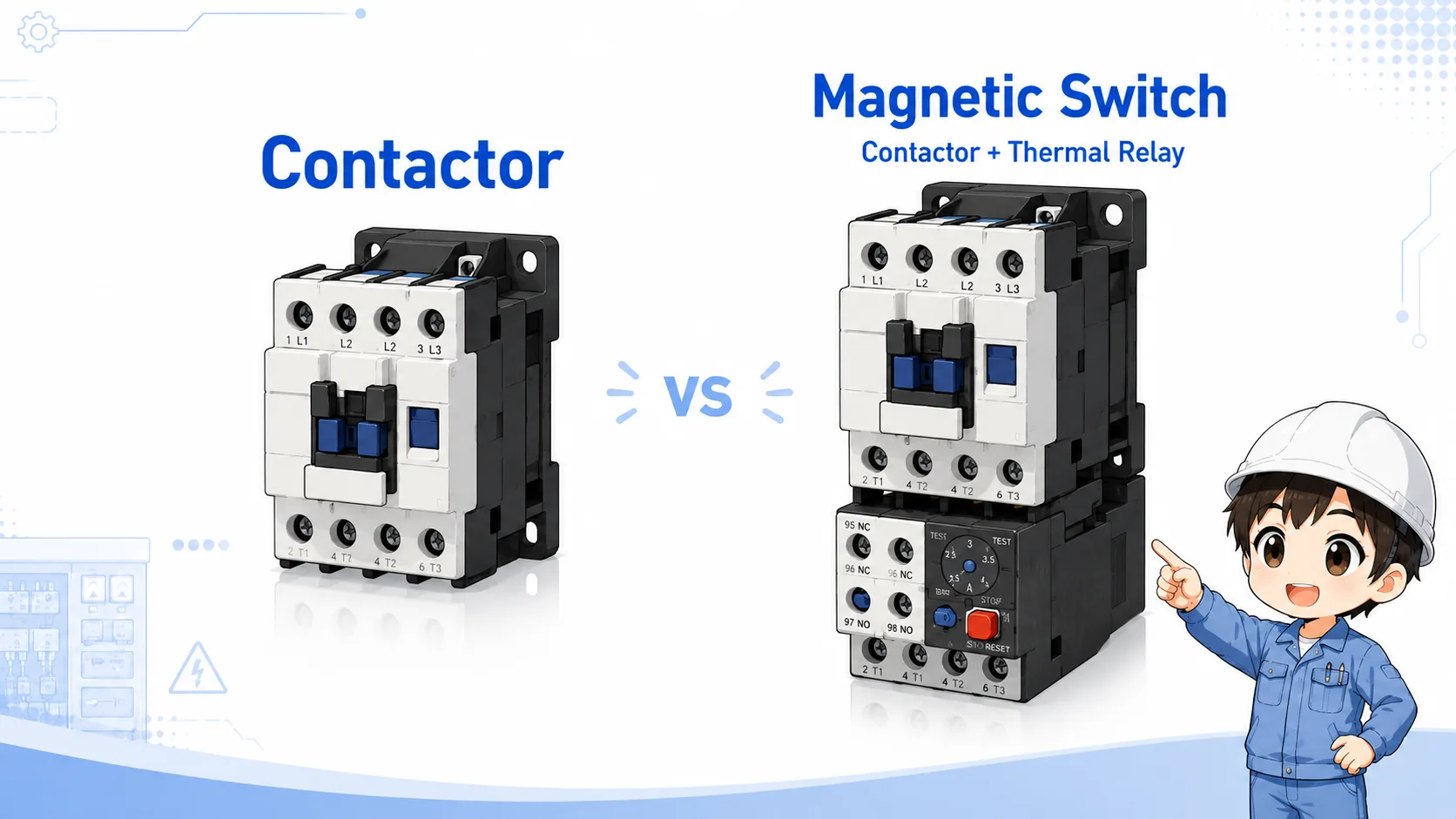
A typical circuit uses three contactors, a timer, overload protection, and interlocks.
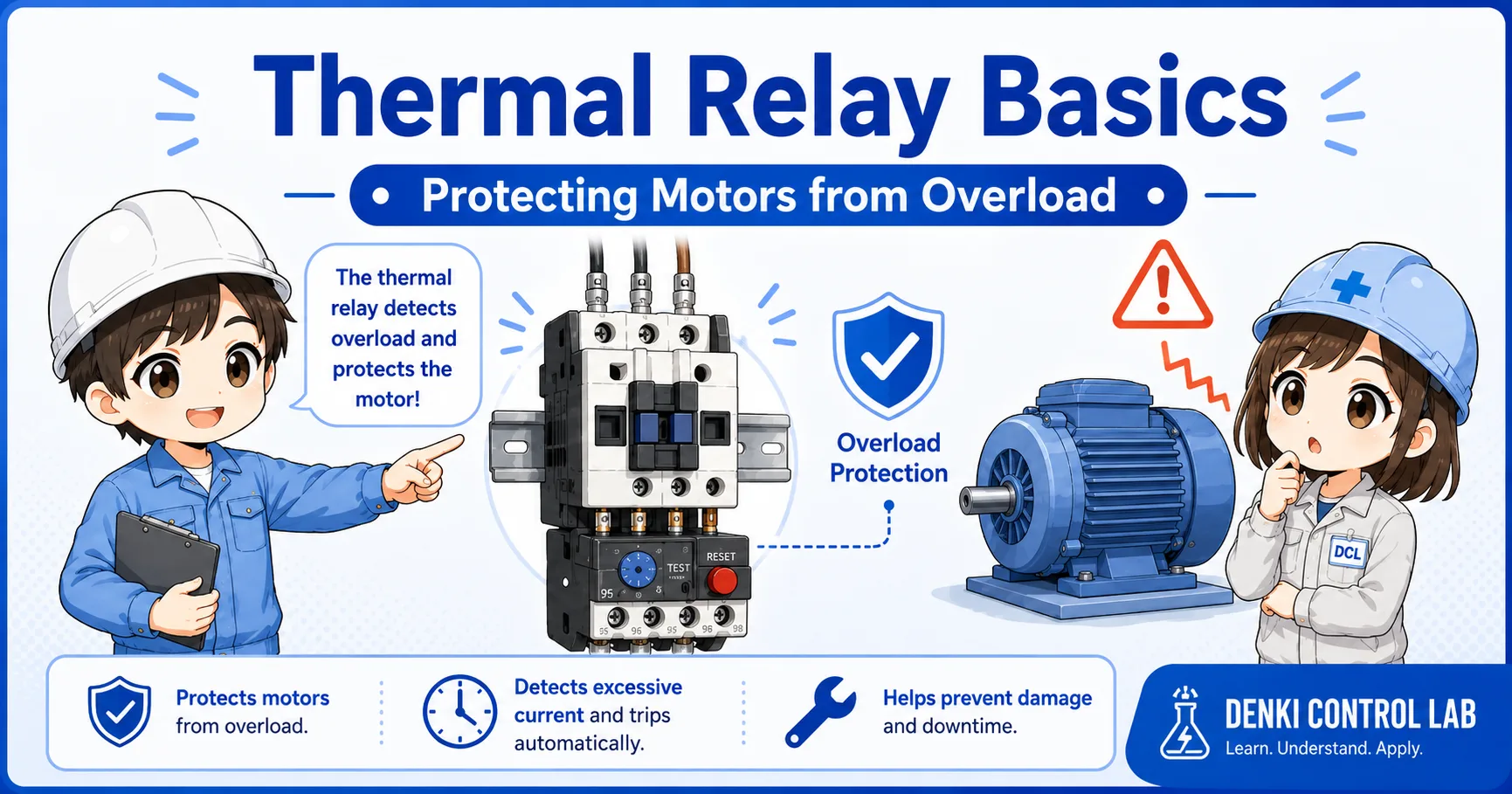
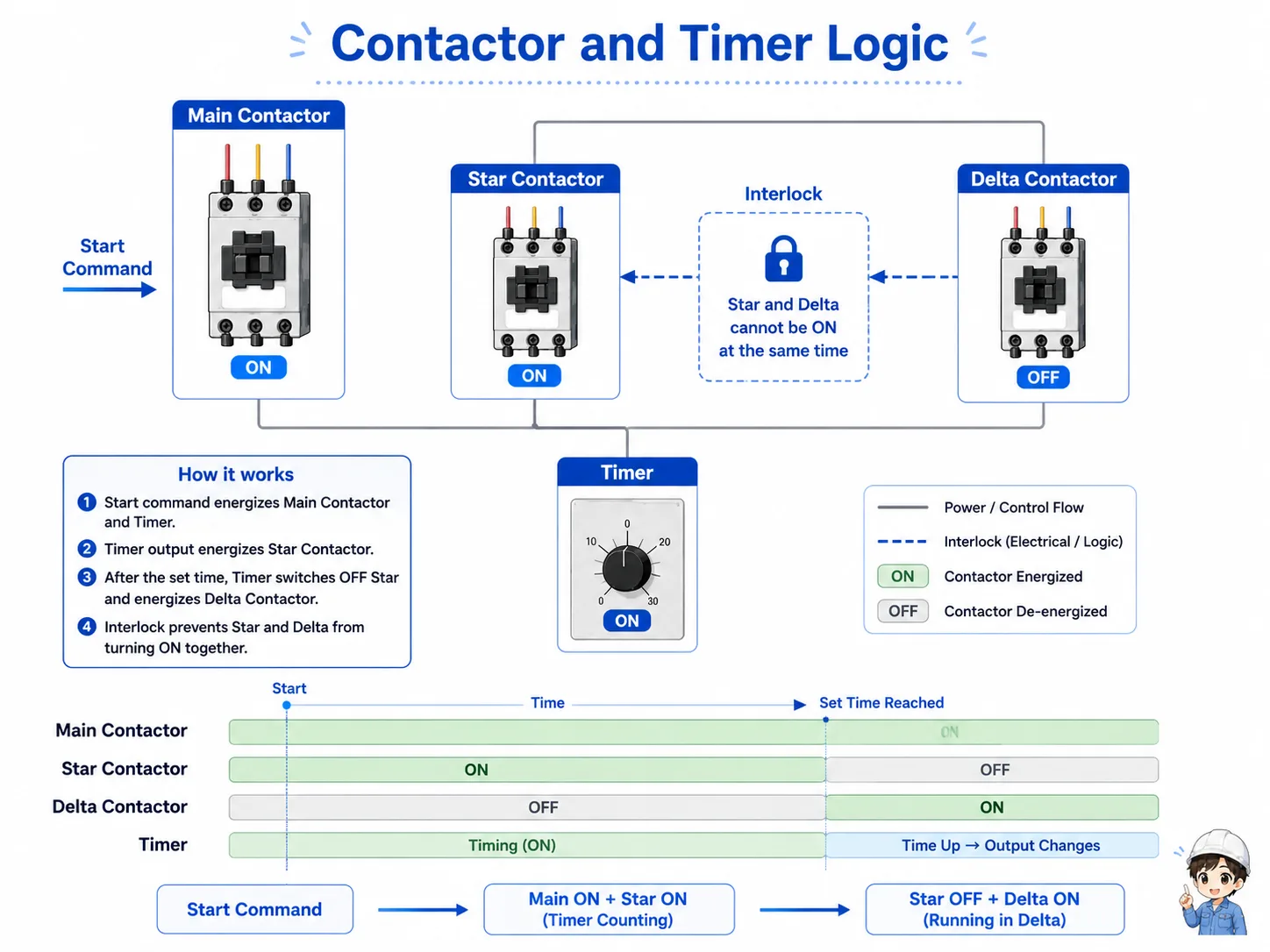
Many star-delta starters have a main contactor, a star contactor, and a delta contactor. The timer controls when the circuit changes from star to delta. A thermal relay or overload relay protects the motor from overload.
The most important safety point is the interlock between the star contactor and delta contactor. If both close at the same time, a serious short circuit can occur.

SeniorWhen you read a star-delta circuit, first identify the three contactors. Then check how the timer and interlocks control them.

JuniorSo the key is not only when delta turns ON, but also making sure star is already OFF before that happens.
Timer and interlock logic
The timer creates the delay, but the interlock prevents dangerous overlap.
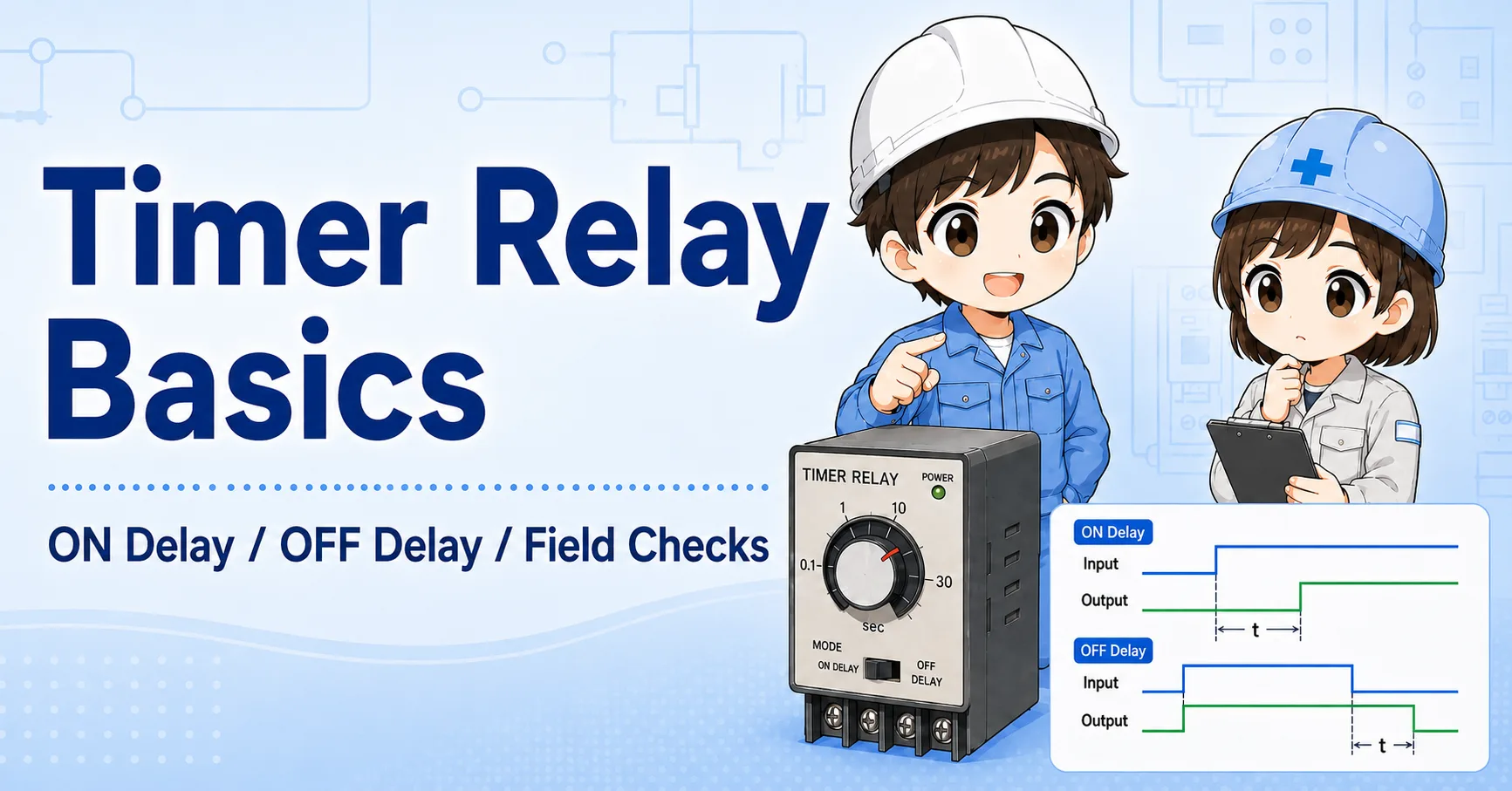
The timer usually keeps the motor in star for a preset time. After that, it releases the star circuit and allows the delta circuit. Depending on the starter design, there may also be a short transition gap so the star contactor is fully open before delta closes.
| Part | Basic role | Field check point |
|---|---|---|
| Main contactor | Connects the power path to the motor starter circuit. | Check coil voltage, auxiliary contacts, and main contact condition. |
| Star contactor | Connects the motor windings in star during starting. | Confirm it turns OFF before the delta contactor turns ON. |
| Delta contactor | Connects the motor windings in delta for normal operation. | Confirm it is blocked while the star contactor is active. |
| Timer / interlock | Controls the switching timing and prevents overlap. | Check preset time, timer output, auxiliary contacts, and mechanical interlock. |
Do not copy a circuit without checking the motor
The motor must be suitable for star-delta starting, and the terminal connection must match the motor nameplate and wiring diagram.
Field checks for star-delta starter problems
Separate the problem into motor suitability, contactor operation, timer transition, and protection trips.
If the motor does not start, trips during transition, or makes an abnormal sound, do not assume the timer is the only cause. Check the power circuit, control circuit, interlocks, overload relay, motor terminals, and load condition step by step.
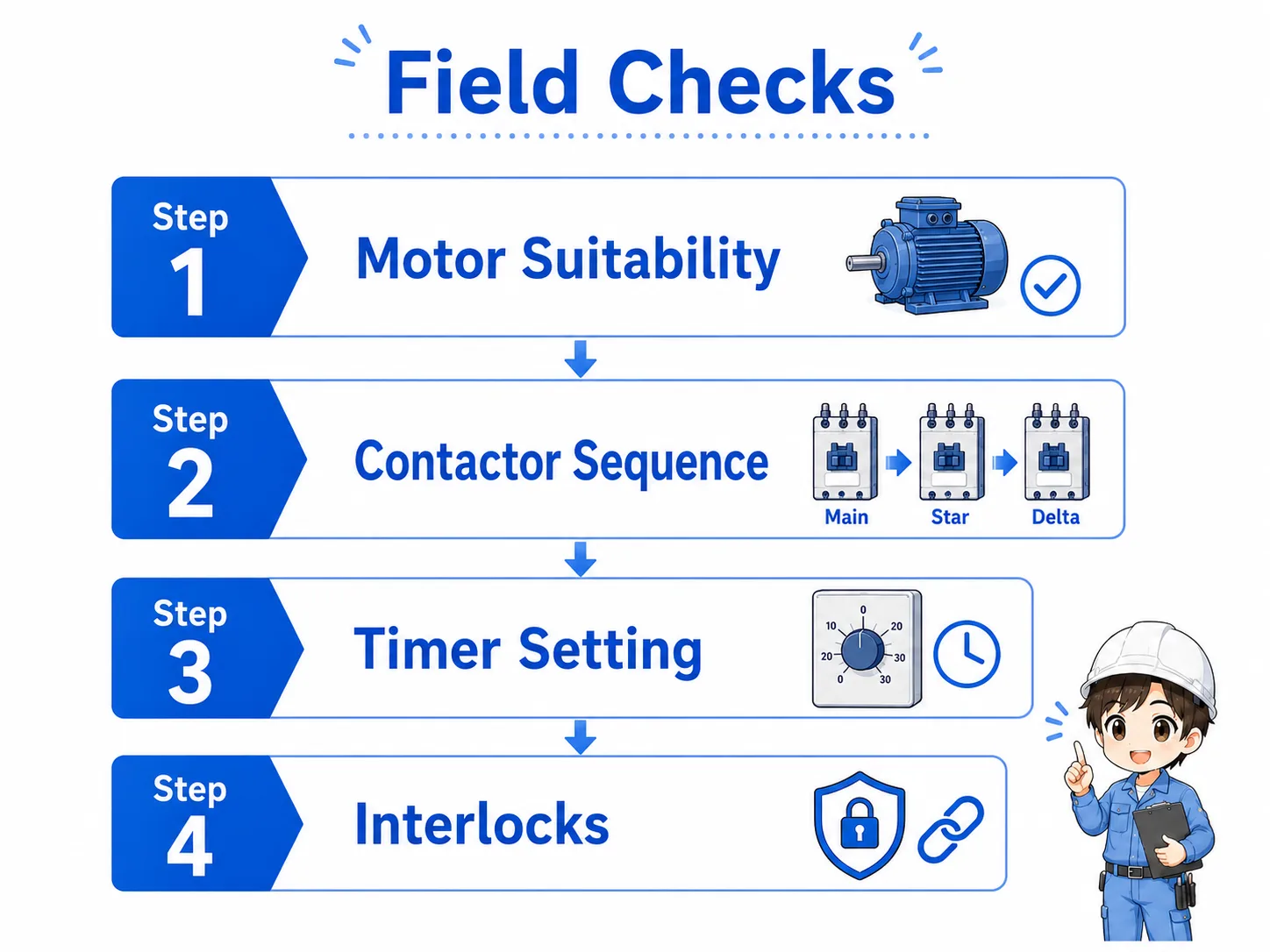
Check motor suitability
Confirm the motor terminal arrangement and nameplate match the star-delta circuit.
Check contactor sequence
Main + star should operate first, then star should open before delta closes.
Check timer setting
If the transition is too early or too late, starting may fail or cause a trip.
Check interlocks
Never allow star and delta contactors to close at the same time.
High-current motor circuits are dangerous
Star-delta starters involve three-phase power circuits. Always follow site procedures, lockout/tagout rules, and official drawings before inspection or modification.
Related articles
These articles connect naturally with motor starting, timers, contactors, and protection devices.