What is a control panel outlet?
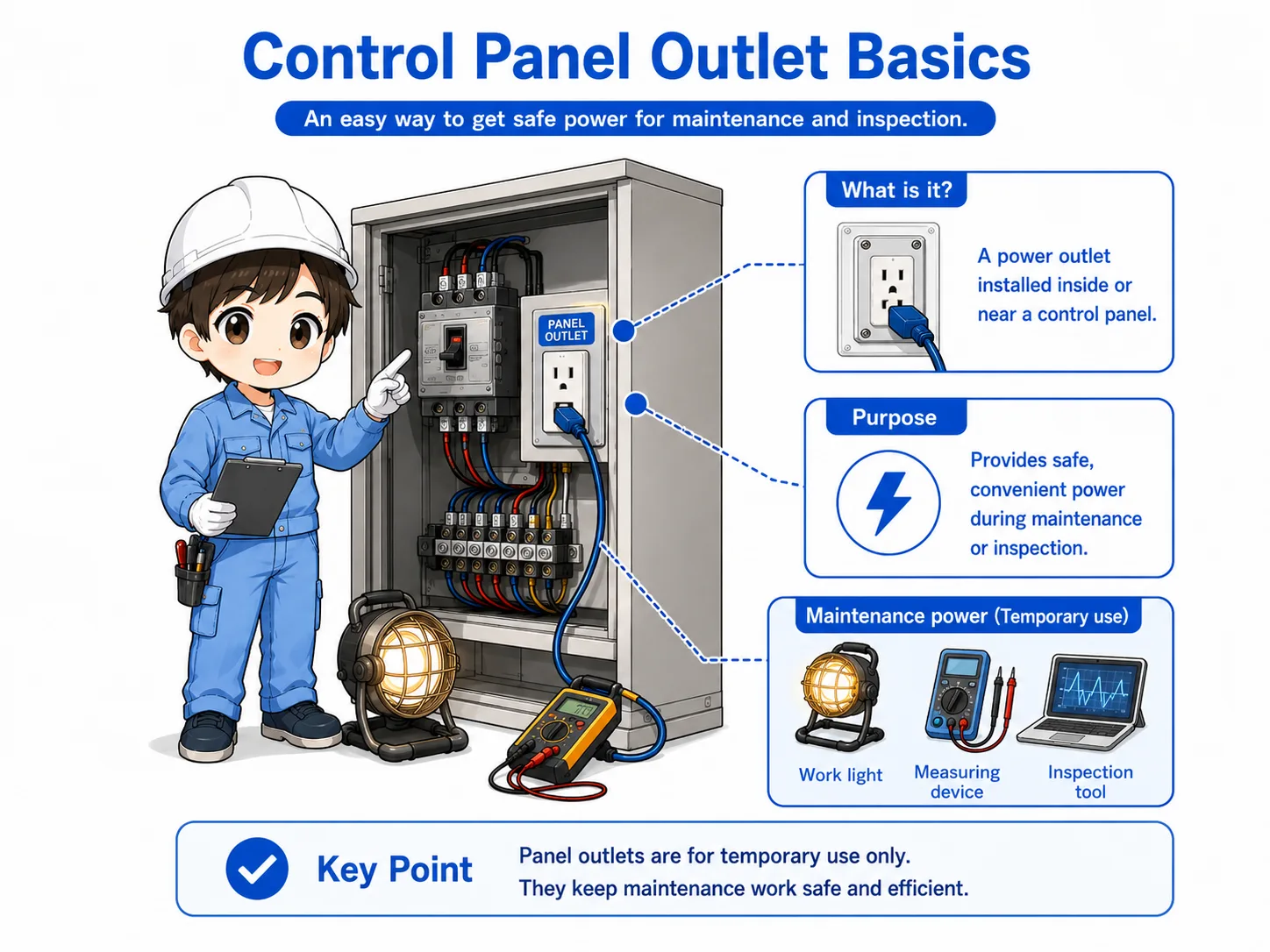
A control panel outlet is a power receptacle installed inside or near a control cabinet for inspection and maintenance work.
A control panel outlet is not the main device that controls the machine. It is usually provided as a support point for maintenance work, inspection tools, temporary lighting, measuring devices, or other small equipment used while checking the panel.
Because it is connected to an electrical circuit inside or near the panel, it should not be treated like an ordinary wall outlet without checking. The voltage, rated current, breaker or fuse, leakage protection, grounding, and site rules all matter.
The simple way to think about it
A control panel outlet is a maintenance support point. It can be useful, but it must be checked as part of the panel’s electrical system, not treated as unlimited free power.
Why outlets are used for inspection and maintenance
Panel outlets can make inspection work easier by providing nearby temporary power for maintenance tools and checking work.
In some sites, the inside of a panel or machine area may be difficult to check without a small maintenance lamp, measuring device, laptop, recorder, or other temporary inspection tool. A nearby panel outlet can reduce the need to pull power from unrelated or unsafe locations.
However, the purpose is usually limited. A maintenance outlet is often intended for temporary work, not for long-term loads that were not included in the original panel design.
Inspection support
It may power small tools or devices used while checking the control panel or machine.
Nearby temporary power
It can reduce unsafe extension-cord routing when the site design allows outlet use.
Maintenance convenience
It can help with short-term work such as checking, measuring, or lighting.
Not unlimited power
Its use depends on voltage, capacity, protection, wiring, and site rules.

A panel outlet is convenient, but convenience does not mean “anything is OK.” Always check what circuit supplies it and what load it can handle.

So I should treat it as maintenance power first, not as a normal outlet for continuous equipment.
Power source, breaker, capacity, and leakage considerations
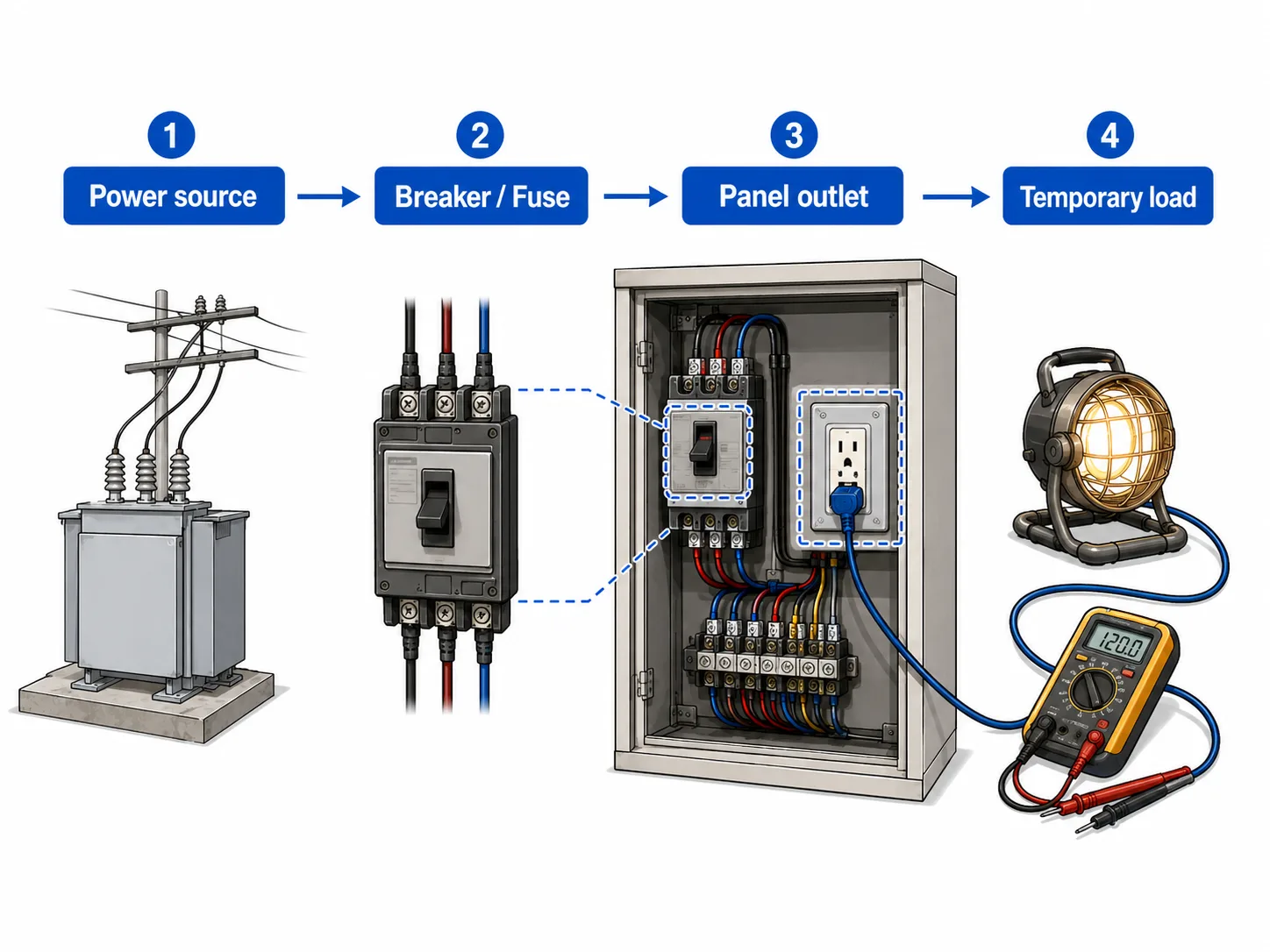
Before using or modifying a panel outlet, confirm the power path from source to outlet.
A panel outlet may be supplied through a breaker, fuse, terminal block, transformer, or auxiliary circuit depending on the equipment. Some outlets may be separated from the main control circuit, while others may be tied to a specific maintenance power circuit.
Do not assume the voltage or capacity from appearance alone. Check the drawing, outlet label, breaker or fuse rating, wiring condition, and actual measured voltage before use.
| Part | Typical role | What to check |
|---|---|---|
| Outlet | Provides maintenance power for temporary inspection work. | Voltage, rated current, physical condition, label, and intended use. |
| Breaker or fuse | Protects the outlet circuit from abnormal current. | Rating, trip condition, label, and whether it matches the drawing. |
| Power source | Supplies the outlet circuit. | AC or DC, source circuit, transformer, auxiliary supply, and separation. |
| Leakage protection | Reduces leakage-related risk where required by the design or site rule. | Protection device, test condition, grounding, and site procedure. |
| Wiring and terminal | Connects the outlet circuit inside the panel. | Loose terminals, insulation damage, wire size, routing, and drawing match. |
Actual specifications vary
Outlet voltage, current capacity, protection method, and allowed use vary by equipment and site. Always confirm the drawing, label, measured voltage, and applicable site procedure.
Temporary use vs. continuous use
A maintenance outlet should not automatically be treated as a permanent power source.
In many cases, the panel outlet is intended for short-term maintenance work. For example, it may be used while checking the panel, powering a small inspection device, or using temporary lighting during maintenance.
Continuous use is different. If equipment is left connected for long periods, the load current, heat, cable routing, breaker rating, leakage risk, and panel design must be reviewed. A load that looks small can still be a problem if it was not included in the original design.
1. Purpose
Confirm whether the outlet is for maintenance, inspection, or designed continuous use.
2. Load
Check the connected device current and whether it fits the outlet rating.
3. Protection
Confirm breaker, fuse, leakage protection, and grounding conditions.
4. Approval
Follow the drawing, site procedure, and design confirmation before continuous use.
Do not add continuous loads without design confirmation
Do not use a panel outlet as a permanent power source for unrelated equipment unless the panel design, capacity, protection, heat, routing, and site rules have been confirmed.
Field checks for control panel outlets
When checking a panel outlet, separate the inspection into voltage, protection, leakage/grounding, and physical condition.
A panel outlet may look simple, but problems can come from the breaker, fuse, wiring, terminal, receptacle, leakage protection, or the connected load. A calm check order helps avoid guessing.
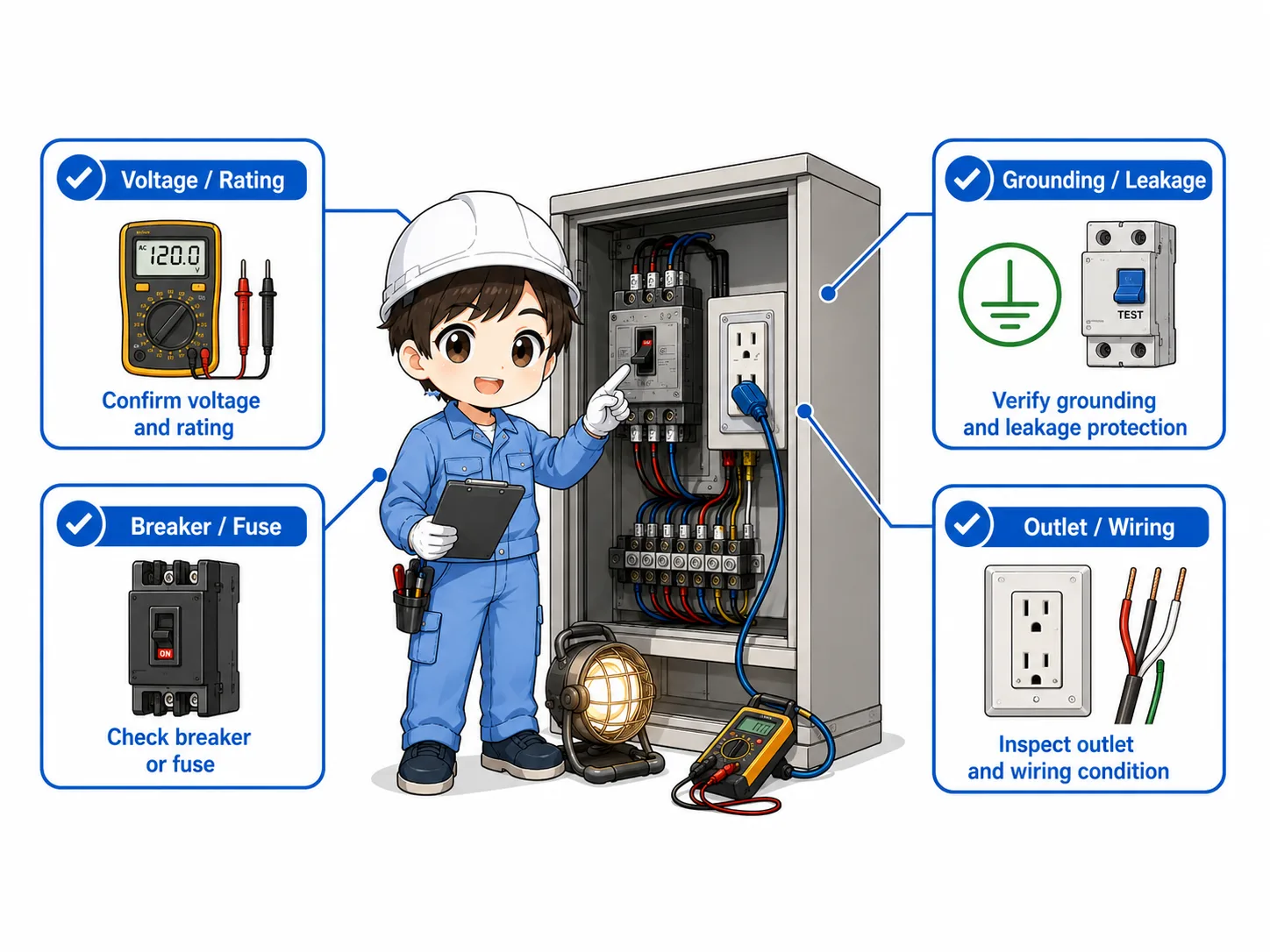
1. Check voltage and rating
Confirm the rated voltage and current from the label, drawing, and actual measurement.
2. Check breaker or fuse
Confirm which protective device feeds the outlet and whether the rating is suitable.
3. Check leakage protection and grounding
Check grounding, leakage protection, and the site rule for using outlets in that area.
4. Check wiring and damage
Look for loose terminals, damaged receptacles, burned marks, broken covers, or poor cable routing.
Common mistakes to avoid
Most panel outlet mistakes come from assuming it can be used like a normal wall outlet.
- Assuming the outlet voltage without measuring or checking the drawing.
- Using the outlet continuously for unrelated equipment.
- Ignoring breaker or fuse capacity.
- Using damaged plugs, cords, or receptacles.
- Overlooking leakage protection or grounding requirements.
- Assuming every panel outlet follows the same rule.
- Changing the outlet circuit without updating the drawing or label.
Simple field mindset
A control panel outlet is helpful for maintenance, but it belongs to the panel’s electrical system. Check the drawing, rating, protection, grounding, and actual condition before use.
Related articles
These articles connect naturally with control panel outlet basics.