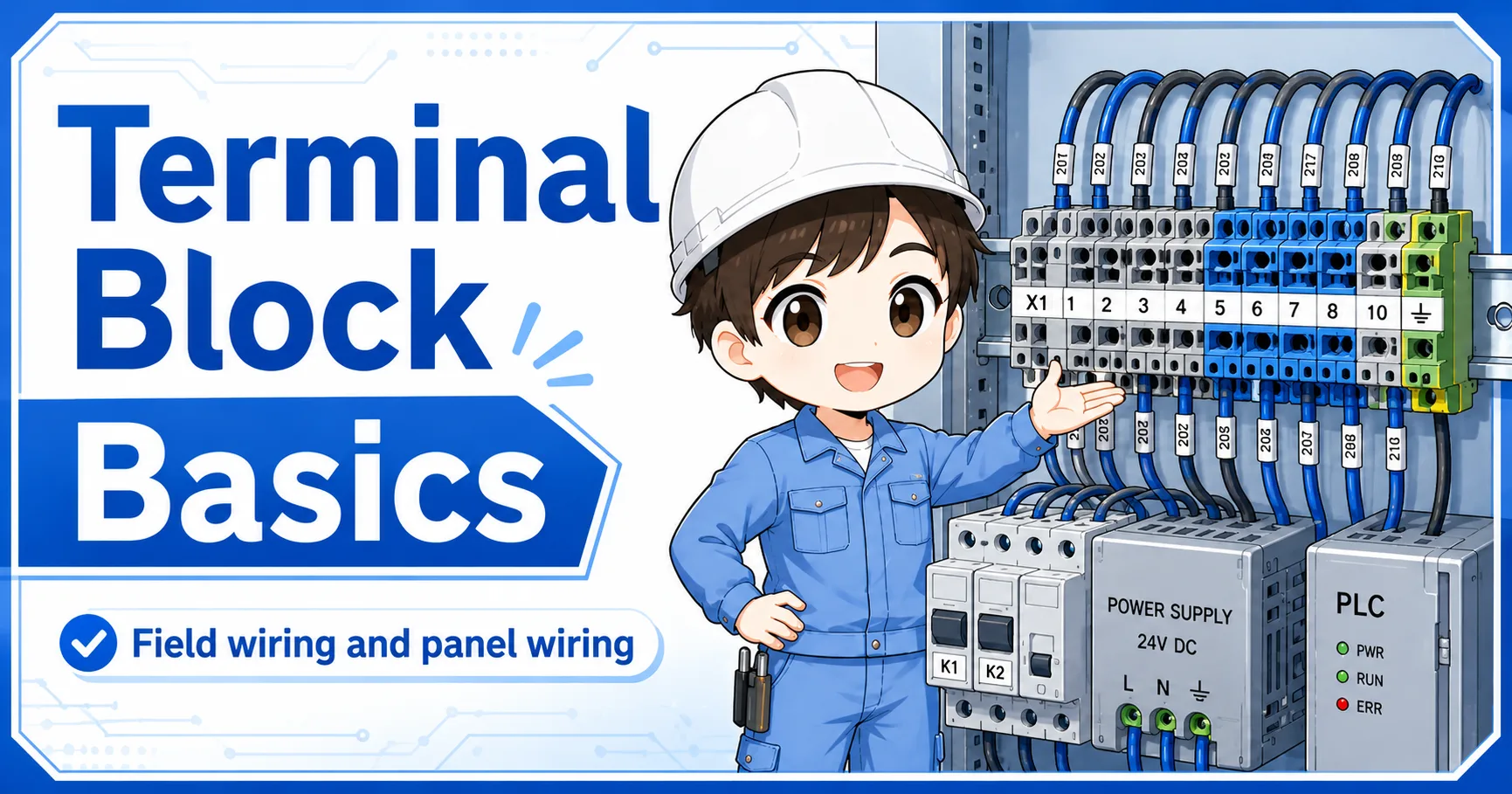
What is a control panel light?
A control panel light is an internal lamp or cabinet light used to make devices and wiring easier to see.
Inside a control panel, breakers, terminals, relays, PLC units, power supplies, labels, and wiring can be packed closely together. A panel light helps workers see these parts clearly during inspection, maintenance, and troubleshooting.
Panel lights are often mounted near the top of the cabinet or on the side wall. Some are switched manually, while others turn on automatically when the panel door is opened by using a door switch.
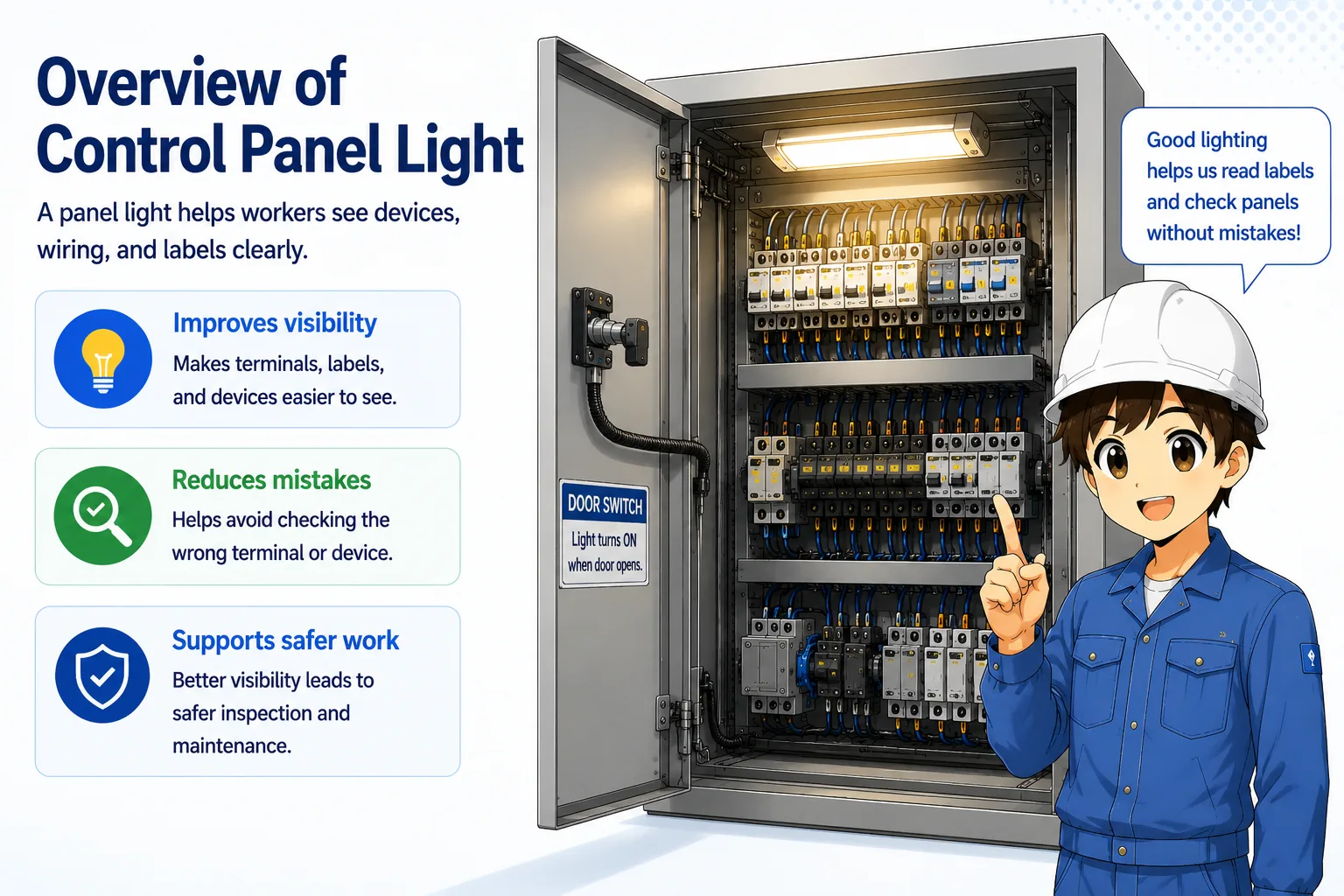
The simple way to think about it
A panel light is not the main control device, but it supports safe and accurate field work by making the inside of the panel easier to read.
Why panel lighting matters during inspection and maintenance
Good visibility helps reduce mistakes when reading labels, tracing wires, checking terminals, and looking for abnormal conditions.
Many control panels are installed in factories, machine rooms, outdoor enclosures, or narrow spaces where lighting is not always ideal. If the inside of the panel is dark, it becomes easier to misread labels, terminals, wire numbers, or warning markings.
A control panel light helps workers see the work area clearly without relying only on a handheld flashlight. It can also make it easier to notice loose wiring, discoloration, dust buildup, condensation, or damaged parts during inspection.
Better visibility
Lighting makes terminal blocks, labels, wires, and small device markings easier to read.
Fewer reading mistakes
Good lighting reduces the chance of checking the wrong terminal, relay, breaker, or PLC point.
Easier inspection
Abnormal conditions such as discoloration, dust, or loose parts are easier to notice.
Safer maintenance
Clear visibility supports safer work, but it does not replace lockout, measurement, or safety procedures.

A panel light looks like a small accessory, but it helps a lot when you need to read labels and terminal numbers calmly.

So it is not only about convenience. It can also reduce mistakes during checking and maintenance.
Door switch, power supply, and wiring basics
Some panel lights are controlled by a door switch so the light turns on when the cabinet door opens.
A common arrangement is simple: the light receives power through a switch. The switch may be a manual switch or a door switch mounted near the cabinet door. When the door opens, the switch changes state and turns the light on.
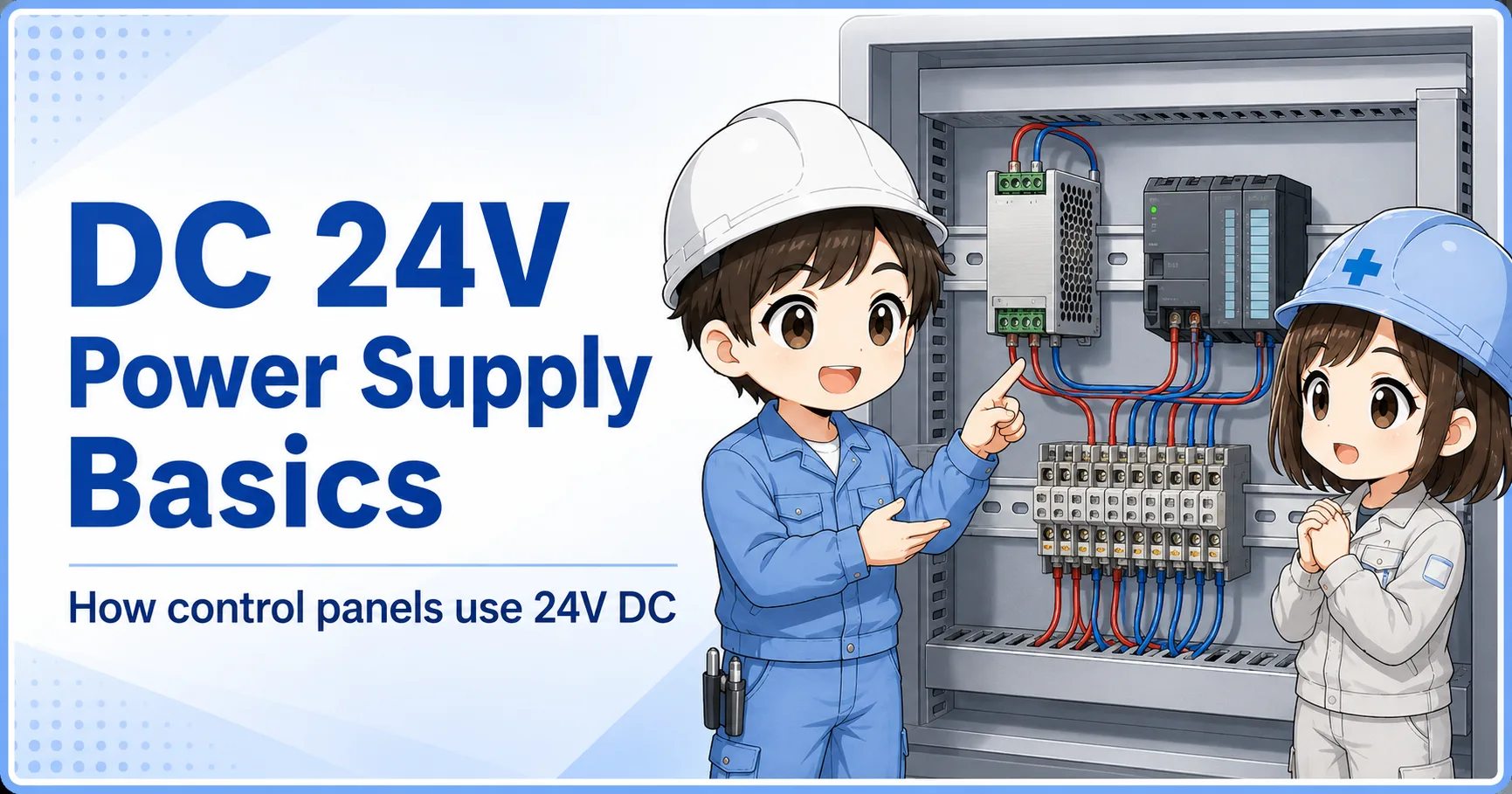
The actual power source can vary. Some panel lights use AC power, some use DC power, and some are powered from a dedicated auxiliary circuit. Always check the drawing and measure the actual voltage before replacing or modifying a panel light.
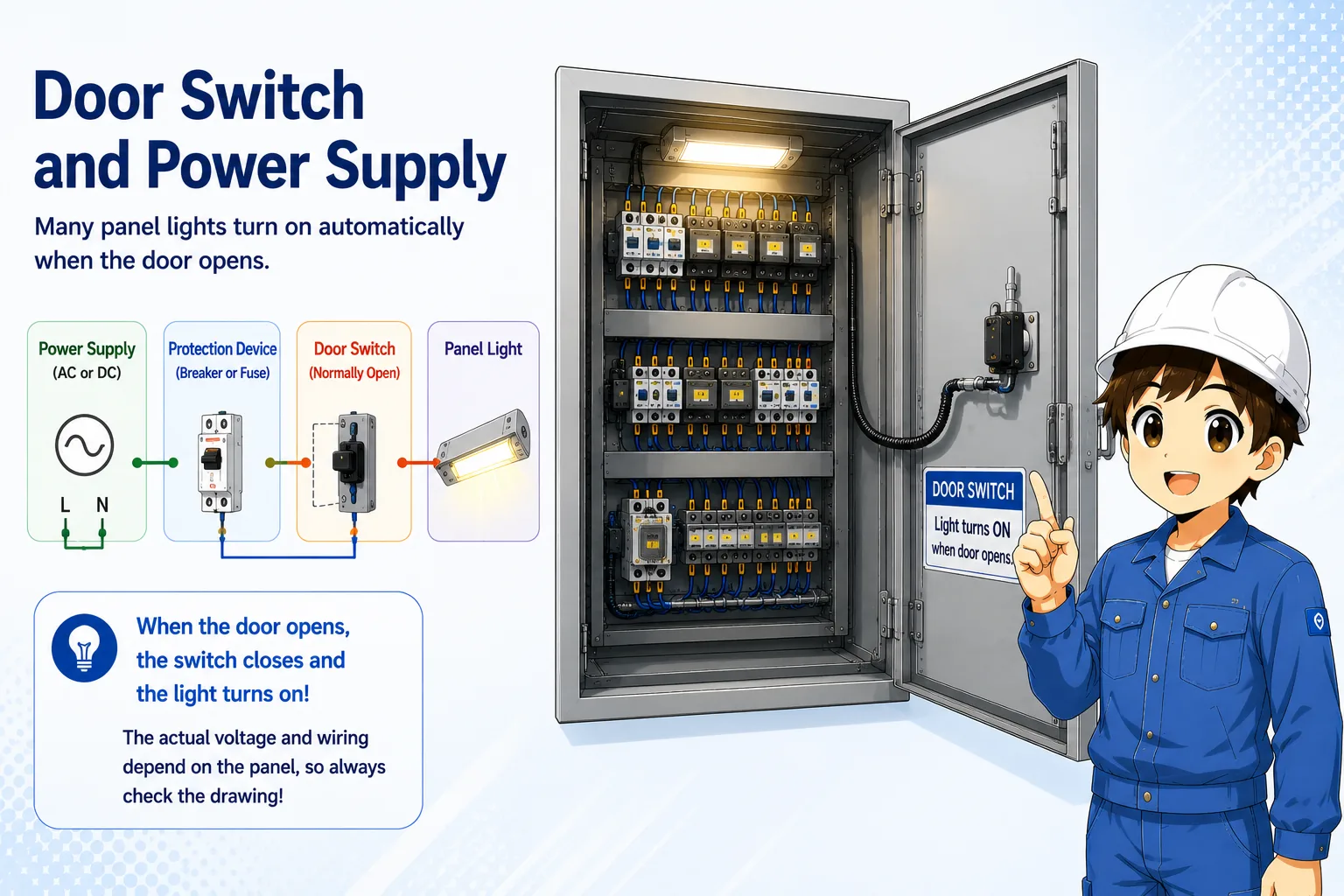
| Part | Typical role | What to check |
|---|---|---|
| Panel light | Illuminates the inside of the cabinet. | Rated voltage, lamp type, mounting position, and brightness. |
| Door switch | Turns the light on or off when the panel door opens or closes. | Switch operation, contact state, mounting position, and adjustment. |
| Power source | Supplies AC or DC power to the lighting circuit. | Voltage, breaker or fuse, terminal, and whether it is separate from other circuits. |
| Wiring / terminal | Connects the light, switch, and power source. | Loose terminals, wire numbers, insulation damage, and drawing match. |
The light may have a separate power path
Some cabinet lights may be powered from an auxiliary circuit. Do not assume the light is dead only because the main machine power is off. Confirm the actual circuit and voltage.
How panel lights connect with labels, wiring, and safety checks
A panel light helps you see the panel, but you still need to check labels, drawings, wiring, and voltage before doing work.
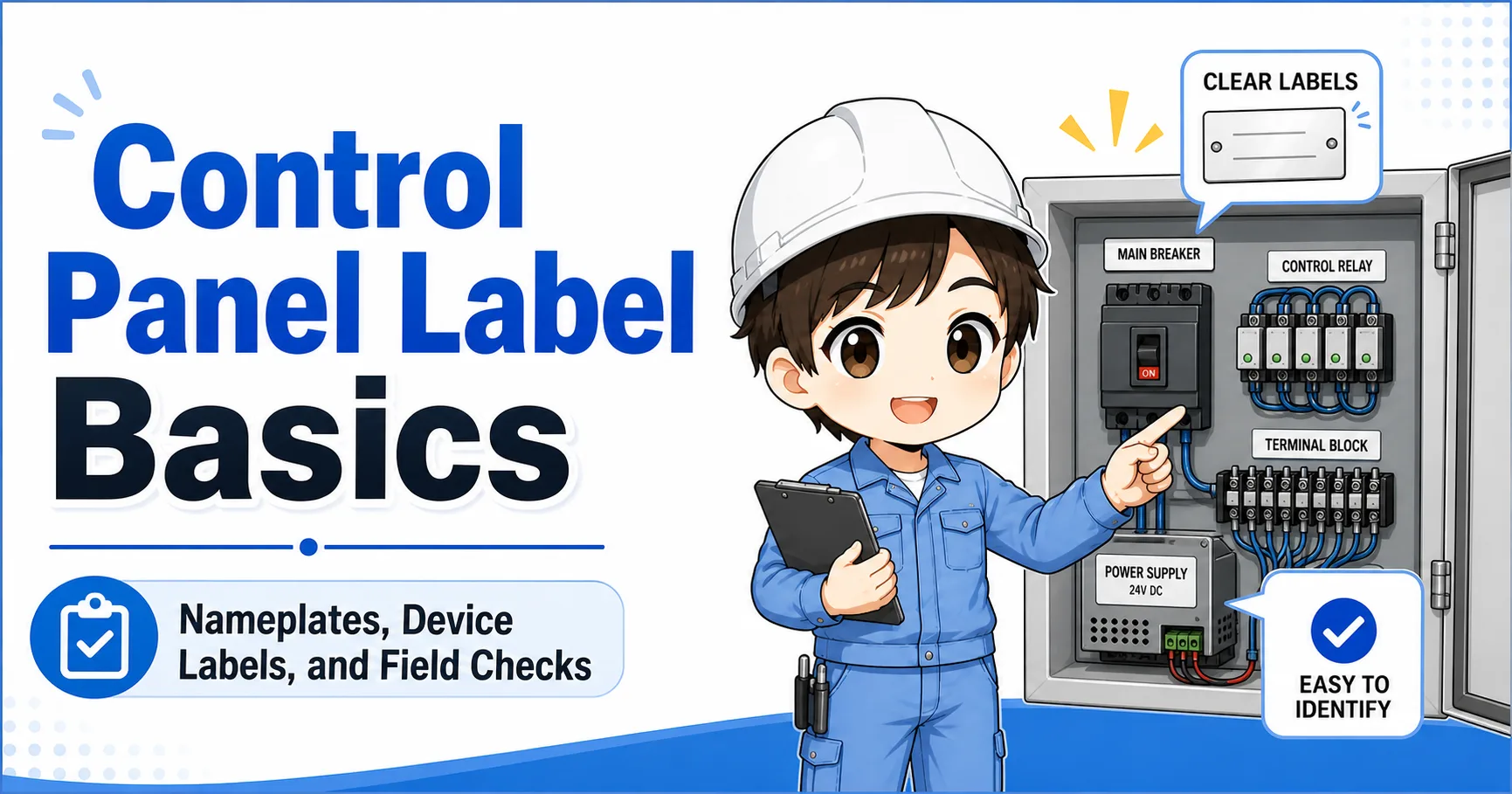
Panel lights support visual checking. They make it easier to read device labels, terminal labels, warning labels, wire numbers, and drawing references. This is especially useful when checking a panel in a dark location or when the wiring is dense.
However, lighting itself does not tell you whether a circuit is safe to touch. Before working inside a panel, follow the site procedure, check the drawing, identify the correct circuit, and measure the actual voltage where needed.
1. Light
Make the inside of the cabinet visible.
2. Label
Read device names, terminal names, and warning labels.
3. Drawing
Confirm the circuit, voltage, and terminal destination.
4. Measurement
Check the actual electrical state before work.
Good field habit
Use the panel light to see clearly, then use the drawing and measuring tools to confirm correctly. Visibility helps your work, but confirmation protects your work.
Field checks for control panel lights
When a panel light does not work, check the lamp, power source, switch, wiring, and terminal condition in order.
A panel light problem may be simple, such as a failed lamp, but it can also come from a door switch, loose terminal, blown fuse, disconnected wire, or wrong voltage. Checking in order prevents guessing.
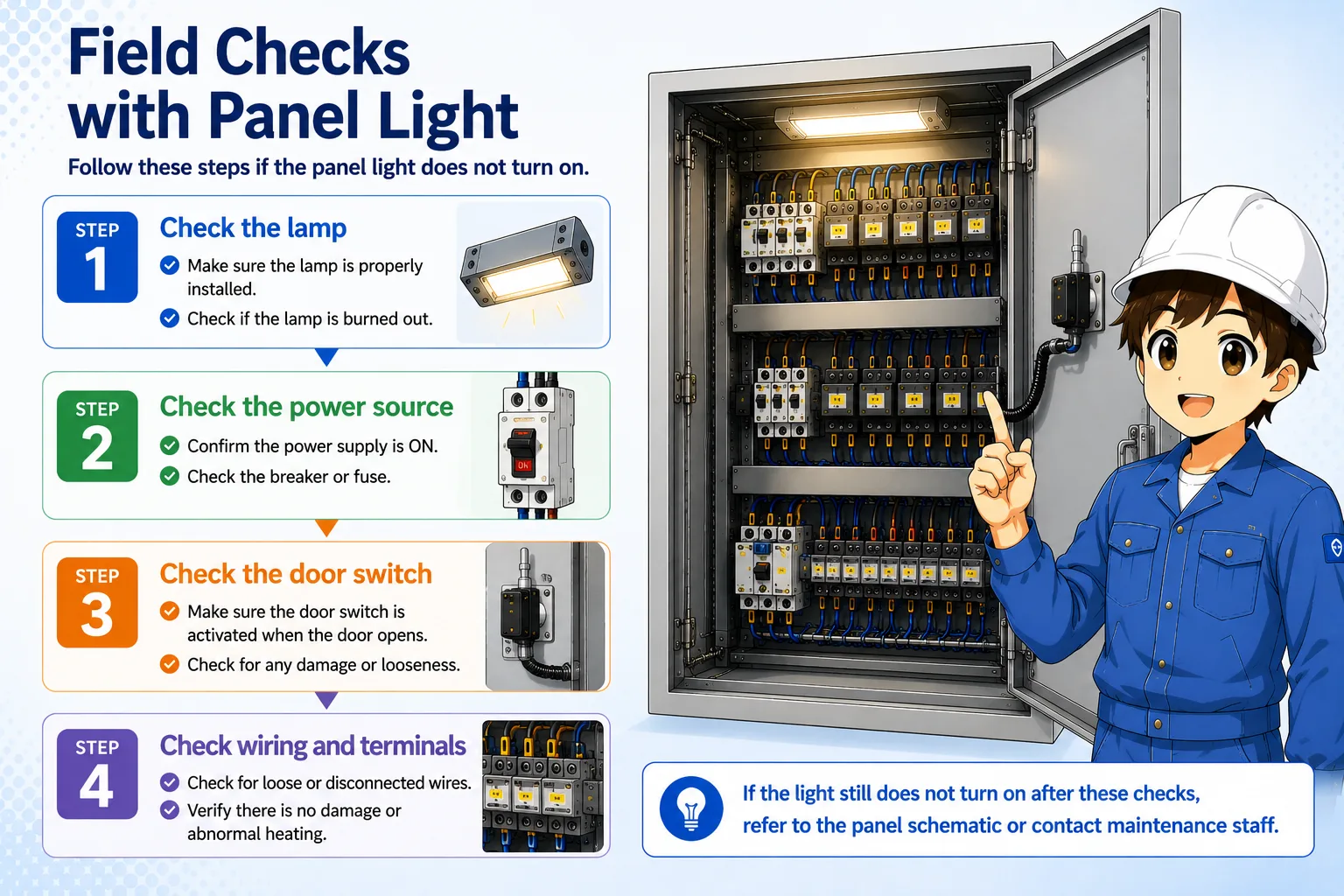
1. Check the lamp itself
Confirm whether the light unit, LED, bulb, connector, or built-in switch is damaged.
2. Check the power source
Measure the supply voltage and check the breaker, fuse, or auxiliary circuit feeding the light.
3. Check the door switch
Open and close the door and confirm that the switch changes state correctly.
4. Check wiring and terminals
Look for loose screws, broken wires, wrong terminals, damaged insulation, or mismatch with the drawing.
Do not work by visibility alone
A bright panel is easier to inspect, but it can still contain live circuits. Follow the site's safety procedure, identify the correct circuit, and measure before touching wiring.
Common mistakes to avoid
Panel light mistakes often happen when the lighting circuit is treated as too simple to check carefully.
- Assuming the panel light uses the same voltage as the control circuit.
- Forgetting that the lighting circuit may have a separate power source.
- Replacing the lamp without checking the door switch or wiring.
- Misreading labels because the light is dim, blocked, or installed in a poor position.
- Leaving loose wiring after replacing a light unit or switch.
- Working inside the panel just because the light is on and the inside is easy to see.
Simple field mindset
Panel lights help you see. They do not prove safety. Use good lighting, read the drawing, check labels, and confirm the actual voltage before work.
Related articles
These articles connect naturally with control panel light basics.