What is a control transformer?
A control transformer is used to create a suitable AC voltage for control circuits inside a control panel.
In many machines, the main power voltage is not used directly for every control device. A control transformer can step down AC voltage and provide a separate control power source for relays, lamps, control circuits, or a DC power supply.
The transformer does not make the circuit “safe by itself.” It changes the voltage level and separates the control power path from the main power path according to the panel design.
The basic idea
A control transformer takes AC power on the primary side and provides a different AC voltage on the secondary side for control circuits.

When you see a transformer in a control panel, first check which side is the input and which side supplies the control circuit.

So I should not only look at the transformer itself. I should trace the primary side and secondary side too?
Exactly. The transformer is part of a power path, not an isolated part to judge by appearance alone.
Why control panels use control transformers
A control transformer helps separate the main power side from the control power side and provides a suitable voltage for control devices.
The main circuit of a machine may use a higher voltage for motors or heaters. However, the control circuit may need a different AC voltage for relays, lamps, solenoids, or power supplies. A control transformer is one common way to create that control voltage.
Step down voltage
The transformer can convert a higher AC voltage into a lower AC control voltage.
Separate control power
Control circuits can be supplied from a defined secondary side instead of directly from the main circuit.
Protect control circuits
Fuses or breakers are often placed around the transformer and control power circuit.
Supply other devices
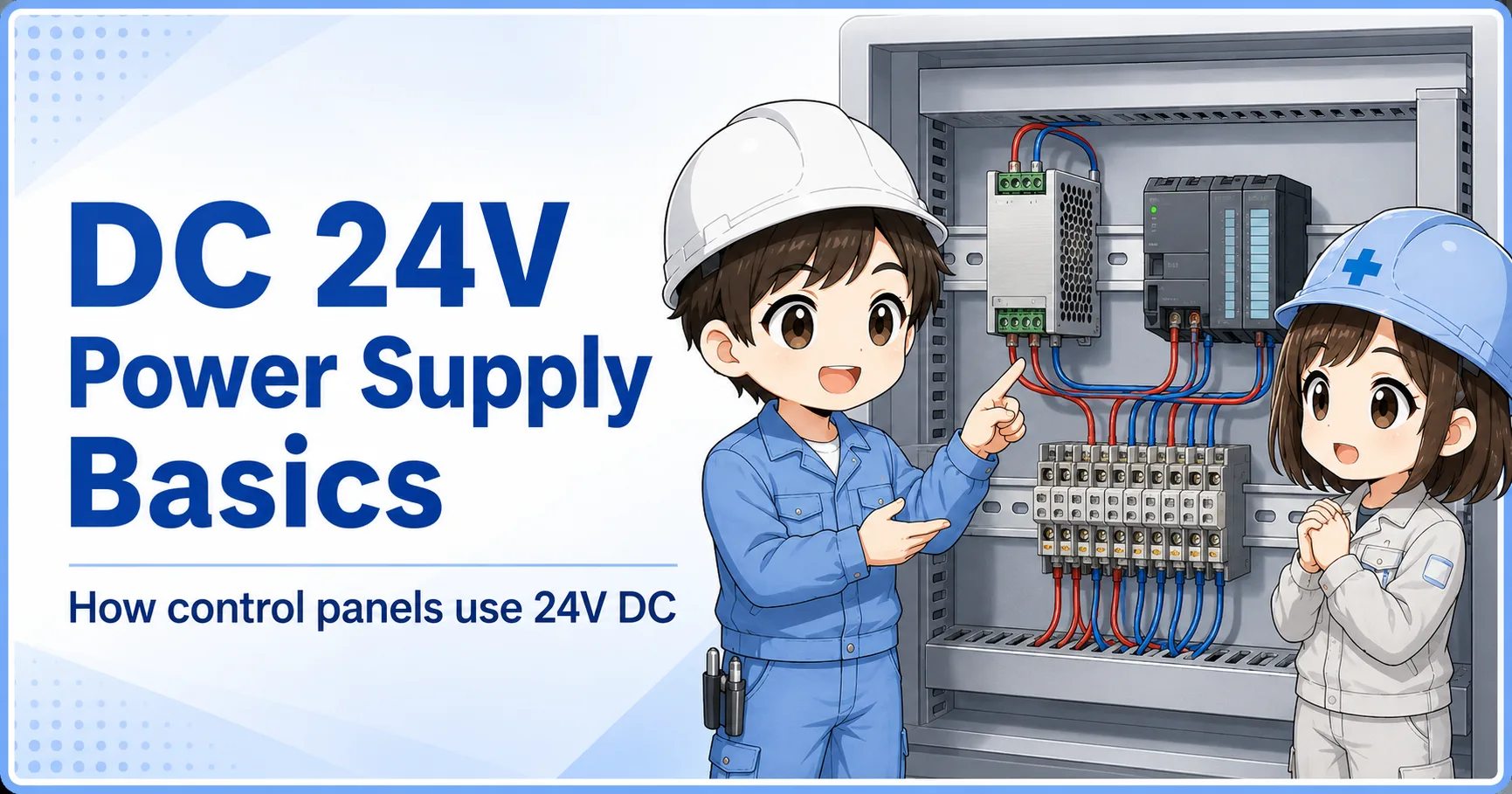
The secondary side may feed relays, lamps, or the input side of a DC 24V power supply.
Primary side and secondary side
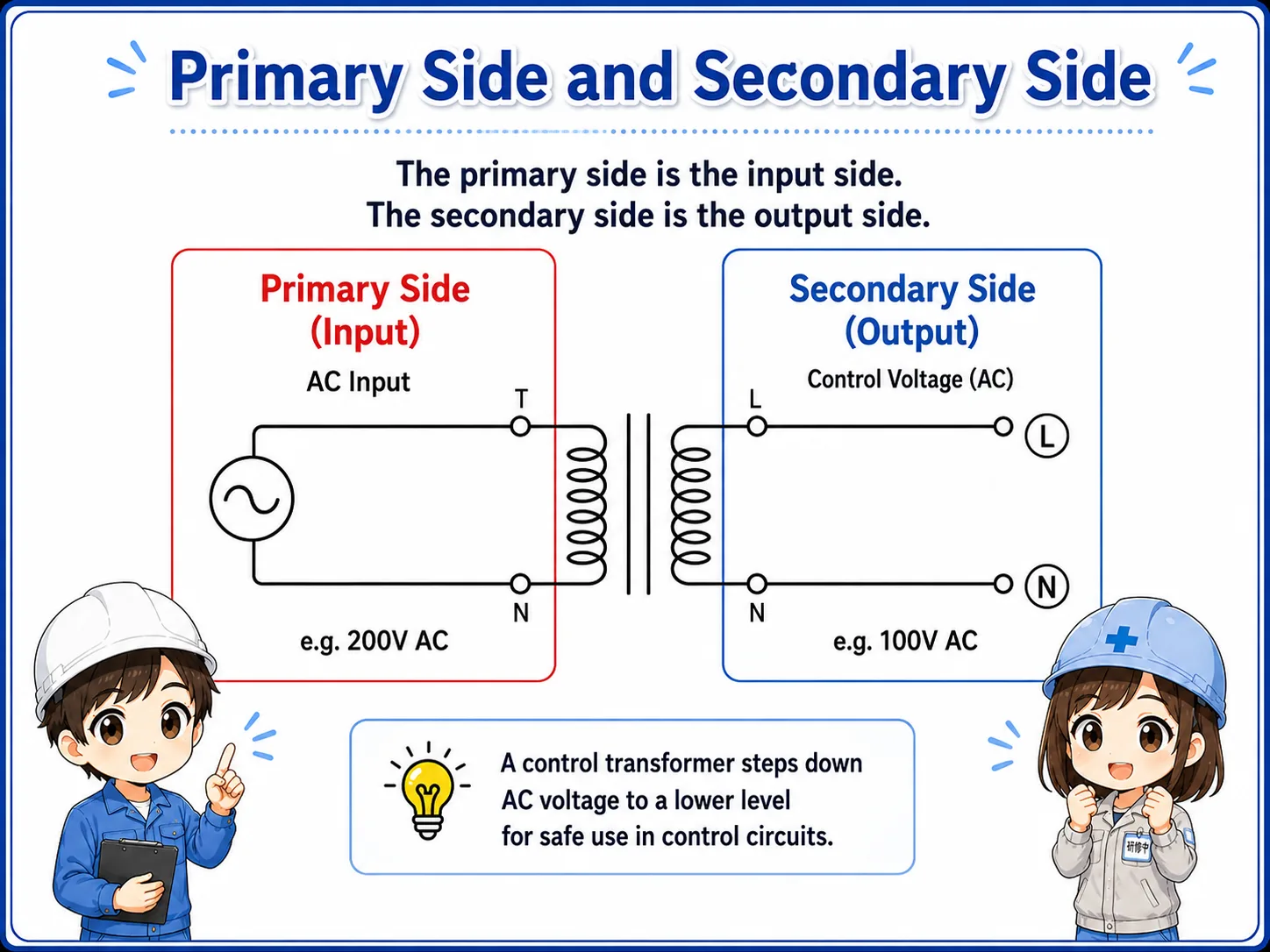
The primary side is the input side of the transformer. The secondary side is the output side.
When reading a drawing or checking a panel, the words primary and secondary are very important. The primary side receives the source AC voltage. The secondary side provides the transformed AC voltage for the control circuit.
| Side | Basic meaning | What to check |
|---|---|---|
| Primary side | Input side of the transformer. | Incoming voltage, breaker, fuse, terminal, and wiring from the source side. |
| Secondary side | Output side of the transformer. | Output voltage, secondary fuse, terminal, and wiring to the control circuit. |
| Load side | Devices supplied by the secondary side. | Relays, lamps, solenoids, control circuits, or power supplies connected downstream. |
Beginner-friendly point
If the secondary voltage is missing, do not immediately assume the transformer is bad. Check whether the primary side is actually receiving voltage first.
Control power flow inside a panel
A control transformer is usually part of a larger power path, with breakers, fuses, terminal blocks, and control devices around it.
A typical path may be: main power enters the panel, passes through a breaker or fuse, goes to the transformer primary side, then the transformer secondary side supplies control power. That control power may feed relays, lamps, solenoids, or a DC 24V power supply.
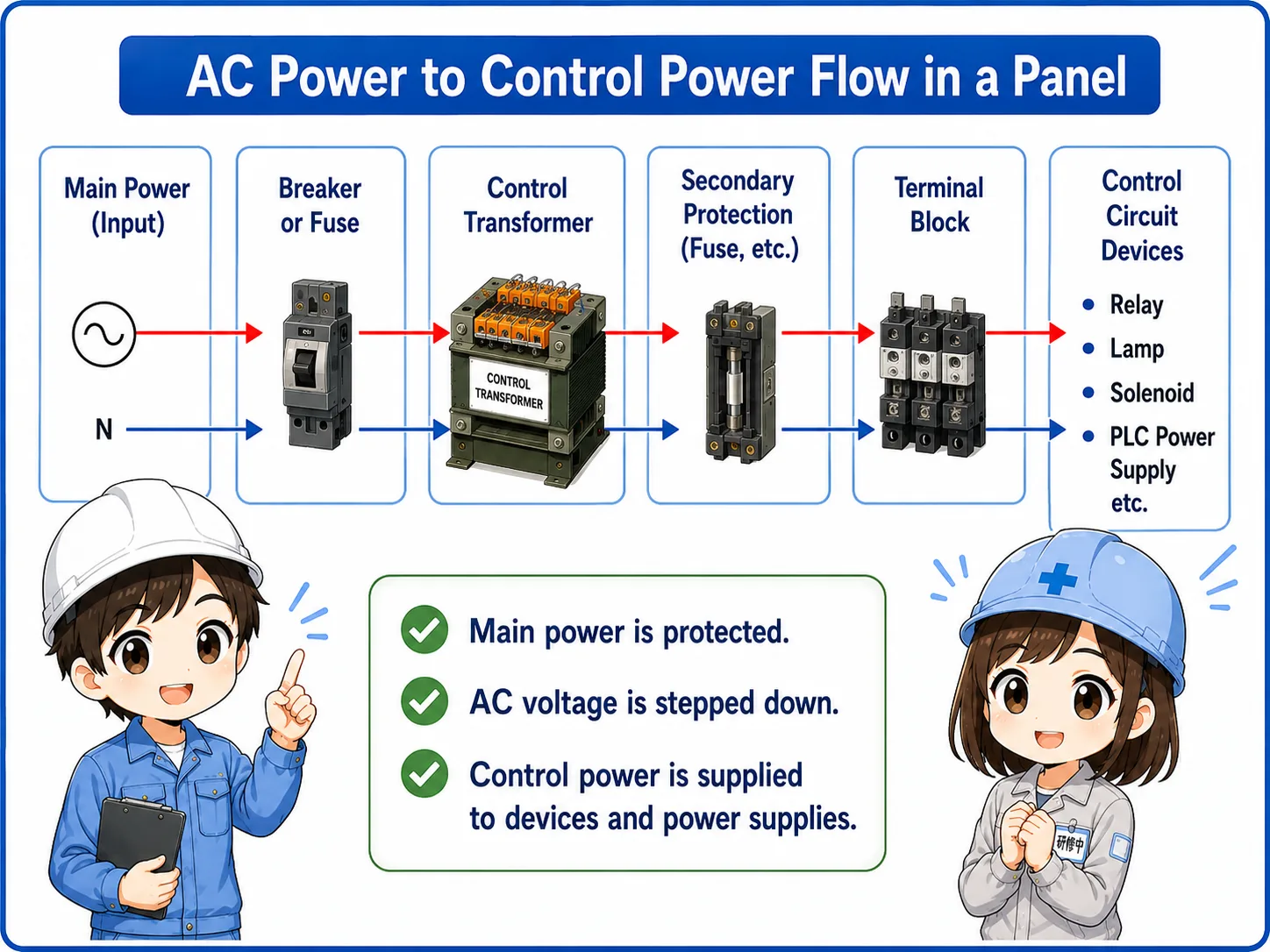
1. Main power
AC power enters the control panel.
2. Protection
A breaker or fuse protects the circuit.
3. Transformer
The transformer steps down the voltage.
4. Control power
The secondary side supplies control circuits.
5. Devices
Relays, lamps, or power supplies receive power.
Field-friendly view
When troubleshooting, trace the path in order. Do not jump directly to replacing the transformer before checking source voltage, fuses, terminals, and load-side problems.
Control transformer vs DC 24V power supply
A control transformer and a DC 24V power supply are different devices, but they may be connected in the same control power system.
A control transformer works with AC voltage. A DC 24V power supply converts power into DC 24V. In some panels, the transformer secondary side may supply AC input to a DC power supply, and the DC power supply then provides 24V DC for PLCs, sensors, and other DC devices.
| Item | Control transformer | DC 24V power supply |
|---|---|---|
| Main role | Steps down AC voltage. | Provides DC 24V output. |
| Output type | AC voltage. | DC voltage. |
| Typical use | AC control circuits, relay circuits, or feeding another power supply. | PLC power, sensors, relays, lamps, and DC control devices. |
| Common check | Primary voltage, secondary voltage, fuses, heating, noise. | Input voltage, DC output voltage, load, short circuit, voltage drop. |
Important point
Do not call every power device in a panel a transformer. A transformer changes AC voltage. A power supply may convert AC into DC.
Field check points for control transformer problems
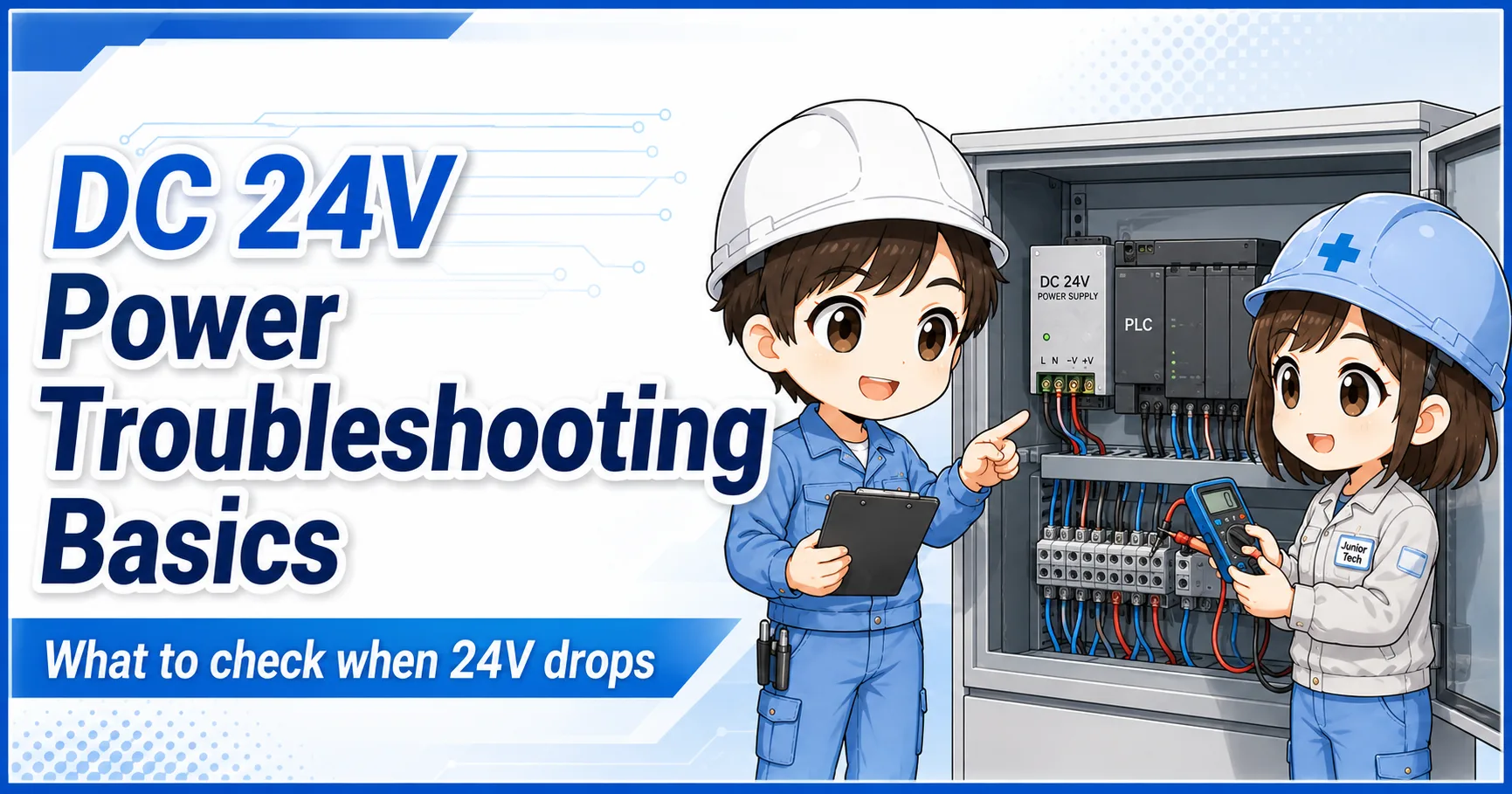
When control power is missing, check the primary side, secondary side, protection devices, terminals, and load side in order.
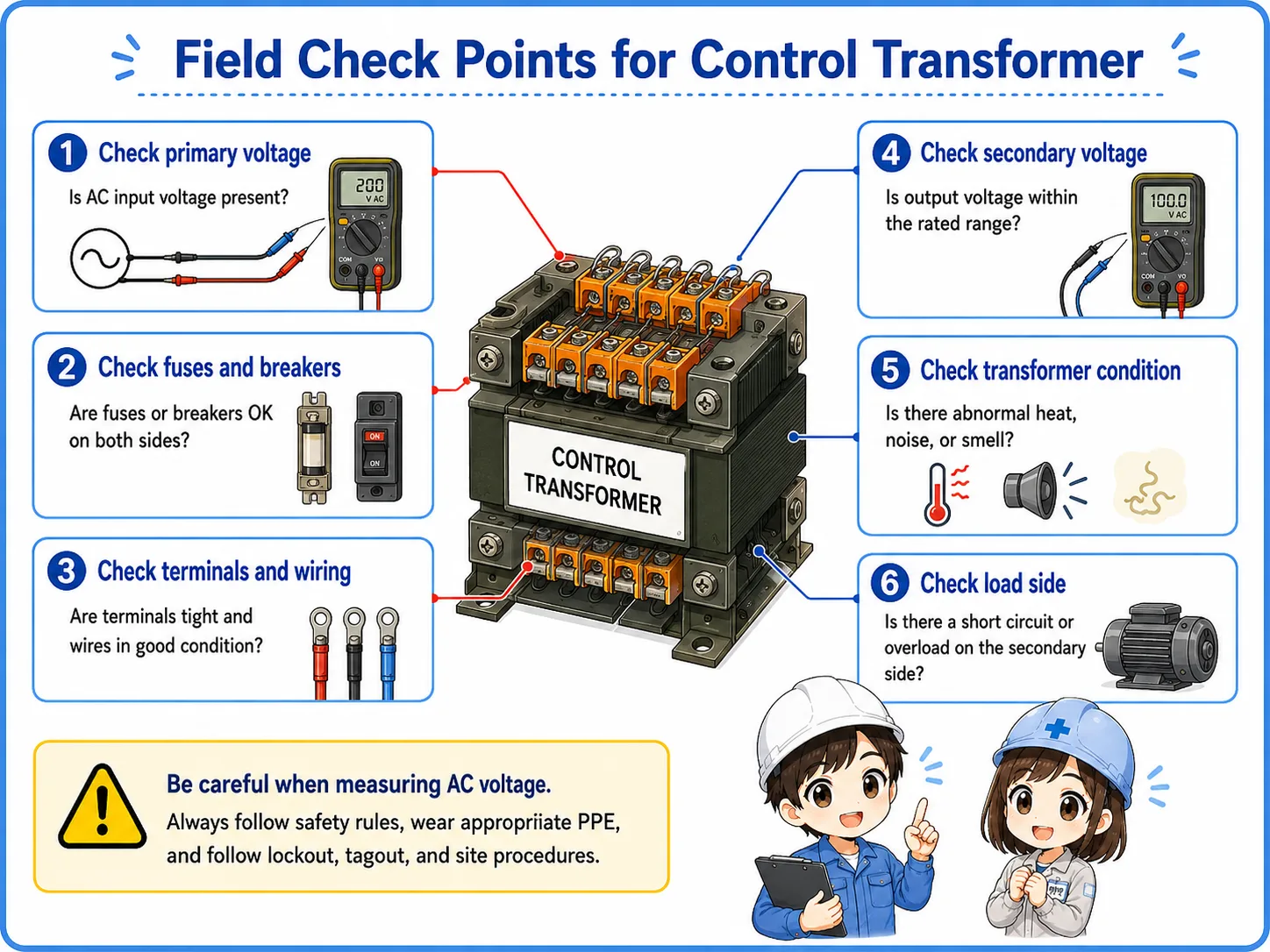
Primary voltage
Check whether the transformer input side is receiving the expected AC voltage.
Secondary voltage
Check whether the transformer output side is providing the expected control voltage.
Fuse or breaker
Check both primary and secondary protection devices, depending on the panel design.
Load-side problem
A short circuit or overload on the secondary side can make the control power fail again.
Be careful when measuring AC voltage
Transformer terminals may be close to live AC circuits. Use suitable test probes and follow lockout, isolation, and site rules when checking voltage.
Common mistakes when checking a control transformer
Many mistakes come from checking only one side of the transformer or ignoring the load side.
| Mistake | Why it causes trouble | Better check |
|---|---|---|
| Checking only the secondary side | If the primary side has no voltage, the secondary side will also be missing. | Check primary voltage first, then secondary voltage. |
| Replacing a fuse without finding the cause | A load-side short may blow the fuse again. | Check downstream wiring and connected devices before restarting. |
| Confusing AC and DC power | A transformer output and a DC power supply output are not the same thing. | Confirm AC/DC, voltage rating, and terminal labels. |
| Ignoring heat or unusual noise | Overload, wiring problems, or transformer trouble may cause heat or abnormal sound. | Check load, ventilation, mounting, rating, and panel condition. |
Beginner-friendly rule
When control power is missing, separate the problem into three areas: source side, transformer itself, and load side.
Safety notes before checking transformer wiring
Control transformers are connected to AC circuits, so checks must be done carefully.
Always follow the site rules and drawings. Do not assume the voltage level from appearance alone. Confirm the transformer rating, terminal labels, drawing symbols, and actual measured voltage.
If the transformer supplies a control circuit for a machine, losing or restoring secondary power may affect relays, valves, lamps, contactors, PLC power supplies, and machine behavior.
Restoring control power can operate equipment
Before restoring power, confirm that the machine is in a safe condition and that unexpected movement or automatic restart will not occur.
Related articles
These articles connect naturally to control transformers, DC 24V power, PLC I/O, and control panel power checks.