What is an earth leakage breaker?
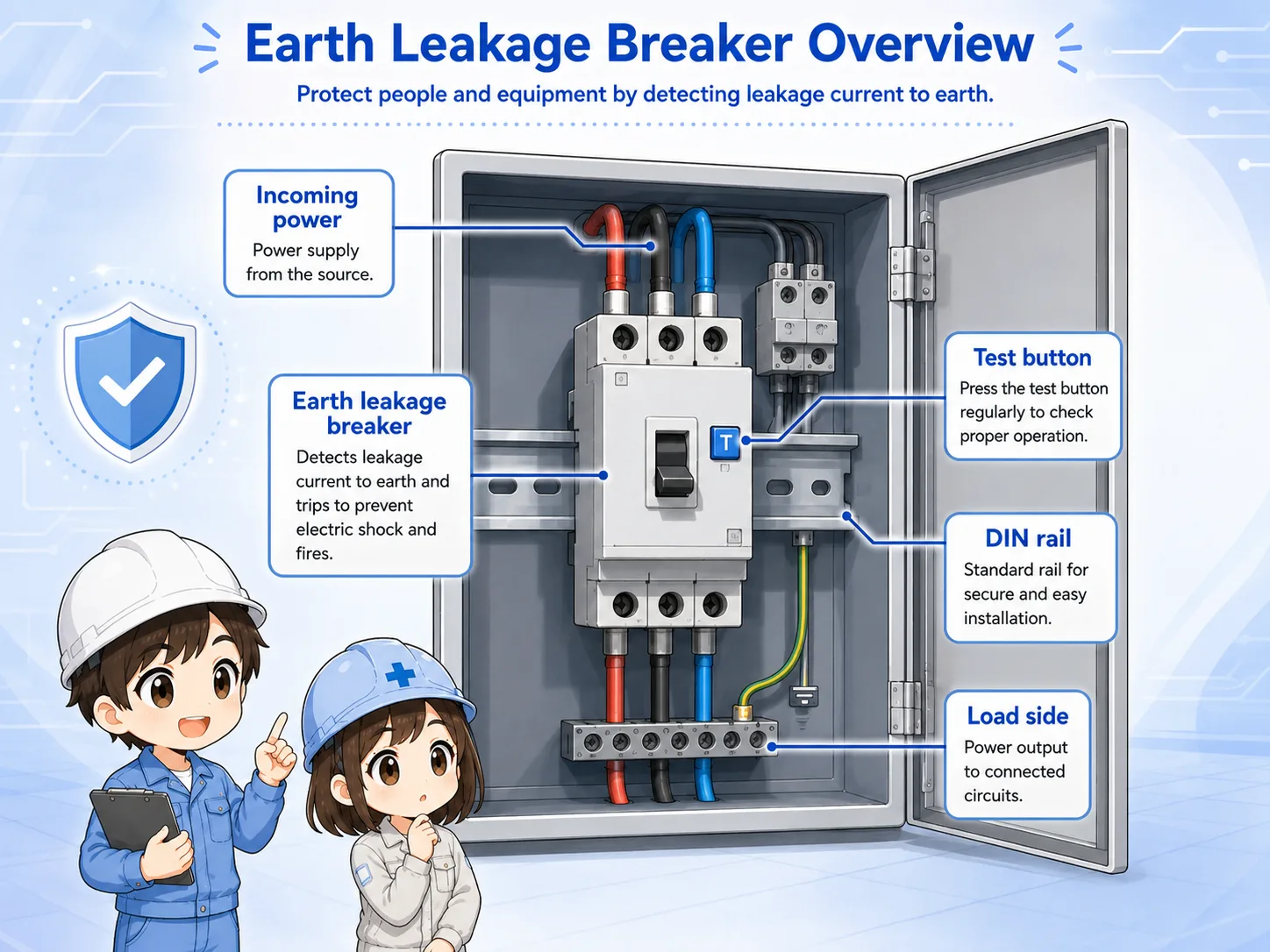
An earth leakage breaker detects leakage current and disconnects power to help protect people and equipment.
An earth leakage breaker, sometimes called an earth leakage circuit breaker or ELCB, is a protection device that watches whether current is flowing normally through the circuit. If part of the current leaks away through insulation failure, water, damaged wiring, a machine frame, or a person, the breaker can trip. Names and functions vary by country, standard, and manufacturer, so always check the actual device marking, wiring diagram, and manual.
This protection is important because leakage current can lead to electric shock, insulation trouble, equipment damage, or leakage-related fire risk. In the field, it is one of the devices you should treat carefully when a trip occurs.
Leakage protection is different from ordinary overcurrent protection
A standard breaker trips mainly for overload or short circuit. An earth leakage breaker also monitors current imbalance caused by leakage.
How leakage current happens
Leakage current means some current is flowing outside the intended circuit path.
In a healthy circuit, the current going out through the power line and the current returning through the return path should balance. If some current leaks to ground through damaged insulation, moisture, a machine frame, or another unintended path, the balance changes.
An earth leakage breaker detects this imbalance. When the leakage exceeds the specified level, it trips to disconnect the circuit.
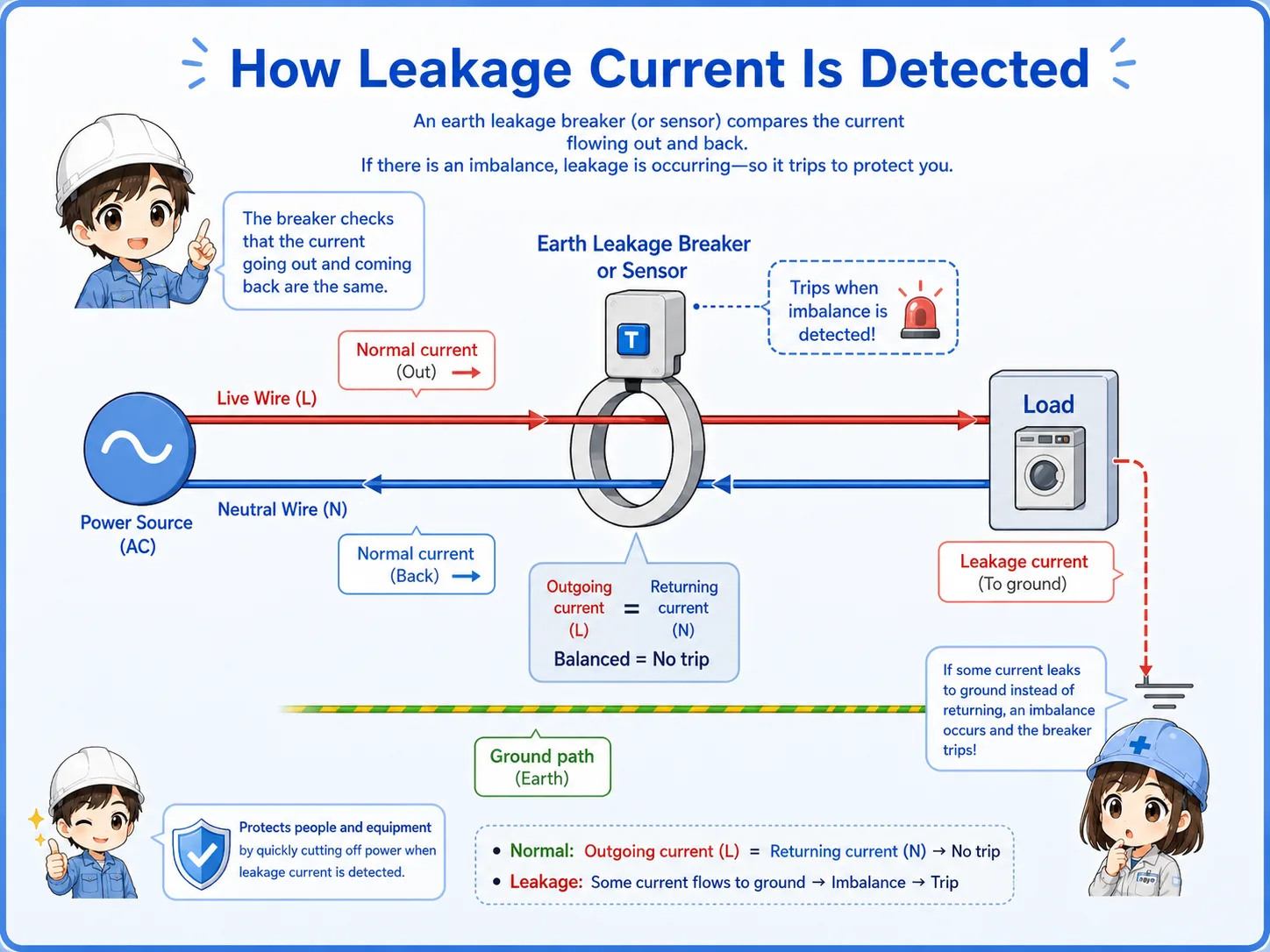

When an earth leakage breaker trips, think first: where could current be leaking? Moisture, insulation damage, wiring damage, or equipment failure are common clues.

So I should not just turn it back ON again. I should check why it tripped.
Earth leakage breaker vs standard breaker
A standard breaker and an earth leakage breaker protect against different abnormal conditions.
| Device | Main protection target | Typical field point |
|---|---|---|
| Standard breaker | Overload and short circuit. | Check load current, short-circuit fault, and breaker capacity. |
| Earth leakage breaker | Leakage current, and often overcurrent depending on model. | Check leakage path, insulation condition, moisture, equipment frame, and wiring damage. |
| Grounding system | Provides a safer path and supports protective operation. | Check grounding together with the breaker and equipment condition. |
Read the actual device marking
Breaker names and functions vary by country and manufacturer. Always check the nameplate, drawing, and device manual before deciding what protection is included.
Rated sensitivity and trip timing
Earth leakage breakers have rated sensitivity current and operating characteristics.
You may see values such as rated current, rated sensitivity current, and trip time on the device label or drawing. The rated sensitivity current indicates the leakage-current level at which the breaker is designed to operate.
1. Current flows normally
Outgoing and returning current are balanced.
2. Leakage occurs
Some current flows through an unintended path.
3. Imbalance is detected
The breaker detects the difference.
4. Circuit trips
The breaker disconnects the circuit to reduce risk.
Do not change ratings casually
The correct rating depends on the circuit, equipment, environment, and applicable standards. Selection should follow the design and qualified electrical practice.
Field checks when an earth leakage breaker trips
A trip can indicate a real leakage fault, so check the cause before repeated resetting.
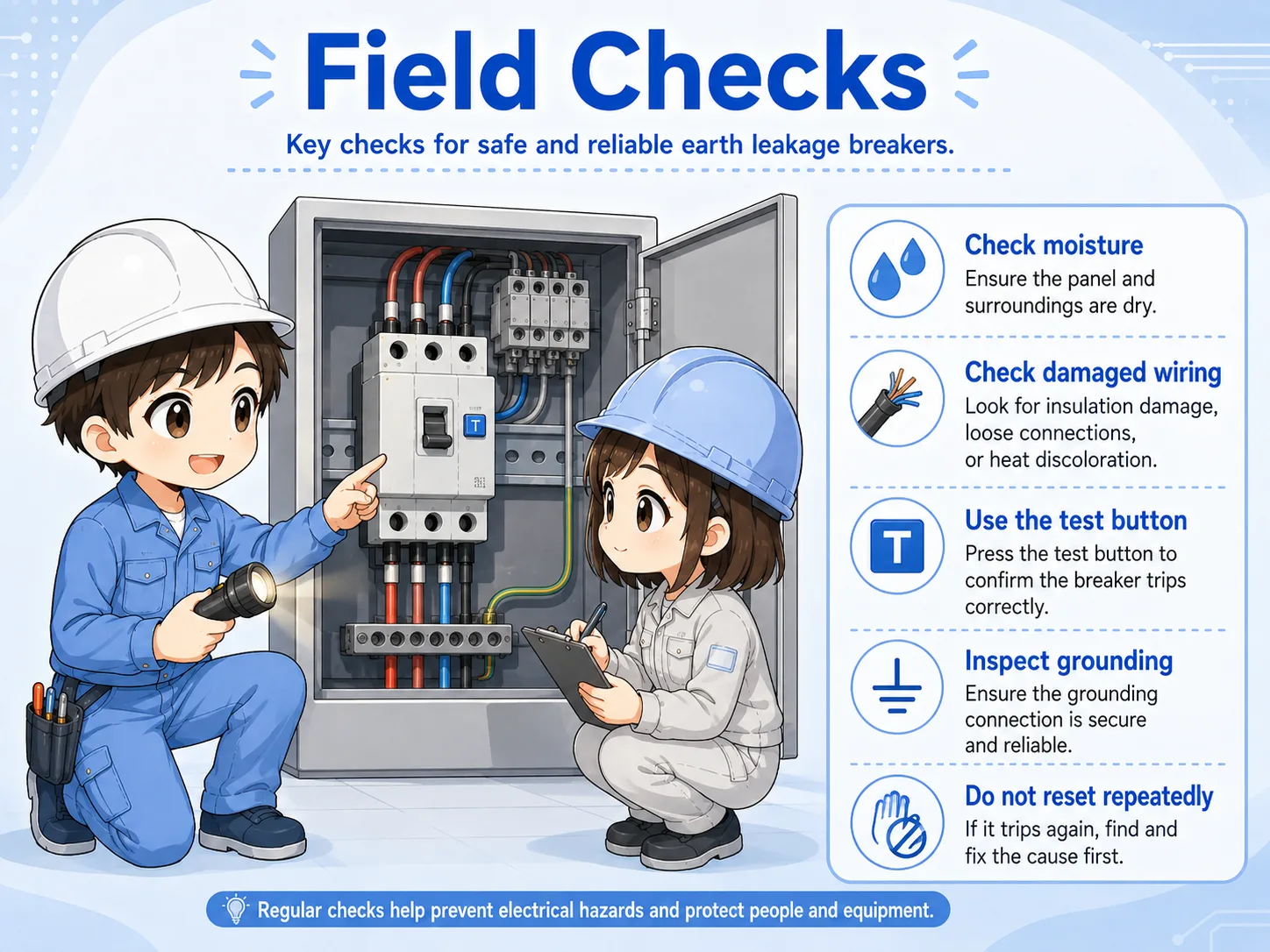
Check what changed
Did the trip happen after rain, washing, maintenance, wiring work, or equipment replacement?
Check the load side
Motors, heaters, cables, terminal boxes, and wet equipment are common places to inspect.
Check insulation safely
Insulation testing should be done only by qualified people using the correct procedure.
Check the test button
The test button checks the breaker operation, but it does not identify the actual leakage location or prove that the whole circuit is safe. If trips repeat, check the load-side wiring, insulation condition, moisture, grounding, and connected equipment according to qualified electrical procedure.
Do not repeatedly reset without investigation
If the breaker trips again, there may be a real leakage or insulation problem. Repeated resetting can be dangerous.
Common mistakes
Many mistakes come from treating an earth leakage trip as just a nuisance trip.
- Resetting repeatedly without checking the load-side equipment.
- Assuming the breaker is bad before checking moisture, insulation, or damaged wiring.
- Confusing overcurrent trips with leakage-current trips.
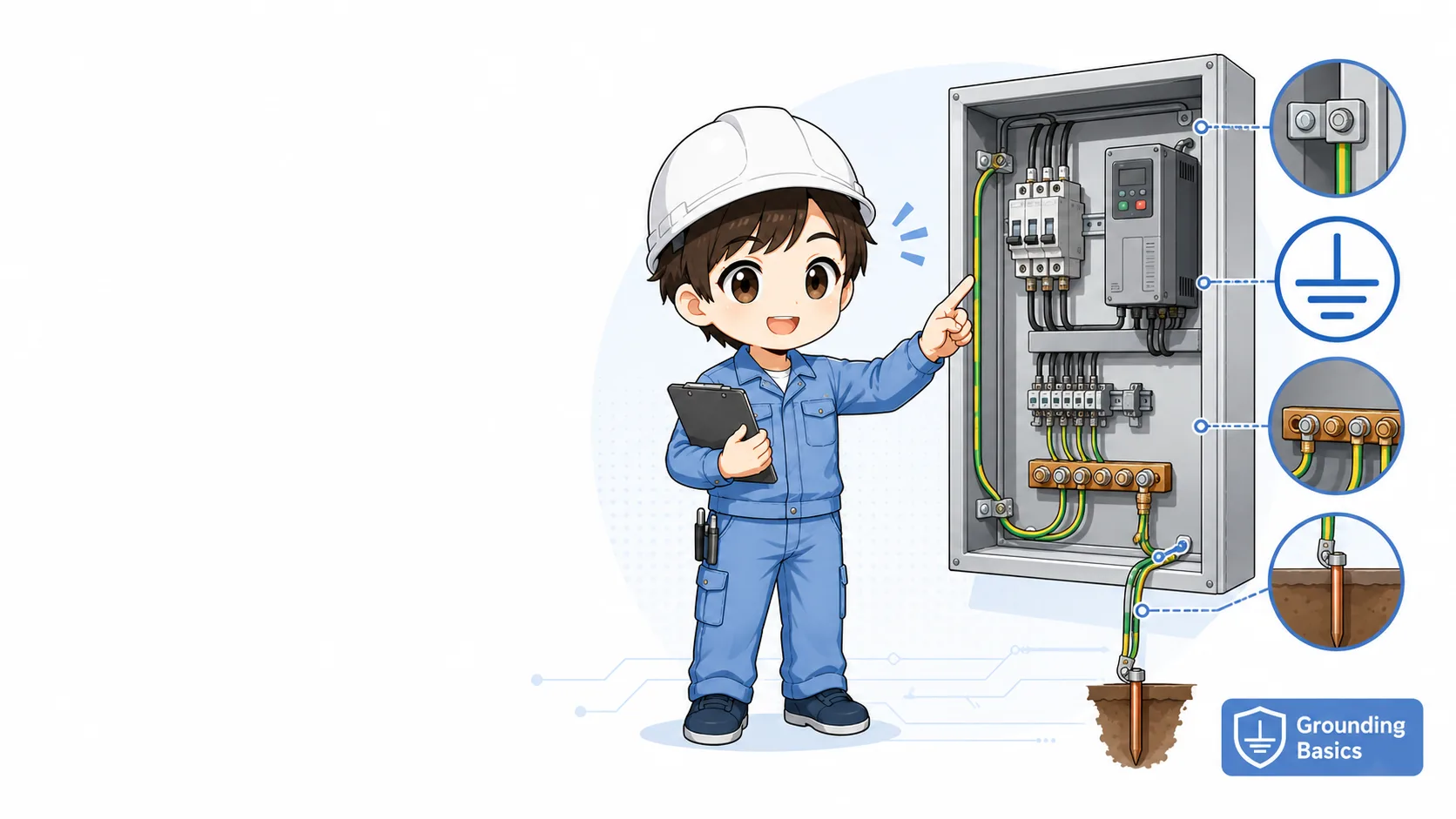
- Ignoring the grounding condition around the equipment.
- Using only the test button result to judge the whole circuit condition.
Trip cause and trip device are not always the same place
The breaker trips at the panel, but the leakage cause may be in a cable, motor, heater, terminal box, or machine-side device.
Summary: leakage trips need careful checking
An earth leakage breaker detects leakage current and disconnects the circuit to help protect people and equipment. It is different from a standard breaker that mainly responds to overload and short circuit.
In the field, a leakage trip should not be treated as something to simply reset. Check the load, wiring, insulation condition, moisture, grounding, and recent changes before deciding the next action.