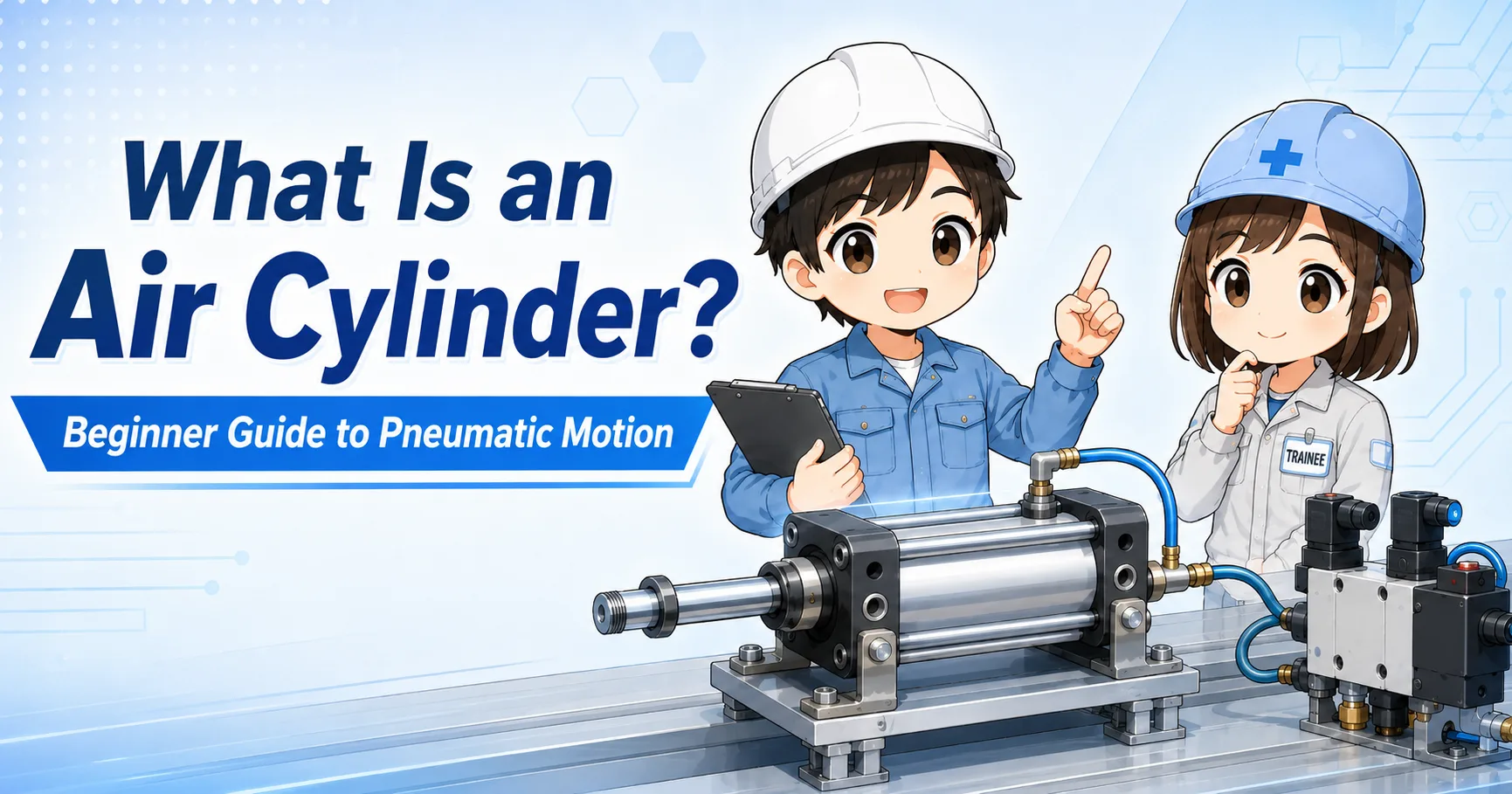
What is an air filter regulator lubricator?
An FRL unit is an air preparation unit installed on the supply side of pneumatic equipment.
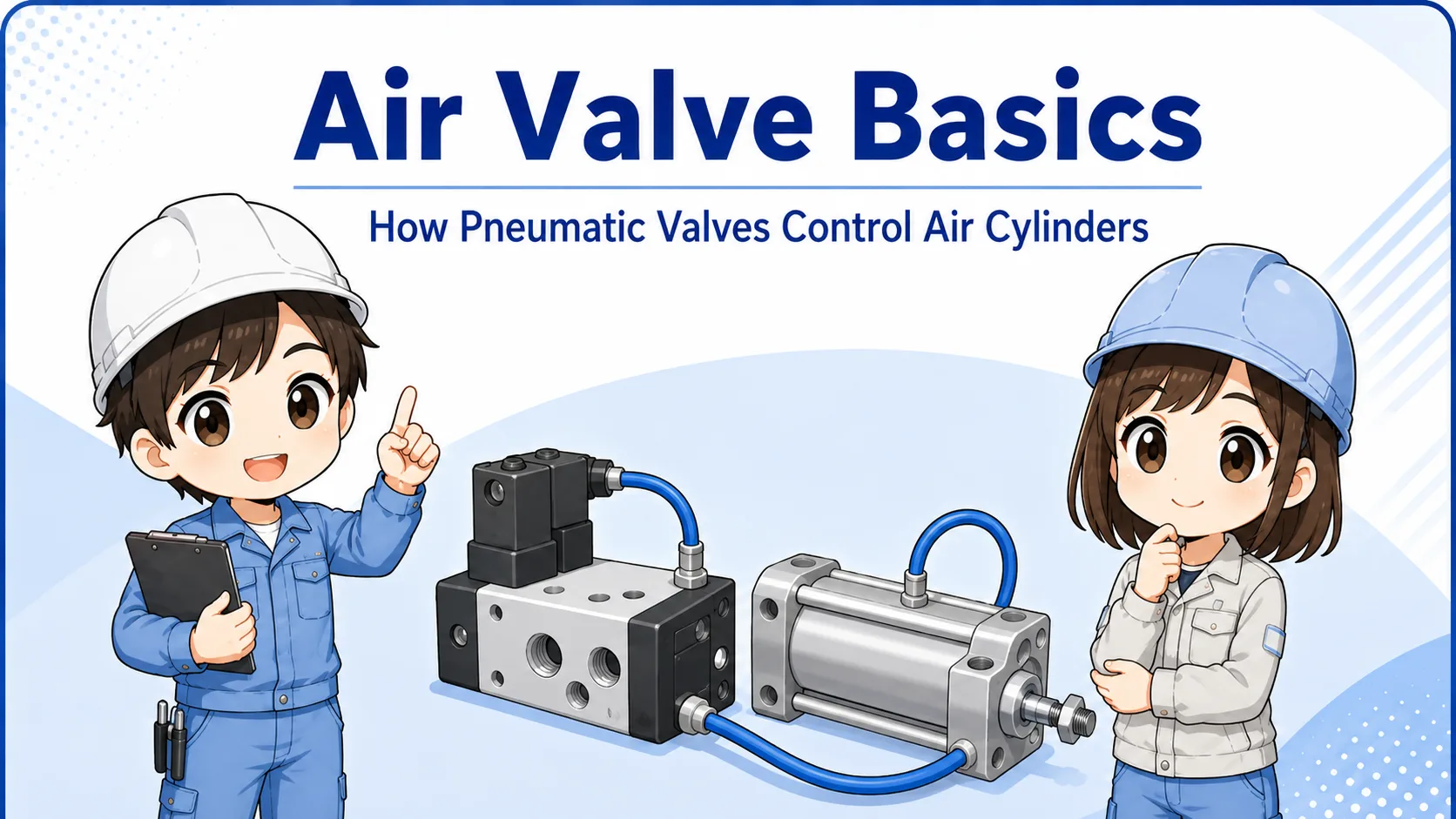
Pneumatic machines use compressed air to move cylinders, operate valves, and drive actuators. However, compressed air can contain water, dust, oil mist, pressure fluctuation, and piping debris. If those problems reach the machine, pneumatic devices may move poorly or wear faster.
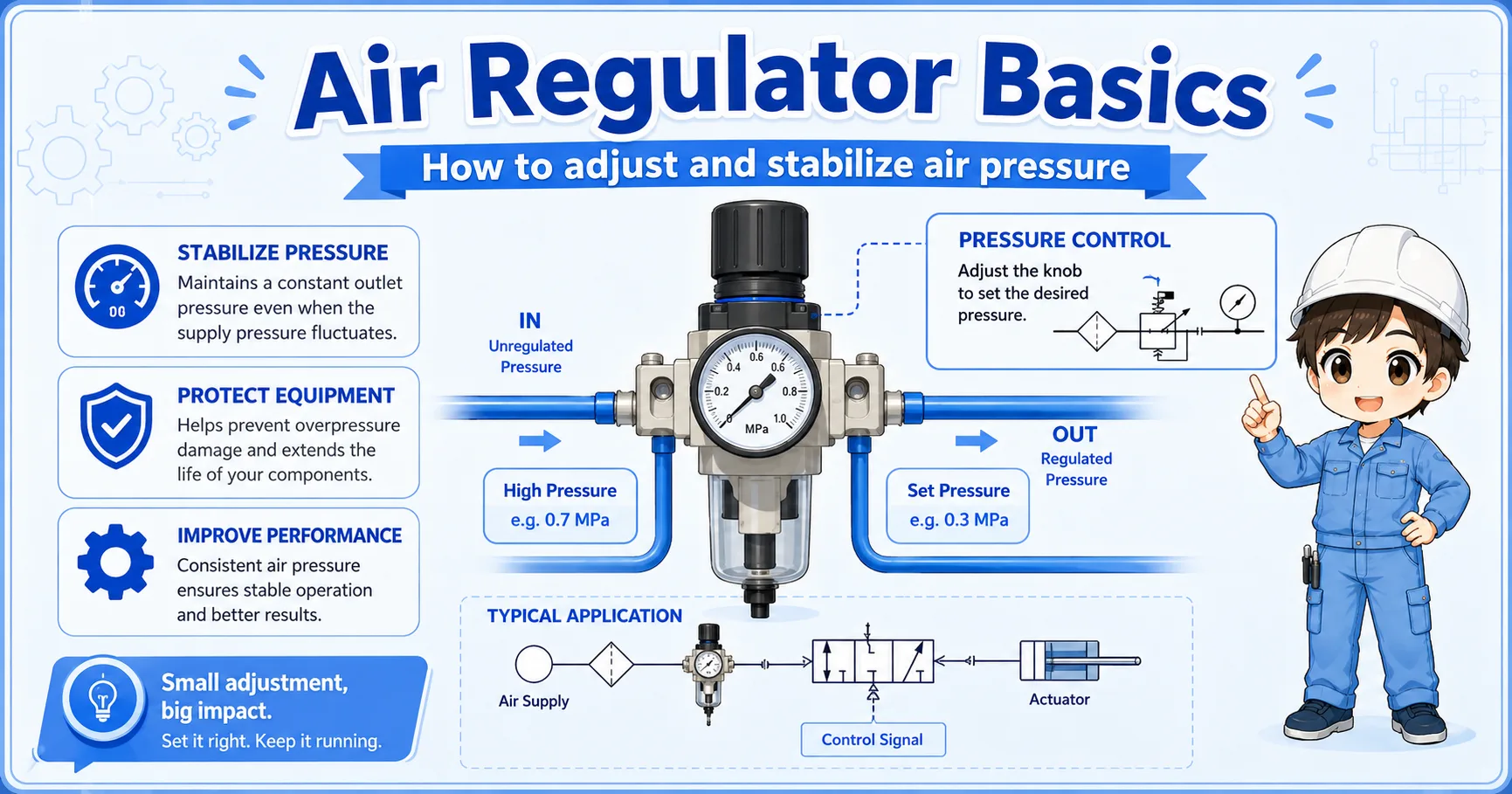
An air filter regulator lubricator is often called an FRL unit. FRL stands for Filter, Regulator, and Lubricator. The purpose is not simply to connect air pipes, but to prepare compressed air before it reaches valves, cylinders, and actuators. In many modern systems, the filter and regulator are common, while the lubricator may or may not be used depending on the equipment.
Think of it as air preparation, not just a pipe fitting
The FRL unit sits before the pneumatic equipment and helps prepare the air condition. It does not replace correct pressure setting, correct piping, or regular drain checks.
The three main parts: filter, regulator, and lubricator
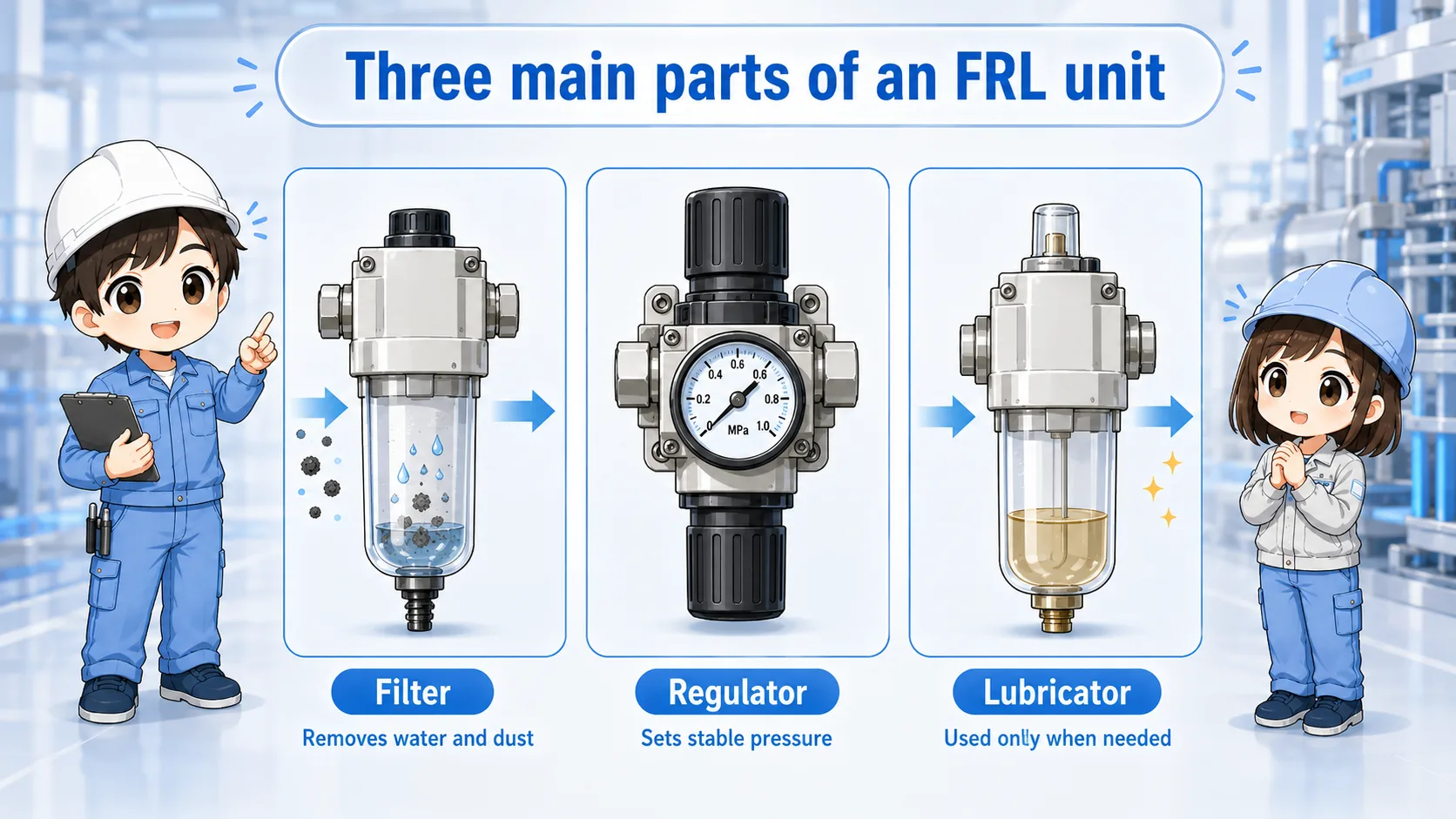
Each part has a different role, so it helps to read the unit from the air supply side to the machine side.
| Part | Main role | What to check in the field |
|---|---|---|
| Air filter | Removes water droplets, dust, and some contamination from compressed air. | Check the bowl, drain level, filter element condition, and flow direction. |
| Regulator | Adjusts air pressure to the level required by the machine or device. | Check the pressure gauge, lock position, and whether the setting was changed. |
| Lubricator | Adds a controlled oil mist when the pneumatic equipment requires lubrication. | Confirm whether the equipment actually needs lubrication before adding oil. |

When you look at an FRL unit, do not see it as one black box. Read it as filter, regulator, and sometimes lubricator. Each part has a different check point.

So if a cylinder moves weakly, I should not immediately blame the cylinder. I should also check the air preparation side.
How air flows through an FRL unit
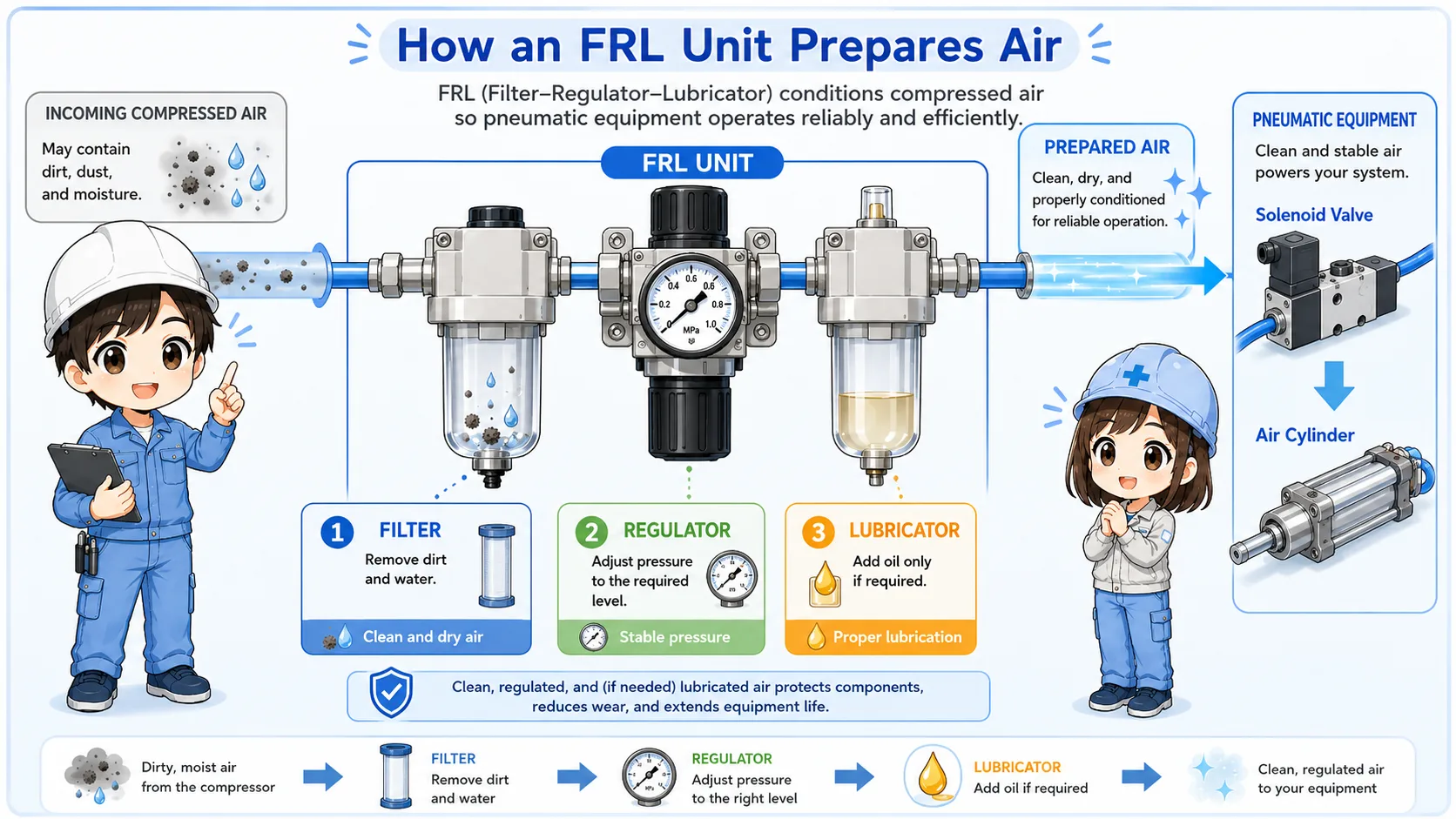
A typical order is filter first, regulator second, and lubricator last when a lubricator is used.
The general flow is air supply → filter → regulator → lubricator → pneumatic equipment. The filter removes water and contamination before pressure adjustment. The regulator then sets the pressure. If a lubricator is required, it adds oil mist after pressure regulation.
1. Air supply
Compressed air enters from the plant air line or local air source.
2. Filter
Water droplets and debris are separated before they reach the machine.
3. Regulator
Pressure is adjusted to the range required by the pneumatic circuit.
4. Equipment
Prepared air is supplied to valves, cylinders, and other devices.
Lubricators are not always used
Many modern pneumatic components are designed for non-lubricated air. Adding oil when the equipment does not require it can cause contamination or maintenance trouble. Always check the pneumatic component manual, machine specification, and site maintenance procedure before adding lubrication.
Drain bowls and pressure gauges
The drain bowl and pressure gauge give quick clues about the air condition and pressure setting.
The filter bowl may collect water and contamination. If water builds up and is not drained, it can pass downstream and cause trouble. Some filters use an automatic drain, while others require manual draining.
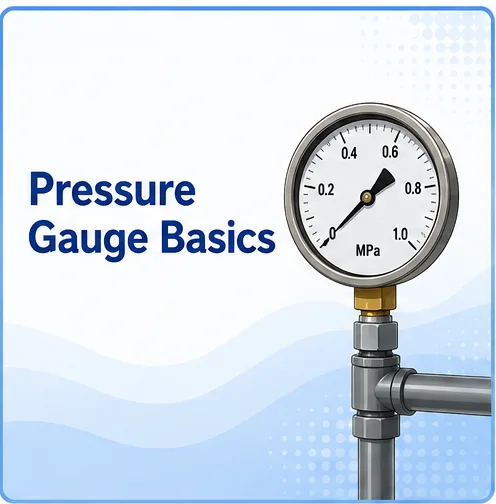
The pressure gauge shows the regulated pressure. If the gauge reading is lower than expected, the machine may move slowly or fail to complete a motion. If it is too high, the machine may move too strongly or put stress on components.
Look before adjusting
Before turning the regulator knob, check the current gauge reading, the required pressure in the manual or drawing, and whether someone has locked or marked the setting.
Field checks for FRL units
When pneumatic equipment behaves strangely, check the air preparation side before replacing devices.
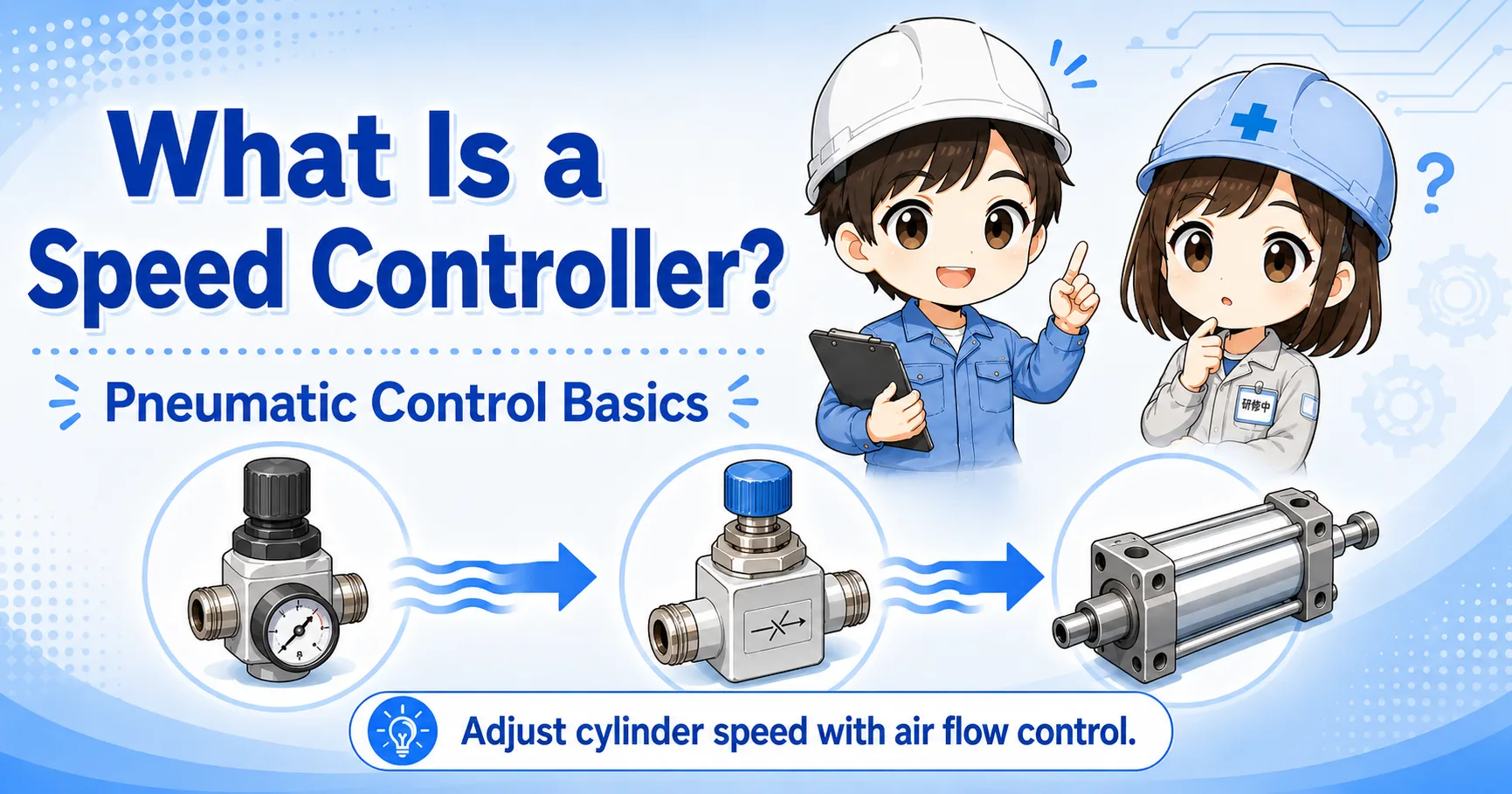
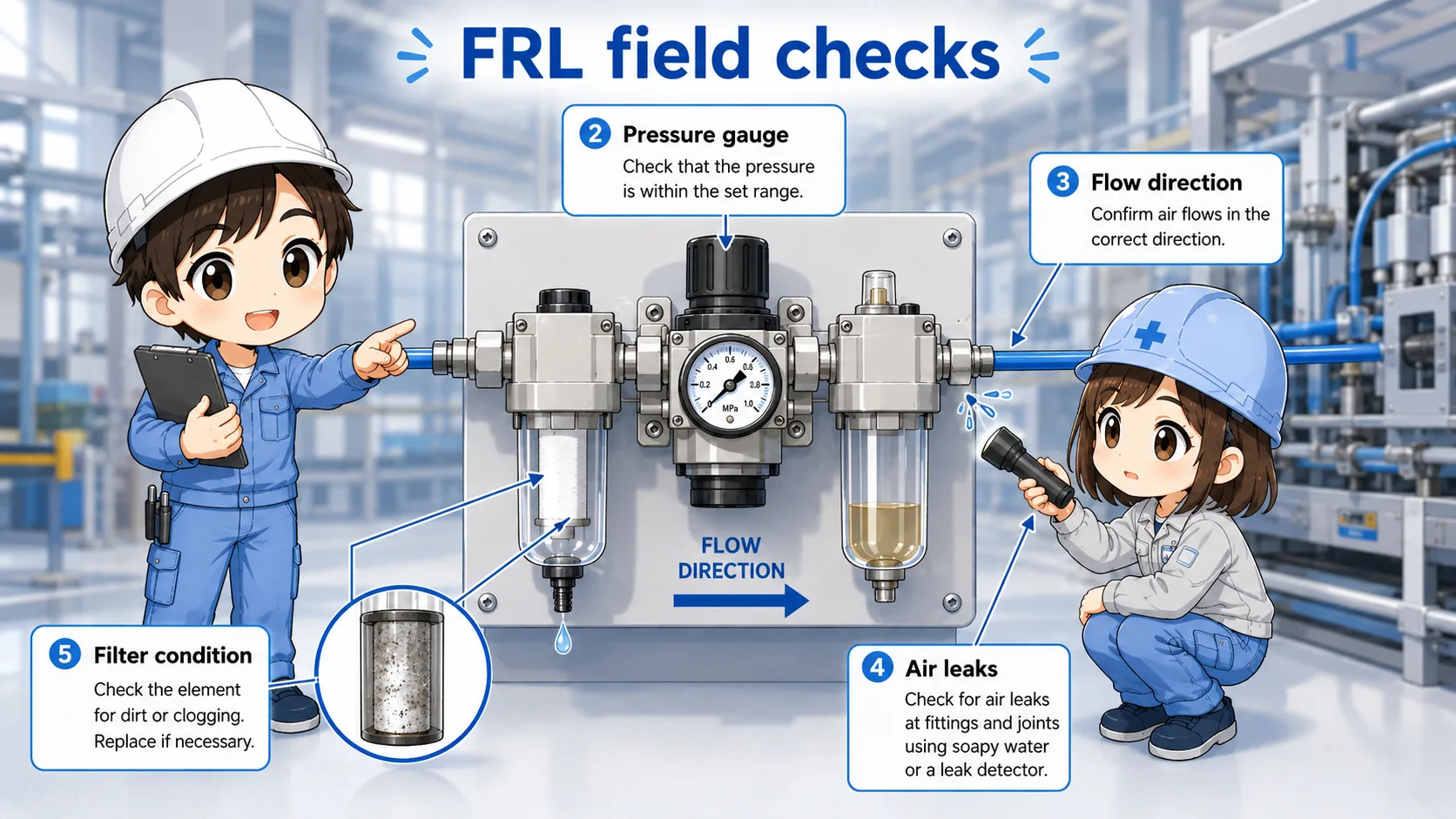
Problems such as weak cylinder motion, unstable speed, sticking valves, or repeated air trouble can be related to supply pressure, water, clogged filter elements, wrong flow direction, or changed regulator settings.
Check the drain bowl
Look for water, dirt, cracks, discoloration, and whether the drain is working.
Check the pressure gauge
Compare the reading with the drawing, manual, or machine label before changing it.
Check flow direction
Confirm the arrow or IN/OUT marking. Reversed installation can cause poor performance.
Check leakage and clogging
Listen for air leaks and check whether the filter element may be blocked or overdue for replacement.
Common mistakes
Most mistakes come from changing the setting without checking the whole air preparation path.
- Turning the regulator knob without recording the original pressure.
- Ignoring water in the filter bowl or assuming the drain is always working.
- Adding lubricator oil even when the equipment is specified for non-lubricated air.
- Replacing a valve or cylinder before checking the upstream air pressure.
- Assuming similar-looking FRL units have the same pressure range or drain type.
Follow site safety rules
Compressed air can move cylinders suddenly. Isolate energy, release residual pressure, and follow the site's maintenance procedure before working on pneumatic equipment.
Summary: prepare the air before judging the device
An air filter regulator lubricator prepares compressed air before it reaches pneumatic equipment. The filter removes contamination, the regulator adjusts pressure, and the lubricator adds oil mist only when it is required.
In field troubleshooting, read the air supply, filter bowl, pressure gauge, flow direction, drain condition, and downstream device together. This habit helps prevent unnecessary part replacement and makes pneumatic problems easier to trace.