1. Basic idea: a light curtain watches a protected area
A light curtain uses multiple beams to detect when a person or object enters a hazardous area.
A light curtain is a safety device installed near machine openings, robot cells, presses, conveyors, or other areas where access needs to be monitored. It has a transmitter side and a receiver side. When the beams are clear, the safety condition can be valid. When the beam path is interrupted, the safety output changes.
In control systems, the important point is that the light curtain is not only a normal photoelectric sensor. It is part of a safety-related input path that must be treated according to the machine safety design.
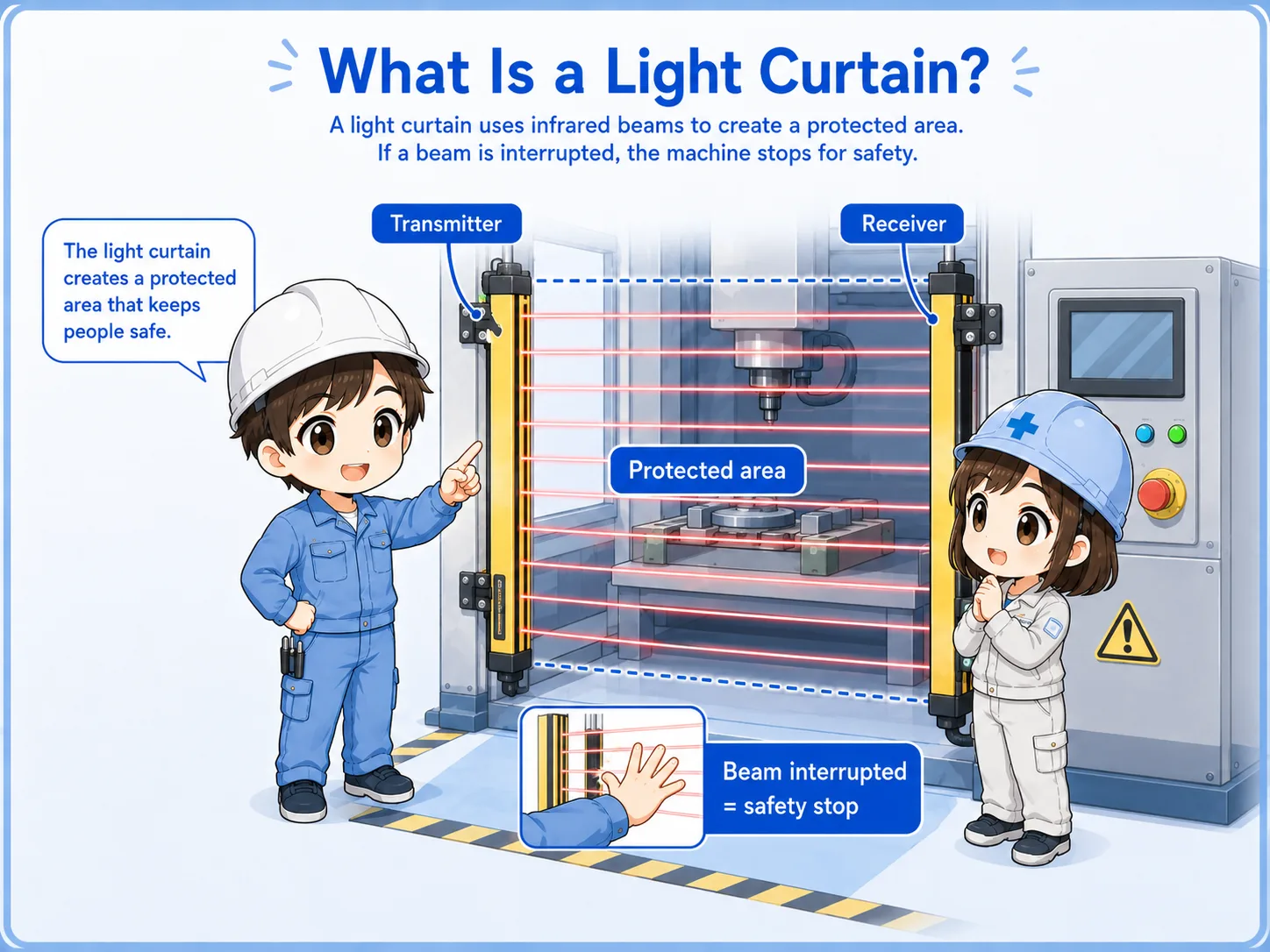

A light curtain is easy to see on site, but the important part is how its safety output is used in the safety circuit.

So I should not think of it as just a normal optical sensor connected to a PLC input.
2. How a light curtain works
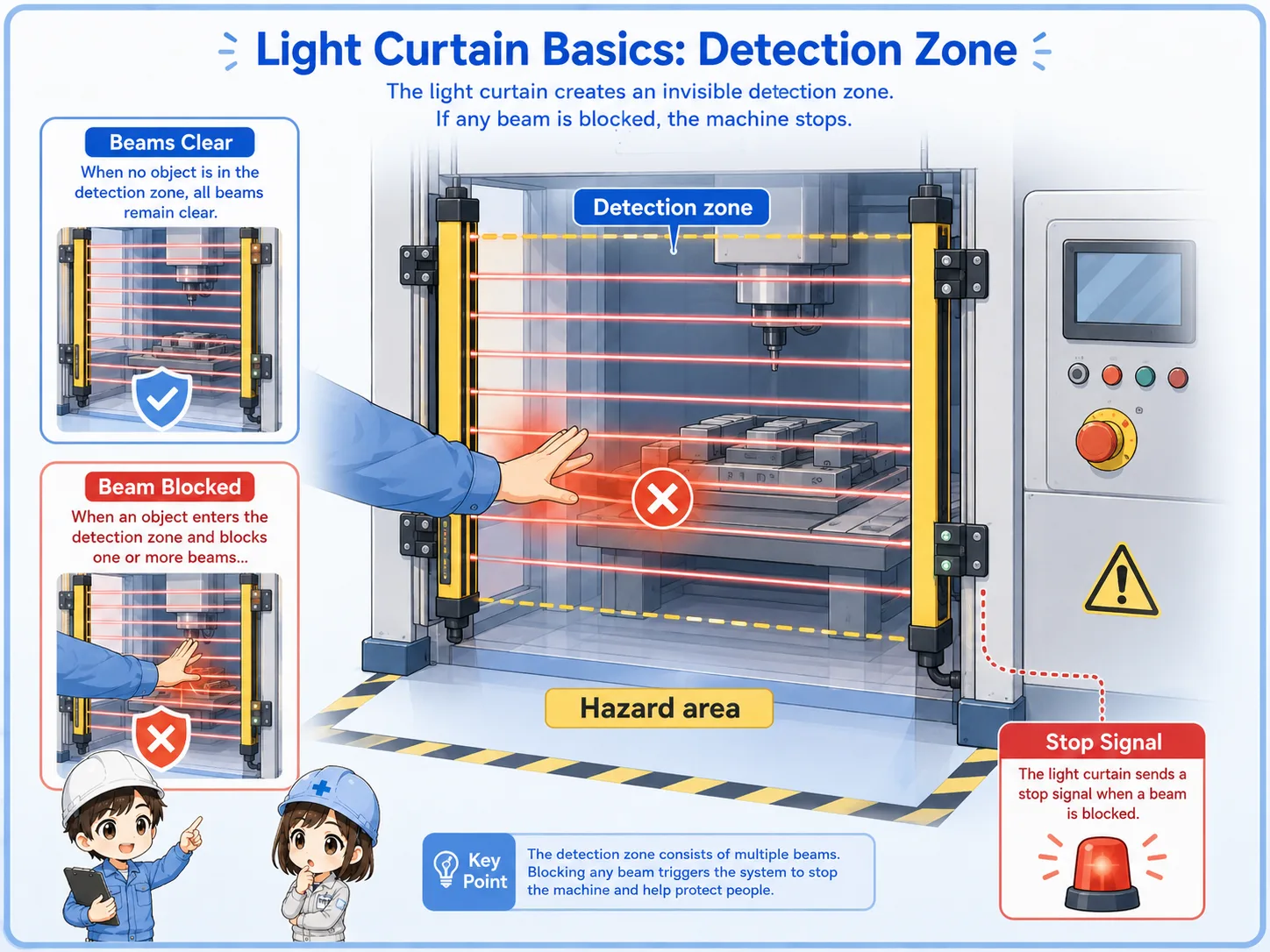
The transmitter sends beams, and the receiver checks whether those beams arrive correctly.
A typical light curtain has a transmitter and a receiver facing each other. The transmitter sends multiple beams across the opening, and the receiver monitors them. If a hand, body, workpiece, or other object blocks the beams, the light curtain changes its output state.
The control system then uses that safety signal through a safety relay or safety controller. The exact output type, response time, muting function, and wiring depend on the product and machine design.
1. Beams are clear
The transmitter and receiver can see each other correctly.
2. Beam is blocked
A person or object enters the protected detection area.
3. Safety output changes
The safety relay or controller receives the changed condition.
3. Difference from a normal area sensor
A normal area sensor detects presence. A light curtain used for safety is part of a safety function.
Some devices look similar from a distance, but their roles can be different. A normal area sensor may be used for workpiece detection or non-safety presence detection. A safety light curtain is selected and wired as part of a safety-related control system.
| Device | Main role | Common use |
|---|---|---|
| Normal area sensor | Detects objects or presence. | Workpiece detection, counting, or process confirmation. |
| Photoelectric sensor | Detects light interruption at a point. | General machine sensing and PLC input checks. |
| Safety light curtain | Monitors hazardous access as a safety function. | Safety relay or safety controller input for machine stopping. |
Do not judge by appearance alone
Whether a device can be used for a safety function depends on its specification, wiring, safety category, and the overall machine risk assessment. Always confirm the official documentation.
4. Signal flow to a safety relay or controller
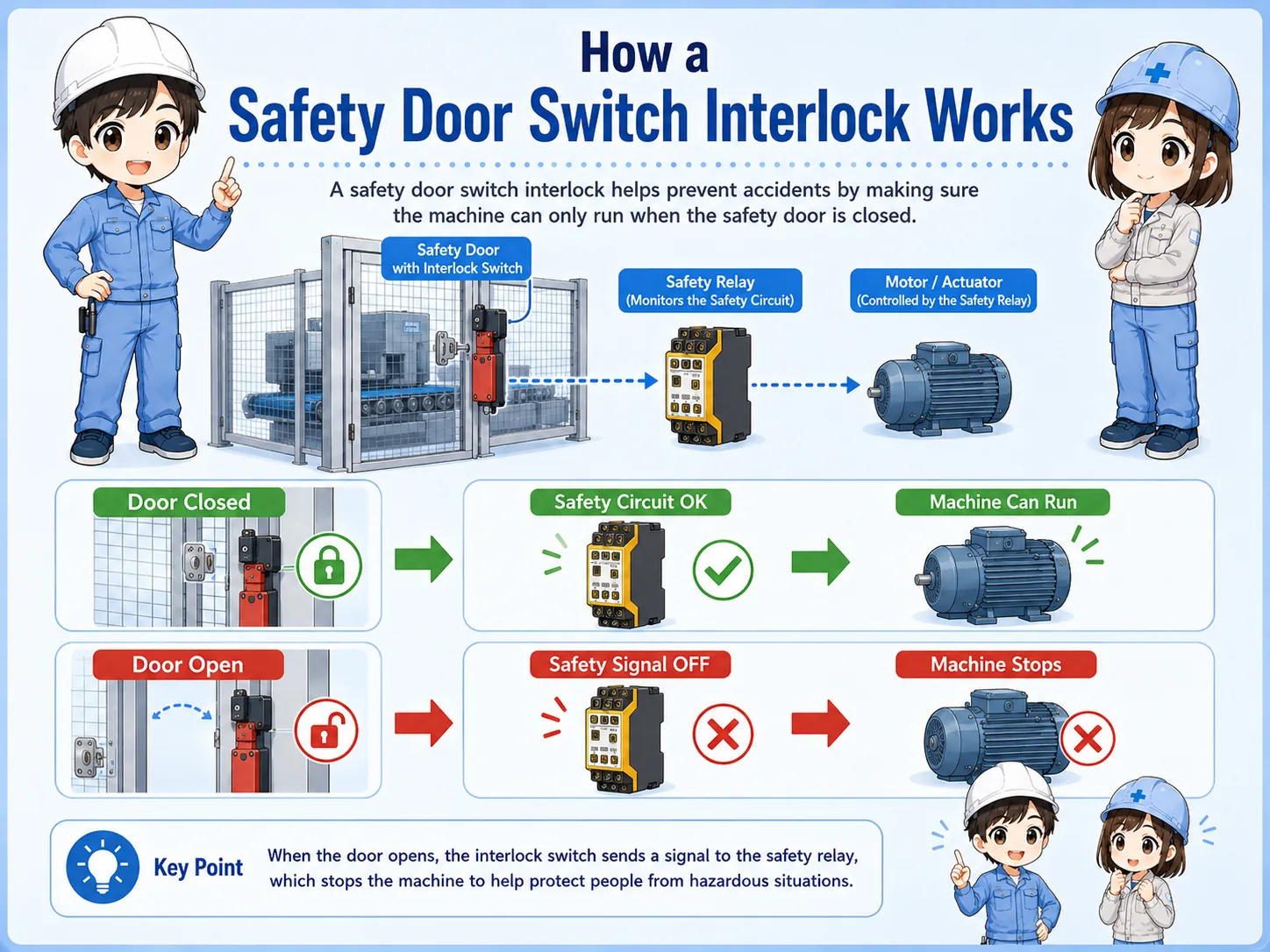
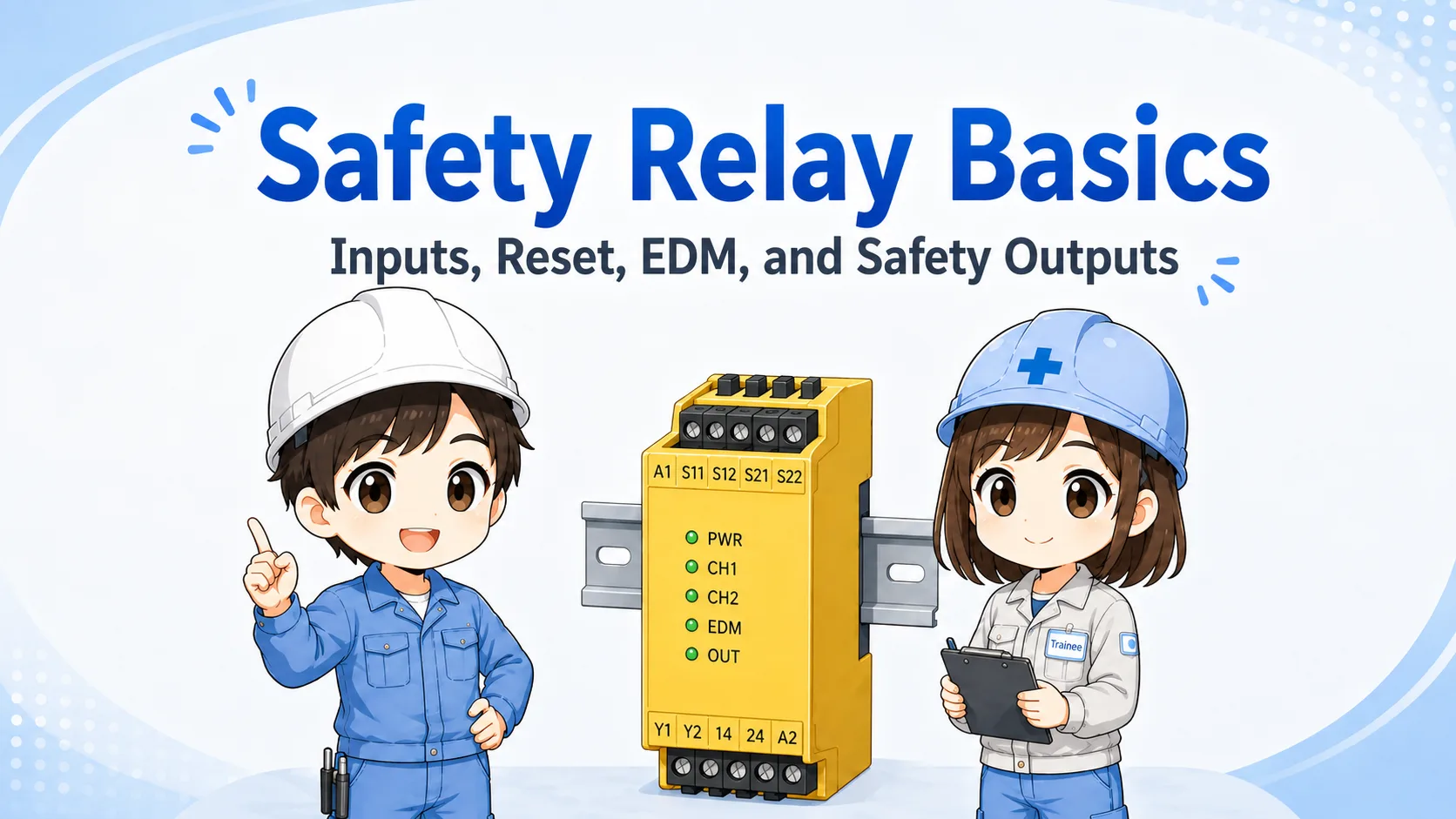
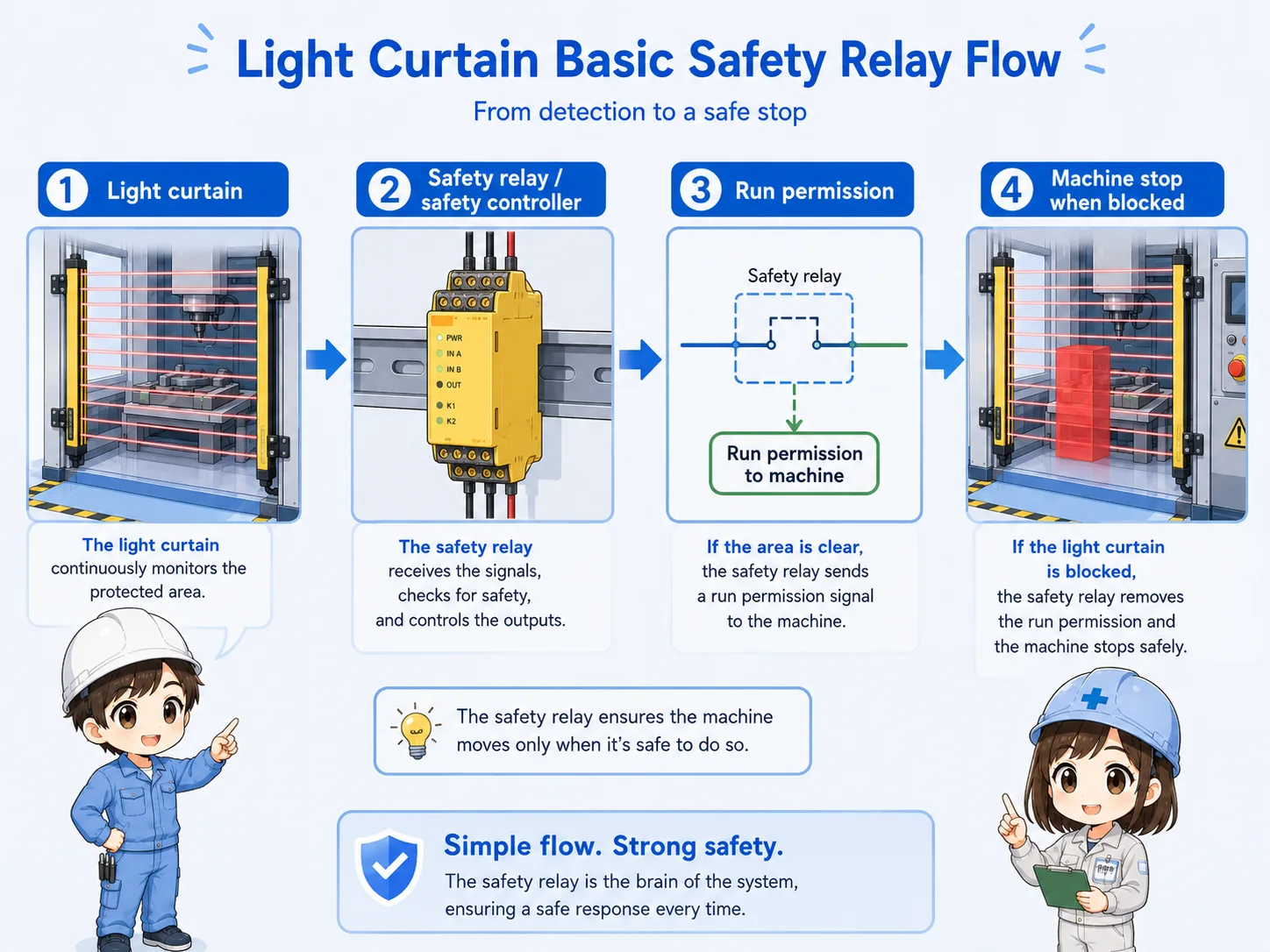
The light curtain output is usually checked by a safety relay or safety controller, not treated as only a normal PLC input.
When the detection zone is clear, the safety output can be valid. If the beam is interrupted, the safety output changes and the safety relay or controller removes the run permission according to the designed circuit.
The safety output may control contactors, STO inputs, or other stop-related elements. The normal PLC may also monitor status, but it should not be the only device responsible for the safety stop.
Do not bypass safety signals
Never short, force, or bypass a light curtain output to clear an alarm. If the machine will not reset, find the real cause using the proper procedure.
5. Reset and restart thinking
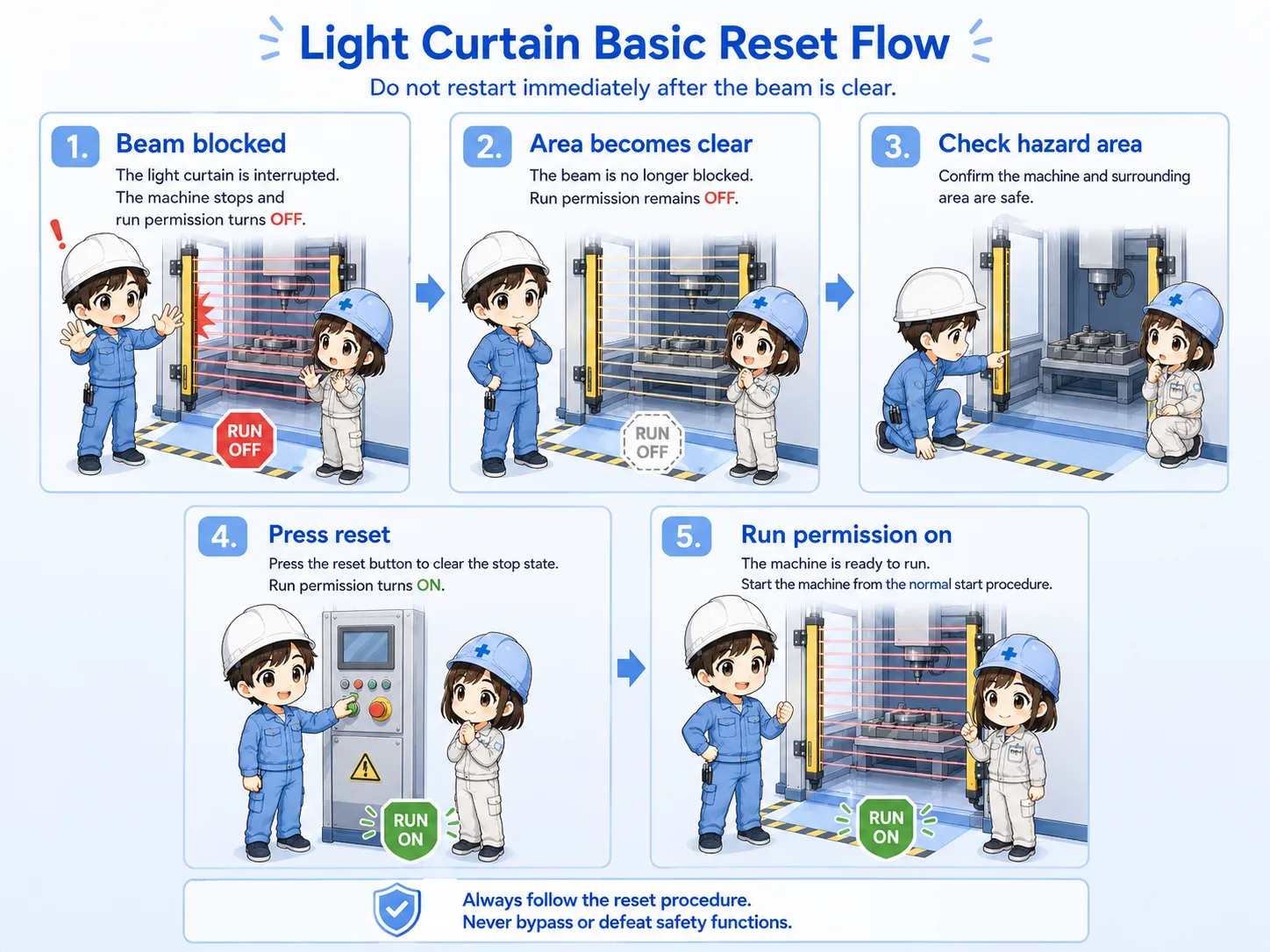
Clearing the beam does not always mean the machine should restart immediately.
After the light curtain is blocked, many machines require the beam to become clear again, the safety relay to confirm valid inputs, and a reset operation before operation can continue. This prevents an unexpected restart when a person has just left the guarded area.
The exact reset method depends on the machine and safety design. In general, separate these ideas: safety condition restored, reset operation completed, and normal start command given.
Field note
If the beam is clear but the machine will not reset, check whether both safety channels are valid, reset input conditions are satisfied, and any muting or EDM conditions are correct.
6. Field check points
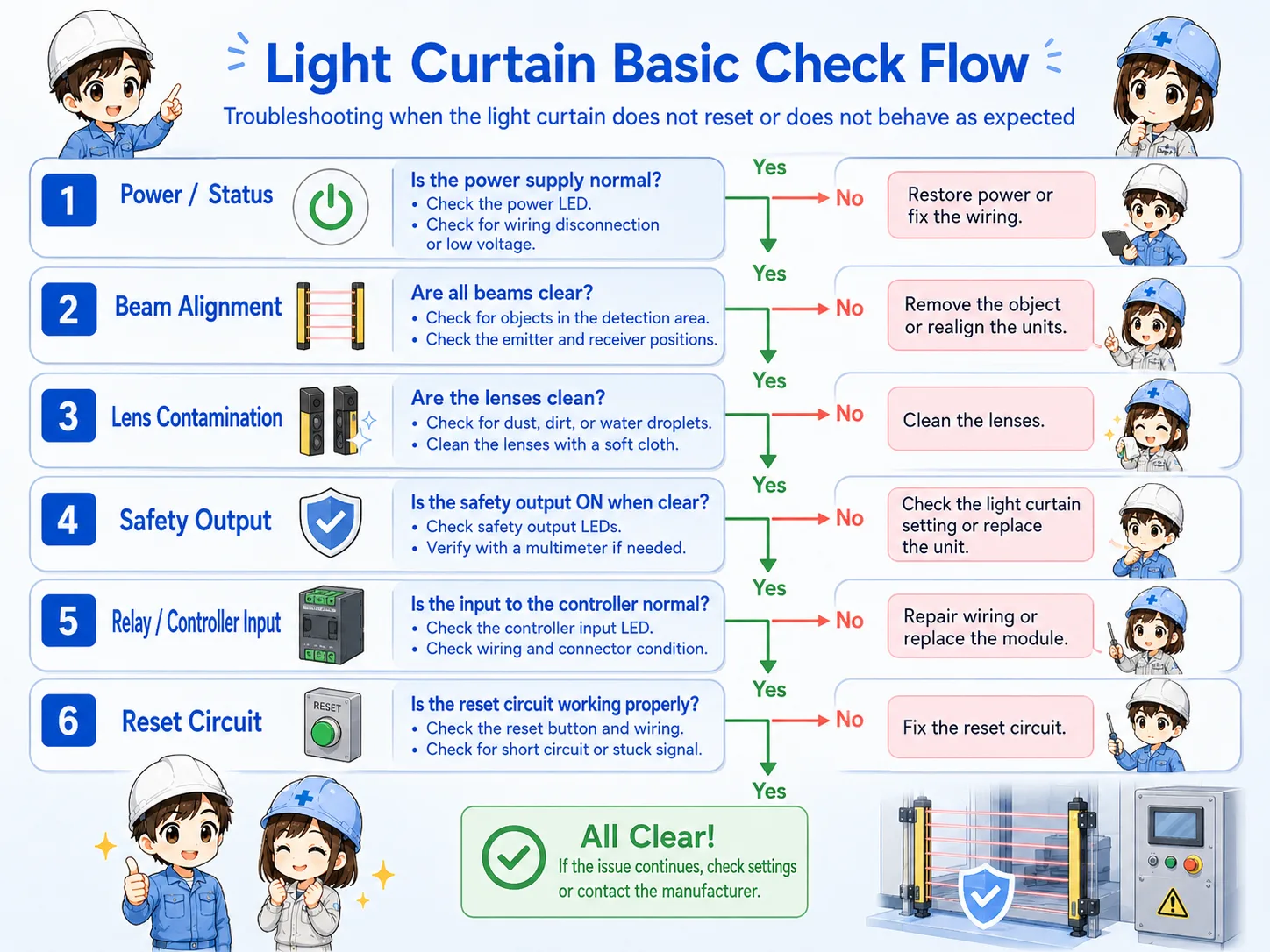
When a light curtain does not reset, separate optical alignment, safety output, wiring, and reset conditions.
Light curtain trouble is often caused by a blocked beam, misalignment, dirty lens, vibration, incorrect mounting, wiring faults, or safety relay input mismatch. Do not immediately replace parts before checking the whole signal path.
Beam area
Check whether anything is blocking the detection zone, including fixtures, cables, hands, dust, or workpieces.
Alignment and lens
Check transmitter/receiver alignment, contamination, vibration, and mounting looseness.
Output and wiring
Check power supply, indicators, OSSD outputs, terminals, connector condition, and cable damage.
Safety relay input
Confirm whether both safety channels reach the safety relay or safety controller correctly.
7. Quick summary
A light curtain is an important safety input device for guarding openings and hazardous areas.
A light curtain uses transmitter and receiver beams to monitor a protected area. When the beam area is interrupted, the safety output changes and the safety circuit should move the machine toward a safe stop condition according to the design.
The beginner-friendly way to understand it is this: the optical beam condition becomes a safety signal, the safety relay or controller checks that signal, and the machine run permission is controlled from there.
Remember this
For troubleshooting, do not look only at the PLC screen. Check the real beam area, alignment, output indicators, wiring, safety relay inputs, reset conditions, and official manual.
Related articles
These English articles are useful next steps after learning light curtains.