What is a pneumatic silencer?
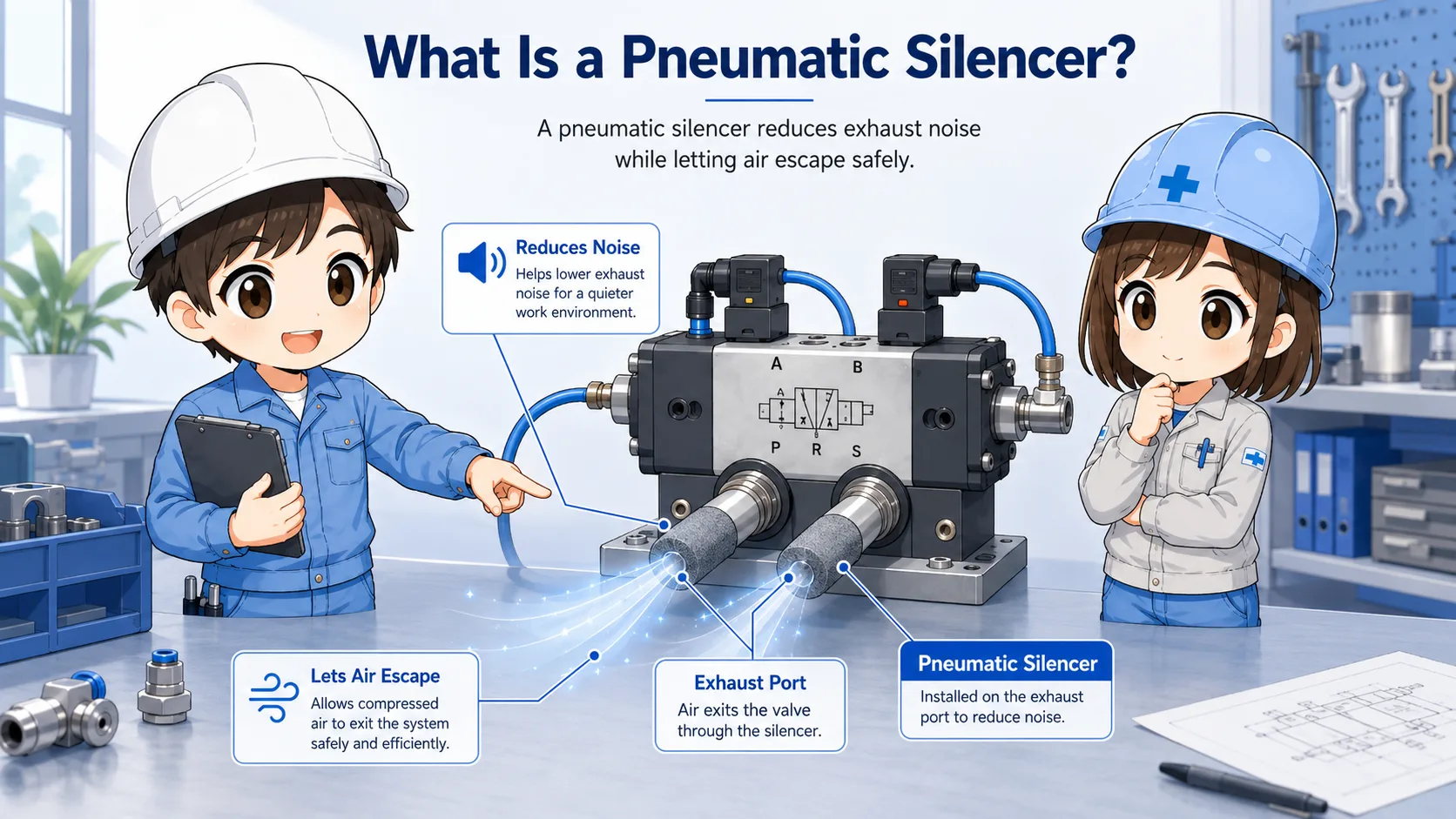
A pneumatic silencer is a small exhaust part that reduces the sound of air released from pneumatic equipment.
Pneumatic valves and actuators release compressed air when a cylinder changes direction, stops, or returns. That released air can make a sharp exhaust sound. A pneumatic silencer, sometimes called an air silencer, exhaust silencer, or pneumatic muffler, is attached to an exhaust port to reduce that noise. The correct port should be confirmed from the valve manual, port marking, and machine drawing.
The silencer is simple, but it is important in the field. It can make a machine quieter and easier to work around. At the same time, if it becomes clogged or too restrictive, it can affect exhaust flow, cylinder speed, and valve response.
Think of it as a noise reducer on the exhaust side
A silencer does not control the cylinder directly. It sits on the air exhaust path and reduces noise while allowing air to escape.
Why pneumatic exhaust can be noisy
Exhaust noise occurs when compressed air is released quickly from a valve or actuator circuit.
Pneumatic systems use compressed air as energy. When a cylinder extends or retracts, the air on the opposite side must escape. If that air is released directly into the atmosphere, the exhaust sound can be loud.
The silencer reduces this sound by passing the exhaust air through a porous or muffling structure. This softens the release of air, but it also means the silencer must be clean enough to let air pass.

When a silencer is dirty, the machine may not just become noisy. The exhaust path can become restricted, and the cylinder movement can change.

So if a cylinder becomes slow, I should also check the exhaust side and not only the air supply side.
Where silencers are installed
Silencers are often attached to exhaust ports on pneumatic valves, manifolds, and some air devices.
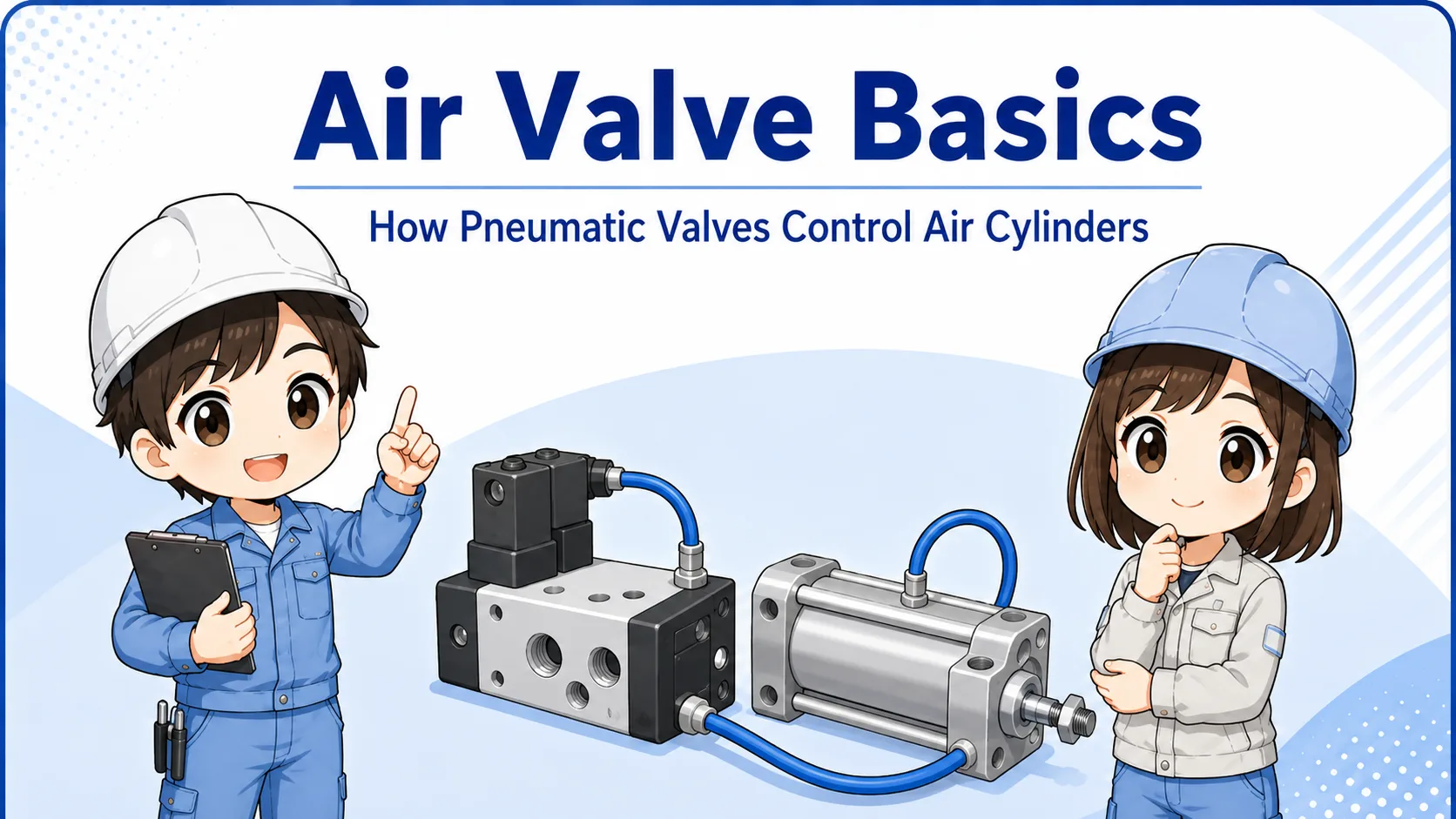
Many directional control valves have exhaust ports. For example, a 5-port valve used with a double-acting cylinder usually has exhaust ports for the air leaving each cylinder chamber. A silencer may be installed on those ports to reduce exhaust noise.
| Installation point | Purpose | Field note |
|---|---|---|
| Air valve exhaust port | Reduces exhaust sound when the valve switches. | Common on 3-port and 5-port pneumatic valves. |
| Valve manifold exhaust | Reduces noise from grouped valve exhaust ports. | Check whether exhaust is shared by multiple valves. |
| Device exhaust port | Reduces exhaust sound from a local pneumatic device. | Confirm the port function before installing or removing parts. |
How a silencer affects exhaust flow
A silencer should reduce sound while still allowing enough air to escape.
Exhaust flow is important because the air leaving one side of a cylinder must escape before the cylinder can move smoothly. If the silencer is clogged with oil, dust, or contamination, the exhaust path becomes narrow.
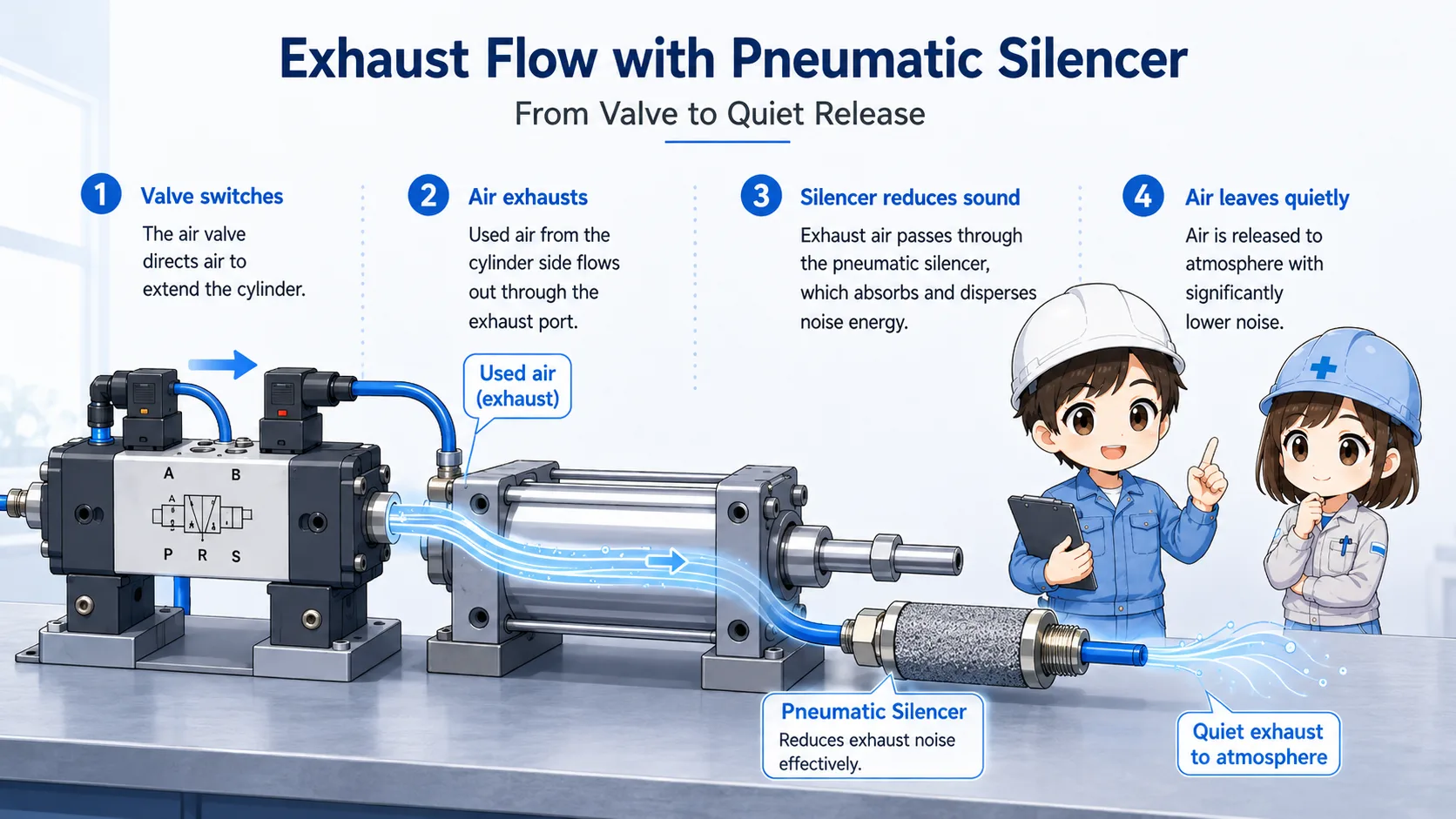
1. Valve switches
The pneumatic valve changes the air supply and exhaust path.
2. Air exhausts
Used air leaves the cylinder side through the valve exhaust port.
3. Silencer reduces sound
The exhaust passes through the silencer structure.
4. Movement stabilizes
Air escapes while noise is reduced, if the part is not clogged.
Slow movement can be an exhaust problem
If a cylinder is slow in only one direction, the exhaust path on the opposite side may be restricted. A clogged or too-restrictive silencer can reduce exhaust flow and change cylinder speed or valve response. Do not simply remove the silencer as a fix; check the required flow, correct replacement part, and site safety procedure.
Field checks for pneumatic silencers
Check noise, clogging, mounting position, exhaust direction, and whether the silencer is correct for the port.
When a pneumatic device becomes noisy, slow, or unstable, check the exhaust side along with the air supply side. A silencer is small, but it can affect how the machine feels in operation.
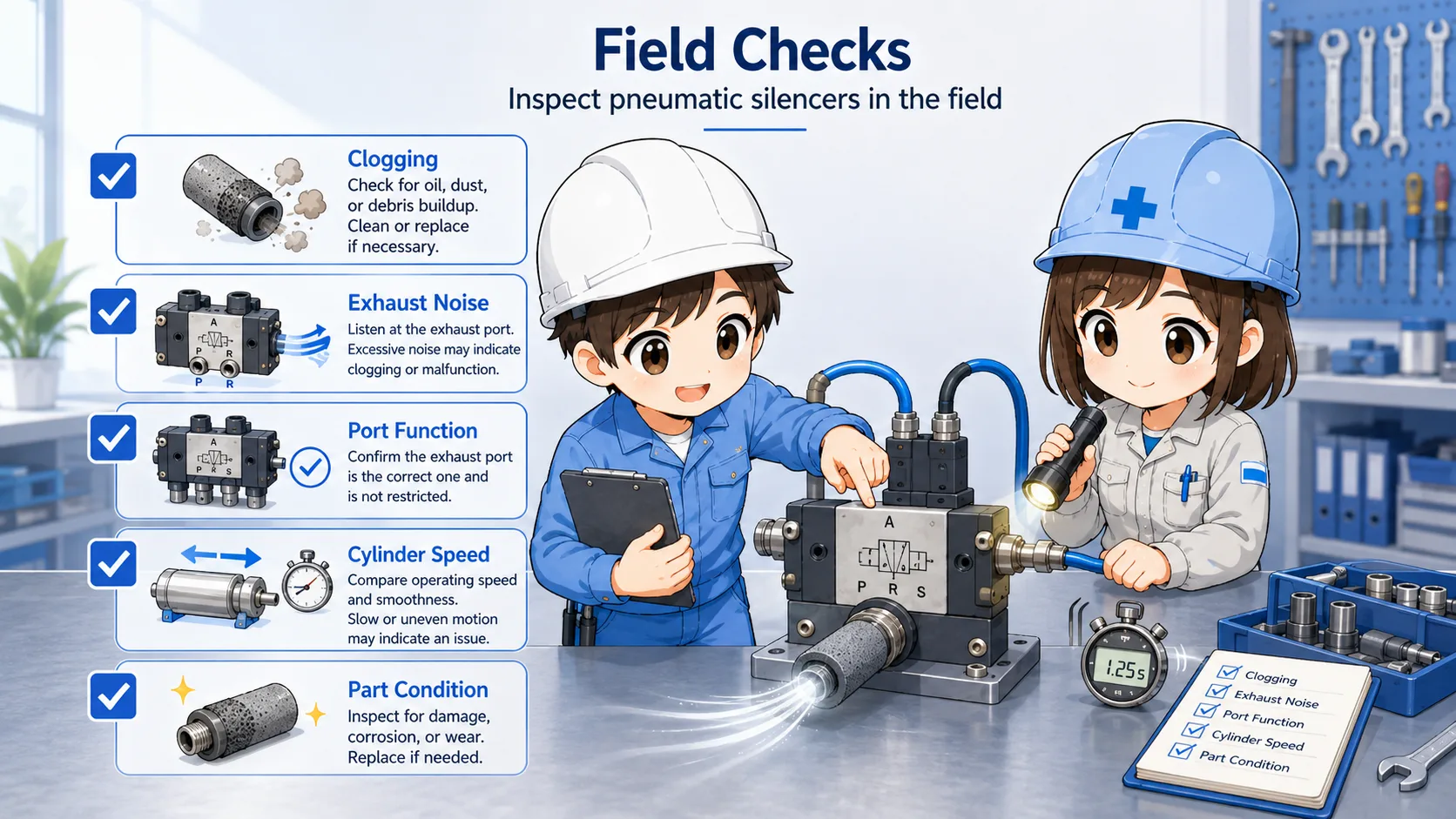
Check for clogging
Look for oil mist, dust, dirt, or contamination that may block the exhaust path.
Check the port function
Confirm that the part is installed on an exhaust port, not on a supply or control port.
Check cylinder behavior
Compare extension and retraction speed. One-sided slowness may point to an exhaust issue.
Check the part condition
Damaged, missing, or incorrect silencers can change noise level and machine behavior.
Do not remove parts casually
Removing a silencer can make exhaust louder and may expose workers to unexpected air discharge. Follow the machine manual and site procedure.
Common mistakes
Most mistakes come from treating the silencer as only a noise part and forgetting the exhaust flow.
- Ignoring a clogged silencer when a cylinder becomes slow.
- Removing the silencer only because the machine is too slow.
- Installing a silencer on the wrong port without checking the port symbol.
- Using a part that is too restrictive for the required exhaust flow.
- Assuming all exhaust noise is abnormal without checking the valve operation.
Noise and motion should be checked together
A quieter exhaust is helpful, but the pneumatic device must still move at the required speed. Always check both sound and motion.
Summary: a small part on an important air path
A pneumatic silencer reduces exhaust noise from air valves and pneumatic devices. It is commonly installed on exhaust ports, where used air leaves the circuit.
The key is to remember that the silencer is not only a sound part. It is also part of the exhaust air path. If it is clogged, damaged, missing, or too restrictive, it can affect cylinder motion and troubleshooting results.